

What Happens in a Doggy Daycare Evaluation
Lillian Ruff Pet Spa
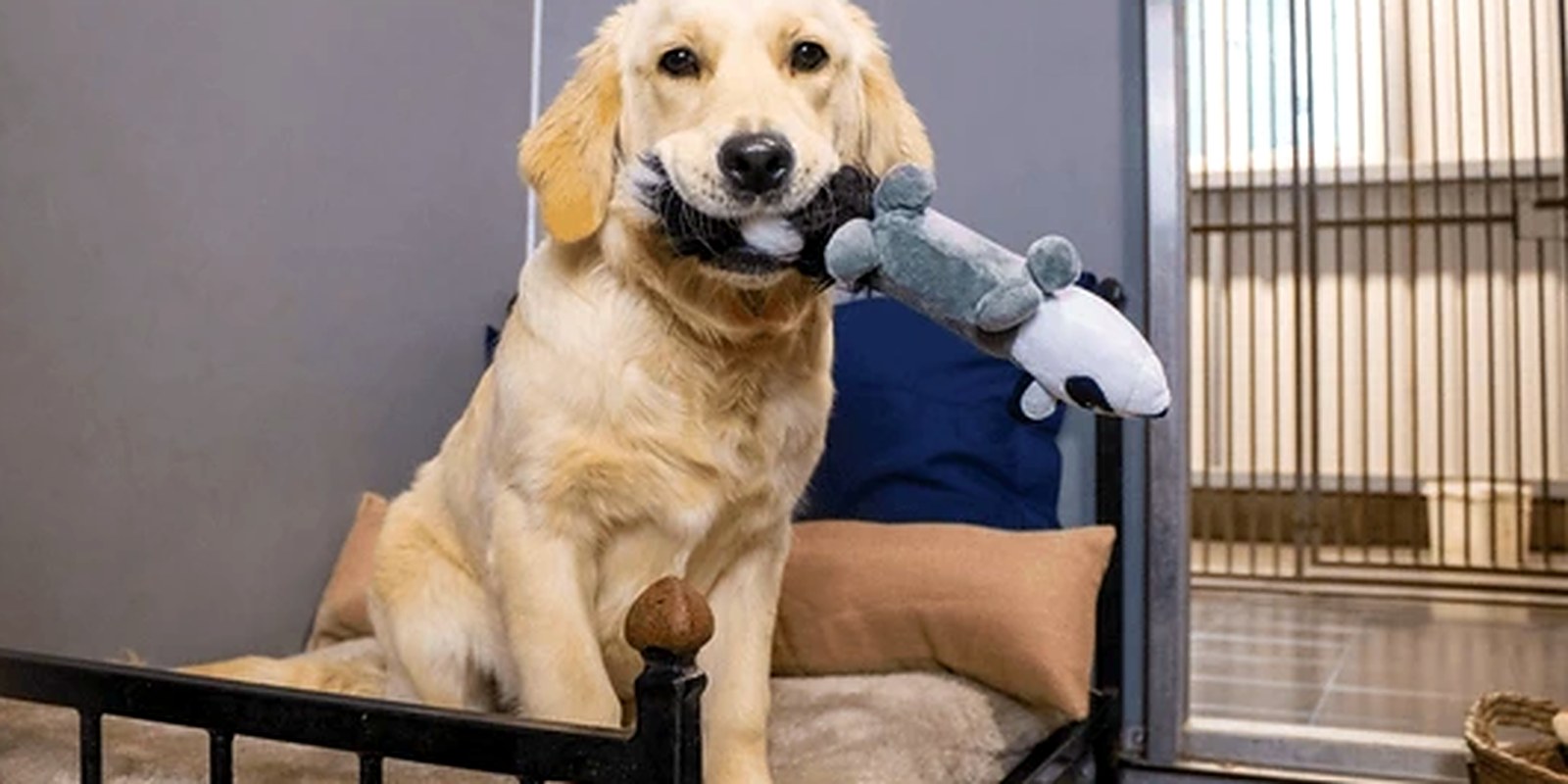
Most people who ask about daycare are not really asking about daycare. They are asking whether their dog is going to embarrass them in front of a stranger holding a clipboard. So let's take that off the table first: the evaluation is not an exam, there is no score, and almost nothing your dog does in the first ten minutes counts against him.
A daycare evaluation is a 30-minute meet and greet. We are working out what kind of day suits your dog — which group, how long, how much rest — not whether your dog is good enough to be here.
Daycare and boarding are at our Ronkonkoma location, 835 Portion Rd. Daycare runs seven days a week, 7am to 7pm. The East Northport salon on Laurel Road is grooming only, Tuesday through Saturday, so if you are coming from Huntington, Commack or Northport for a day of daycare, Ronkonkoma is the one you want.
Why every good daycare screens, and what screening protects
Here is something worth knowing before you compare facilities: New York State does not license or inspect doggy daycare, boarding kennels or grooming. There is no state inspector, no state standard, no certificate on the wall that means anything. A bill has been proposed in Albany, but it is not law. Every screening process you encounter on Long Island is a policy the business decided to impose on itself.
Which is exactly why you should ask about it. A daycare that takes any dog that walks in is not being generous. It is passing the risk on to the dogs already in the room — and to yours.
Screening protects three groups at once. The dogs in the group, who did not agree to spend six hours with a dog that has hurt another dog. Your dog, who should not be dropped into a large, loud group if he is going to spend the day pinned in a corner. And the staff, who need to be able to interrupt, redirect and separate safely.
An open dog run and a supervised daycare group are not the same product. One is unfiltered; the other is the filter.
That distinction matters locally. The Town of Huntington's off-leash dog run at 106 Deposit Road in East Northport is a genuinely good amenity — free permit, waste stations, shade pavilion, running water. But entry there is about paperwork: Town residency, a licensed dog, current rabies, at least four months old, two dogs per person. Nobody is assessing whether the dogs already inside are a fit for yours. Daycare is the opposite arrangement. The whole point is that somebody made a judgment before the gate opened.
The first meeting: handler first, other dogs second
The single most common mistake in a first visit is rushing to the dogs. A dog who has just been driven somewhere unfamiliar, walked past a reception desk and had his leash handed to a stranger is not in any state to meet eight new dogs. So we go in order.
You and your dog arrive together
We talk to you first. What he is like on a walk, what he does when the doorbell goes, whether he has ever had a scrap, what he was like at the vet last time. Be blunt. Nothing you say here loses him a spot, but something you leave out might cause a problem later.
He meets a handler, not a crowd
Can a stranger take the leash, touch his collar, move him through a doorway, put a hand on his shoulder? This is the part that actually predicts the day. A dog who cannot be handled cannot be kept safe in a group.
Space to look around
Some dogs need two minutes and some need ten. Sniffing the perimeter and ignoring us completely is a normal, healthy response, not avoidance.
One well-chosen dog
Not the whole group. One steady, socially fluent dog, on a short introduction we can end early. What we want to see is not instant friendship — it is a clean greeting and the ability to disengage.
Then a small group, briefly
If that goes well, a few more dogs, for a short window. First visits should end while the dog is still doing well, not when he runs out of road.
Play style, arousal, and how quickly a dog comes back down
Owners tend to worry about the wrong signals. Here is roughly what we are and are not reading.
| What owners apologize for | What we are actually watching |
|---|---|
| Barking in the parking lot | Whether the barking stops once he is inside and busy |
| Hiding behind your legs | Whether he comes out on his own within a few minutes |
| Mounting another dog once | Whether he can be interrupted, and whether he goes straight back to it |
| Playing rough | Whether both dogs are choosing it, and whether it pauses on its own |
| Ignoring the other dogs entirely | Nothing. Plenty of good daycare dogs prefer people and naps |
Play style is mostly a matching problem, not a quality problem. Wrestlers want body contact. Chasers want a runner and get frustrated by wrestling. Some dogs mainly want to patrol and sniff. Some want a person's knee to lean on for six hours. None of those is wrong; they just do not all belong in the same corner of the room.
The thing we care most about is the come-down. Every dog gets wound up. What separates an easy daycare dog from a difficult one is how fast he returns to baseline after the excitement stops — and whether a handler stepping in shortens that or lengthens it. A dog who spikes hard and settles in thirty seconds is straightforward. A dog who spikes and stays up there for twenty minutes needs shorter sessions, a smaller group and scheduled rest, which is a plan, not a rejection.
Reads as an easy fit
- Loose body, curved approaches, plenty of pauses
- Takes a break without being made to
- Recovers quickly after a startle
- Lets a handler take the collar
- Can eat, drink and lie down in the room
Means we slow it down
- Fixed stare, stiff pauses, no breaks in the chase
- Guarding a toy, a doorway, a water bowl or a person
- Redirecting onto whoever is nearest when frustrated
- Cannot settle at all after an hour
- Any history of a bite that broke skin
Size and energy: how the groups get decided
Group assignment comes down to three things, in this order: size, play style, and how a dog behaves when he is tired. Size matters most for simple physics — a happy 80-pound dog can flatten a nine-pound dog with no bad intent at all, and small dogs who get flattened often learn to snap first next time.
Energy is the second filter. A high-drive young Lab and a nine-year-old Shih Tzu can be equally friendly and still have no business sharing a play space. And the third filter is the one people never think about: fatigue. A lot of daycare trouble happens in the late afternoon, from dogs who never took a break. Rest is part of the day, not an interruption to it.
Your dog's group is not fixed forever, either. Puppies grow into different groups. Older dogs move down into quieter ones. If we move him, we will tell you why.
What happens if the answer is no, and what we suggest instead
Sometimes group daycare is not the right product for a dog, and saying so is the whole value of doing an evaluation at all. Nobody benefits from a dog who spends six hours stressed in a room he never chose.
When that is the case, it usually looks like one of these instead: half-days rather than full days, so the dog leaves before he runs out of tolerance; a slower reintroduction over several short visits; grooming and structured one-on-one handling rather than group play; or, honestly, a decision that this dog is happier with a long walk and a person than with fifteen other dogs. That last one is not a failure. Some dogs simply do not enjoy other dogs, and forcing it makes them worse, not better.
A dog who has suddenly become snappy, will not settle, flinches at handling or has changed how he plays may be sore, hearing less, or seeing less. We notice these things and we tell you — but we are groomers and daycare staff, not veterinarians. Anything that looks medical belongs with your vet before it belongs with a trainer.
Boarding has a firmer bar than daycare, and we publish it plainly: a pet must be non-aggressive, comfortable in a kennel, able to socialize, and free from bite history. Every boarding stay includes full-day daycare at no extra charge, which is exactly why the daycare assessment comes first.
What to have ready before you come
Vaccination requirements for boarding kennels in this county are set by law, not by us. Suffolk County Code § 302-13 requires a current health certificate from a licensed veterinarian showing vaccination against rabies, distemper, hepatitis, parainfluenza, parvovirus and coronavirus within the previous year — unless an approved three-year vaccine is certified by the vet — and bordetella within the previous six months.
That six-month bordetella clock is the one that catches people out. Everything else runs annually, so owners assume bordetella does too, and turn up with a certificate that lapsed two months ago. Check the date before you drive over, and confirm current requirements with both your vet and with us.
The vaccine reduces risk; it does not eliminate kennel cough. What people call kennel cough is properly canine infectious respiratory disease complex, and the AVMA counts roughly eleven contributing pathogens. A vaccinated dog can still pick something up in any place dogs gather — daycare, a groomer, a dog run, a vet waiting room.
Separately, New York requires every dog to be licensed and rabies-vaccinated from four months of age under Agriculture & Markets Law § 109. If you have a puppy, that is the first date that matters.
Daycare is 7am to 7pm, seven days. Full day (4+ hours) $35, half day $30, with 5-, 10- and 20-day passes that do not expire. Late pickup after 7pm is $5 per 15 minutes. Bring your own food, or we can feed ours at $5 per day. Boarding check-in is 2pm to 7pm and check-out is 7am to 11am. Sales tax of 8.875% applies.
Questions people actually ask
Do I stay for the evaluation?
We start with you there — the conversation about your dog is half of it. Most dogs then do better once the person they are checking on has stepped back, because they stop reading you for cues about whether this place is safe.
My dog barks his head off the whole drive and at the door. Is that a problem?
On its own, no. Arrival barking is about arousal and anticipation, and it usually stops within minutes. What matters is what happens after, not at the door.
What if my dog fails?
There is no fail column. There is a fit and a plan. That might be half-days, a smaller group, a slower reintroduction, or a straight recommendation that group play is not this dog's thing. We will tell you which, and why.
My dog snapped at another dog once at a park. Should I mention it?
Yes, and in detail — what happened before it, whether contact was made, whether skin broke. It rarely rules a dog out of daycare by itself. Hiding it is what causes problems, because we then set the day up wrong.
Can I book daycare at the East Northport salon?
No. East Northport, at 16 Laurel Rd, is grooming only, Tuesday through Saturday. Daycare and boarding are at Ronkonkoma, 835 Portion Rd, seven days a week.
How many visits before my dog is actually settled?
More than one. Almost every dog looks better on the third visit than the first, because by then the building is not new information anymore. Judge daycare on a few visits, not on day one.
Book the meet and greet first.
Thirty minutes, in person, and you leave knowing whether daycare suits your dog and what a first full day would look like.
See daycare rates & book ›835 Portion Rd, Ronkonkoma, NY 11779 · Daycare 7 days, 7am–7pm
Ready to Pamper Your Pet?
Book a grooming appointment today and give your furry friend the spa treatment they deserve.
Book an Appointment