

Rust Stains on a White Coat: Saliva, Urine and Wet Fur
Lillian Ruff Pet Spa
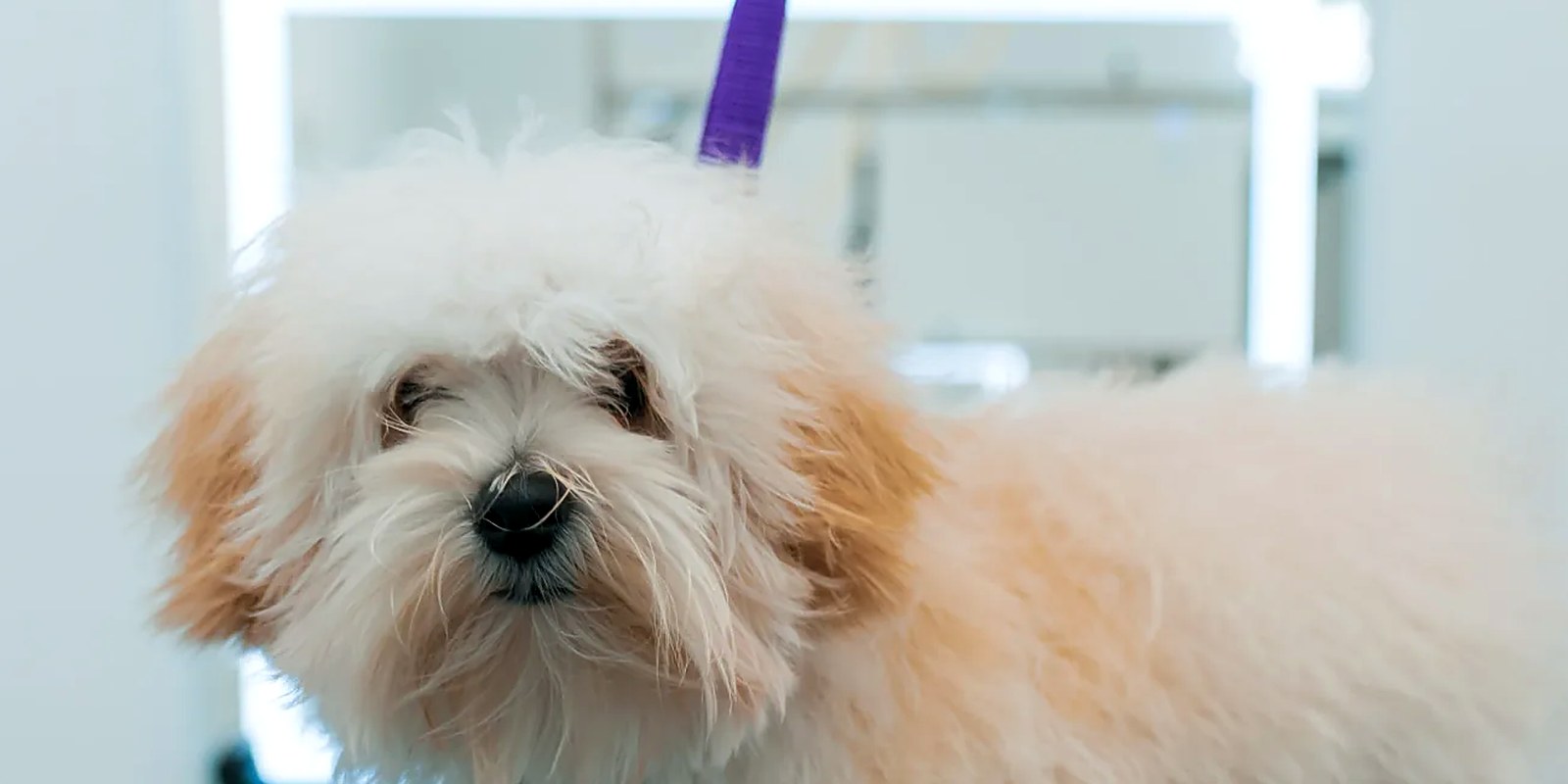
A white dog does not turn brown from dirt. If your Maltese, Bichon, cream doodle, Westie or white Shih Tzu has rust-colored legs, feet, belly or sanitary area, what you are looking at is almost always the same thing: a spot that keeps getting wet, and stays wet.
Staining is a moisture problem before it is a cleaning problem. Saliva, urine and damp fur all leave the same reddish-brown mark. Shorter hair in those four zones dries faster, and fur that dries faster stains less. No shampoo fixes a coat that is wet twelve hours a day.
Why licked, chewed and constantly damp fur turns rust-colored
Dog saliva, tears and urine all carry porphyrins — iron-containing compounds the body clears out as waste. On a dark coat you will never see them. On white or cream fur they oxidize on contact with air and light and settle into the hair shaft as that familiar rust or copper color. It is a stain in the true sense: the pigment is inside the hair, not sitting on top of it.
Damp fur makes it worse in a second way. Warm, wet hair against skin is a comfortable place for yeast and bacteria, which add their own brownish tint and, often, a distinct smell. The same patch is being colored from two directions at once.
Which is why scrubbing a stained leg barely moves the color. The pigment is already in the hair. What you can change is how long that hair stays wet tomorrow.
Legs, feet, belly and the sanitary area: the four zones that stain
| Zone | Usual cause | What actually helps |
|---|---|---|
| Feet and toes | Licking, plus grass and puddles trapped in long paw hair | Pad and paw hair short; towel the feet at the door |
| Front legs and wrists | Saliva from grooming or boredom licking | Trim the leg shorter so it dries in minutes, not hours |
| Belly and inner thighs | Urine splash-back, worst in short-legged dogs | A closer belly clip; wipe and dry after wet walks |
| Sanitary area | Urine and fecal contact with long hair | Hair kept short enough that nothing sits against skin |
Three of the four fixes are trim work, not product. Hair length is the one variable on that list you control every single day.
Male and female patterns, and why the trim differs
The staining maps onto anatomy, which is why two dogs of the same breed can look completely different in the same house.
Male dogs
- A narrow stained strip along the lower belly and sheath
- Lifting a leg means one back leg is often worse than the other
- Long belly coat wicks moisture backward toward the groin
- Trim priority: the belly strip clipped short and blended
Female dogs
- A rounder patch around the vulva and inside both back legs
- Squatting puts the sanitary area against wet ground
- Long rear feathering acts like a wick on grass
- Trim priority: shorter hair around the sanitary area and less rear feathering
Neither trim needs to look severe. On a doodle or a Bichon the underside can go short while the outline stays exactly as you like it — nobody sees a belly from across a room. On a Maltese or a Westie the sanitary area can be tidied without touching the skirt at all.
Occasional licking is normal. A dog that returns to the same spot — one paw, one wrist, one patch of belly — is telling you something itches or hurts. Allergies, a yeast or bacterial infection, a grass seed, a tick bite, joint pain underneath or an anal gland problem can all show up as a stain that returns a week after grooming. We can point it out and take the hair off it; we cannot diagnose it. See your vet before you spend money on stain products.
What lifts staining, and what only makes the coat look brighter
Worth being blunt here, because the marketing in this category is aggressive.
Genuinely useful
- Cutting the stained hair off — the only reliable way to remove a stain that is already set
- Drying to the skin after every bath, not just to the touch
- Wiping and towel-drying feet, belly and sanitary area after wet walks
- Treating the actual cause of the licking, with your vet
Looks like a fix, isn't
- Whitening shampoos — these mostly deposit a blue or violet tone that cancels yellow visually, and it washes out
- Optical brighteners: an appearance change, not stain removal
- Hydrogen peroxide, bleach or lemon — near eyes and genitals that is a burn risk, not a shortcut
- Any supplement or antibiotic bought online for staining, without a vet's say-so
You cannot wash out a stain that grew into the hair. You can grow it out, or cut it off — and stop the next one starting.
For the record, we do not use dye, chalk or color products at Lillian Ruff. If a coat comes back whiter after a groom, it is because the stained hair is gone and the rest was cleaned and fully dried.
Keeping the areas short enough to stay dry between grooms
Decide the length by drying time, not by looks
Tell us the problem zone at drop-off. If a leg takes an hour to dry at home, it needs to come shorter than the rest of the coat, whatever the breed standard says.
Keep paw and pad hair off the ground
Hair growing past the pads mops up everything wet the dog walks through and holds it against skin all day. This is the single change that shows up fastest on a white foot.
Ask what a shorter cycle would look like
If the belly or the sanitary area is the part that goes wrong first, ask us when you book. Sometimes the answer is an appointment in between the haircuts; sometimes it is simply that the haircut needs to come shorter underneath so it lasts the whole gap.
Finish the drying at home
A towel by the door does more for a white coat than any bottle. Feet, belly, sanitary area — thirty seconds each after a wet walk, before the dog settles down damp on a bed.
Winters here are genuinely wet underfoot — the nearest official climate station, at Islip, averages roughly 10 inches of snow in January and 9 in February, with overnight lows below freezing December through February. That means slush and salted sidewalks on white legs and feet. And the Town of Huntington's off-leash dog run is right here in the hamlet, at 106 Deposit Road. Neither is a reason to stay in. Both are a reason to keep those four zones short.
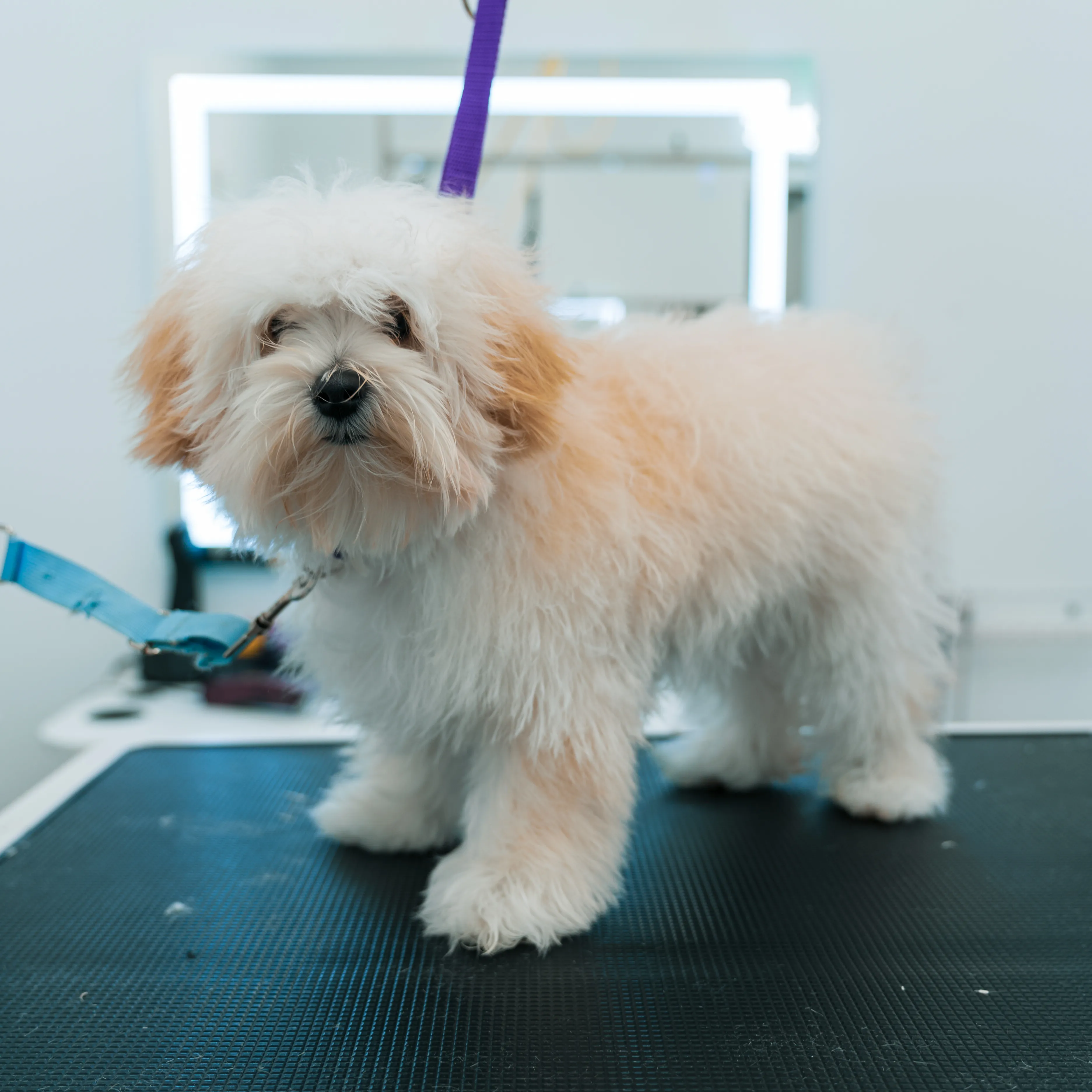
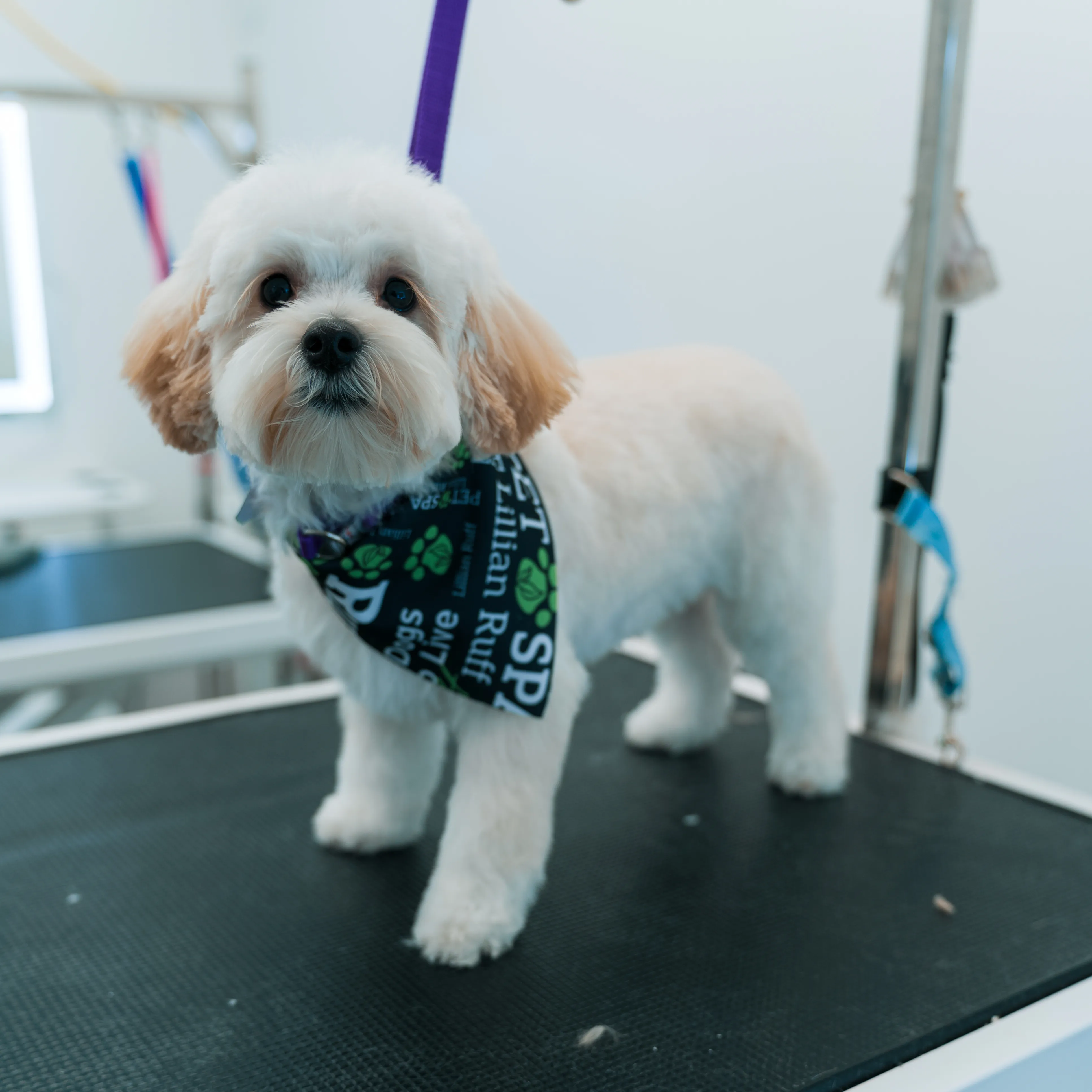
If the haircut is still holding its shape, you may not need a full groom at all. A bath and brush is the cheaper appointment, and for a staining problem the wash and the drying are doing most of the work anyway. Tell us which zones are the problem when you book and ask what that appointment can cover for your dog — it is a better question than guessing at the online form.
Questions people actually ask
Will the stain come out if I just keep bathing him?
Usually not. Once porphyrin has oxidized inside the hair shaft, washing lightens the surface at best. The stained hair has to grow out or be cut off. What bathing does help with is the yeast and bacteria layer — provided the coat is dried all the way to the skin afterward.
My dog only licks one paw. Is that a grooming problem?
Treat it as a health question first. Allergies, infection, something stuck between the toes or joint pain underneath are all common explanations, and all need a vet. We can shorten the hair so you can see the skin clearly, but we do not diagnose — and we would not want you treating a stain when the itch is the real issue.
Is a sanitary trim the same as shaving my dog down?
No. It is a small, discreet clip around the genitals and under the tail, plus the strip of belly that gets wet. The visible outline of the coat stays as it is. Most owners cannot tell it has been done unless they go looking.
Do whitening shampoos work at all?
They work the way purple shampoo works on blonde hair: a tone that visually cancels the yellow. Real effect, temporary one. Enjoy it — just do not expect a permanently white leg, and never reach for peroxide or bleach near the eyes or sanitary area.
Can you get the stains out of my dog's face?
Tear staining under the eyes follows the same porphyrin rule, and the same limits apply — we can trim carefully and clean the area, not erase it. Persistent tear overflow, a red or weepy eye, or a sudden change in staining is a vet conversation, not a grooming one.
How short is too short on the belly?
Short enough to dry quickly, long enough to protect skin from sun and cold. On most dogs that is a clipped but not bald belly, blended so nothing looks like a line. If your dog is thin-coated, elderly or spends real time outdoors in winter, say so and we will leave more.
Bring us the stained zones.
Tell us which legs, belly or sanitary area are the problem when you book, and we will cut and dry those areas for how your dog actually lives.
See pricing & book ›16 Laurel Rd, East Northport, NY 11731 · Tue–Sat 9–5
Ready to Pamper Your Pet?
Book a grooming appointment today and give your furry friend the spa treatment they deserve.
Book an Appointment