
Puppy Coat Change: Why a Coat That Never Matted Suddenly Does
Lillian Ruff Pet Spa
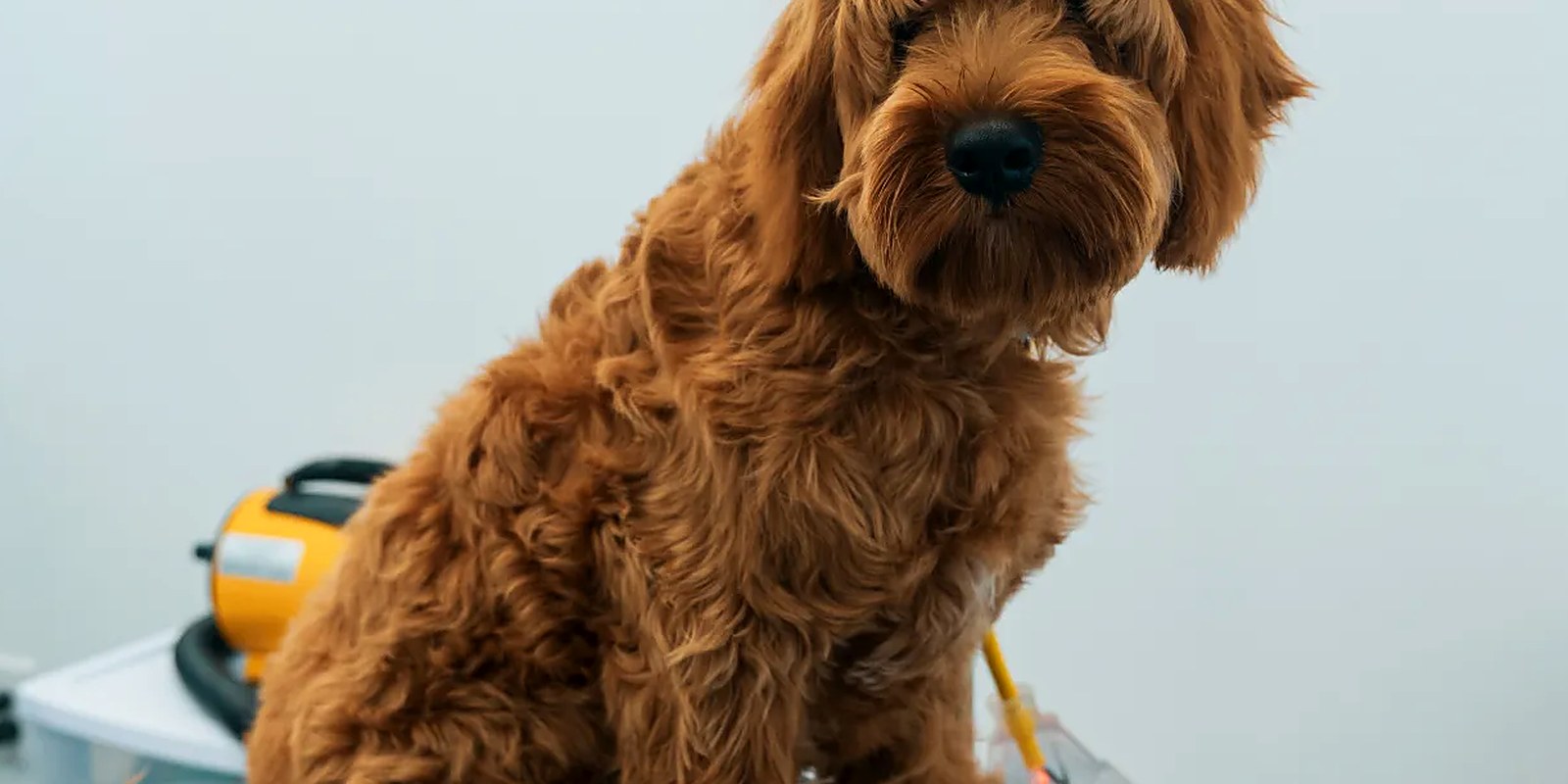
For months the coat does nothing wrong. You brush when you remember, the comb slides straight through, everyone tells you what an easy dog you have. Then one week the brush stops halfway down the shoulder and there is a mat behind the ear that was not there on Sunday. Nothing changed in your routine. The coat changed underneath it.
The soft puppy coat is being pushed out by a denser adult coat. The shed hair has nowhere to fall, so it wraps around the new growth and felts. Brushing has to go up while that happens, not stay the same. It is temporary — but it is the point where most owners either build a habit or give up and go short.
What coat change actually is
A puppy is born with a single, fine, soft coat. Somewhere in the first year, the adult coat starts coming in underneath it: coarser, thicker, and in most coated breeds a proper double layer with dense undercoat below the guard hairs.
The old coat does not politely fall out first. It loosens and sheds while the new coat is already growing, and in a curly or wavy coat there is nowhere for the loose hair to go. It stays trapped, moves against the skin every time the dog walks or sleeps, and knits itself into felt. That is the whole mechanism. It is not neglect and it is not a nutrition problem.
The window varies. Smaller coated breeds often start earlier, slower-maturing dogs later, and plenty drift in and out of it rather than going through in one clean run. If your dog is in the second half of the first year and the coat suddenly feels different in your hands, that is almost certainly what you are feeling.
Why a coat that needed nothing at four months mats within a week
That last one is the trap. A brush that only skims the top gives you a tidy dog and a false reading. The mat forms at the skin and grows outward.
The coats that catch owners out hardest
| Coat type | What happens in the change | What it costs you if missed |
|---|---|---|
| Doodles and poodle crosses | Wavy puppy coat turns dense and curly. The worst offender by a distance. | Often a full shave-down. It regrows, but it is months. |
| Shih tzu, maltese, maltipoo | Fine coat lengthens and thickens. Mats form fast at collars and armpits. | Body length comes down; the face can usually be kept. |
| Goldens, bernese, double coats | Heavy undercoat arrives. It packs, then mats behind the ears and on the trousers. | A long de-shed rather than a haircut. Never a shave. |
| Labs, beagles, smooth coats | Coat thickens and sheds more. It does not felt. | Nothing. Do not book a haircut you do not need. |
That bottom row is genuine. With a short smooth-coated dog, coat change is a vacuuming problem, not a grooming emergency. A bath and blow-out clears a lot of loose hair, but you are not on a clock.
Brushing has to increase, not stay the same
Whatever you were doing at four months is not enough at nine. For a coated dog mid-change, short daily sessions beat one long weekly one — the coat only needs a few days of friction to felt.
Two tools, not one
A slicker brush and a metal comb. The comb is the important one — a brush alone will lie to you.
Line brush, do not surface brush
Part the coat with your free hand, brush the exposed layer from the skin outward, then move the part up an inch. Work in sections.
Finish with the comb test
Run the comb through the section with the teeth touching skin. Passes freely, that section is clear. Snags, and the brush never reached the bottom.
Hit the friction points every time
Behind and under the ears, throat, armpits, backs of the thighs, tail base, and wherever a collar or harness sits.
Never bathe a matted coat
Water tightens felt. Brush first, bathe second. This is the most common way a small problem becomes a shave.
Do not pull hard at a mat sitting tight against the skin, and never go at one with scissors — mats lift the skin with them and it is very easy to cut through. If you find redness, moisture, a smell, or the dog flinches at a spot, stop brushing it and have a vet look. Groomers spot skin problems; we do not diagnose or treat them.
What can be kept, and what has to come off
If the change ran ahead of you, what you need is an honest read on the coat, not a lecture. Here is roughly how we sort it.
Usually saveable
- Tangles the comb can be worked through in sections
- Isolated mats at the ears, armpits or tail base
- A coat that is tight in places but loose at the skin overall
- Face, ears and tail even when the body comes down
Has to come off
- Felt that sits flat and continuous against the skin
- Anything the comb cannot get behind
- Mats over a hot, damp or broken patch of skin
- A dog already sore — comfort beats length, every time
Dematting is done for the dog, not for the haircut. If clearing it would hurt more than starting over, we start over.
A shave-down is not a failure and it is not permanent. What grows back is the adult coat — generally easier to maintain than the mess you were fighting. What matters is what you do in the months after.
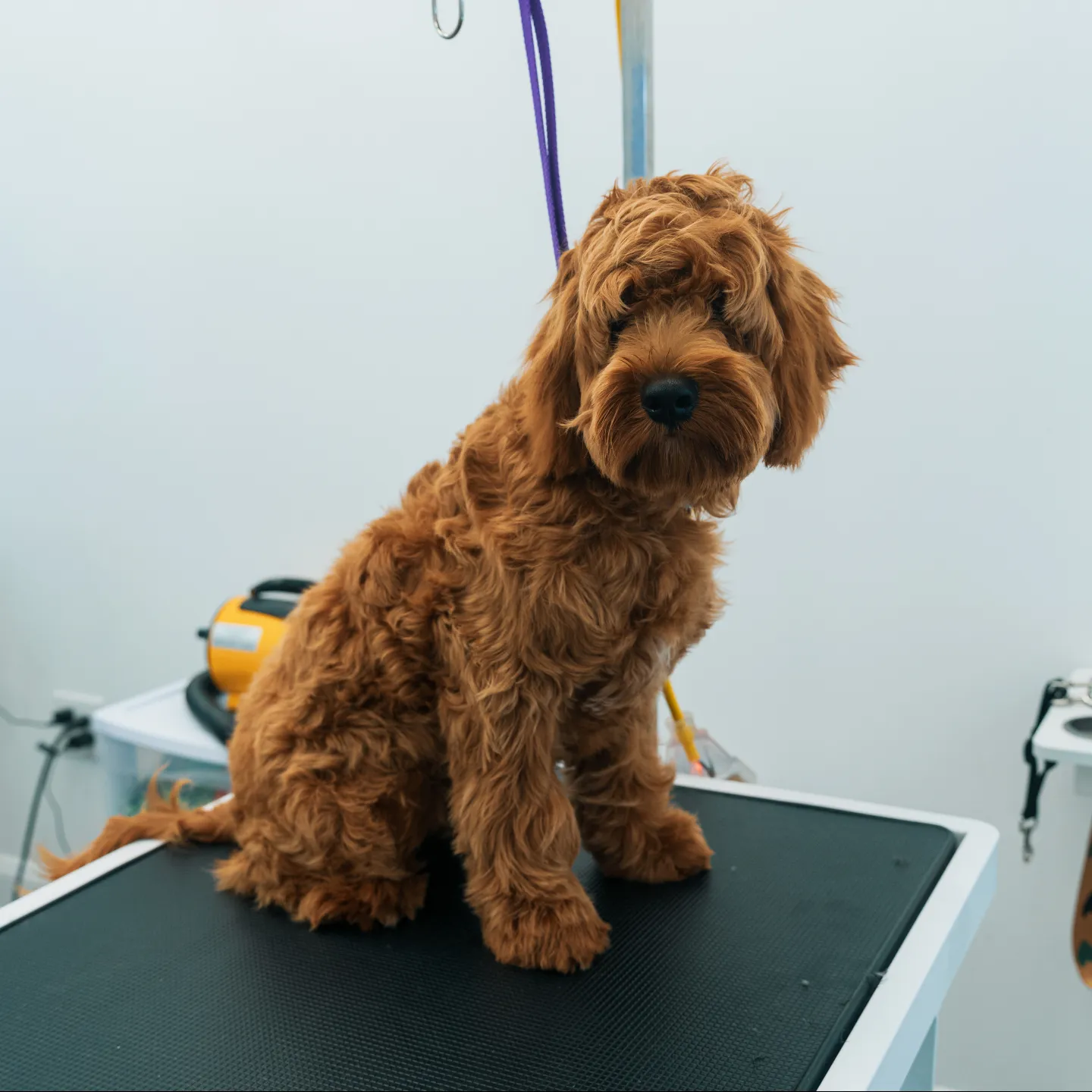
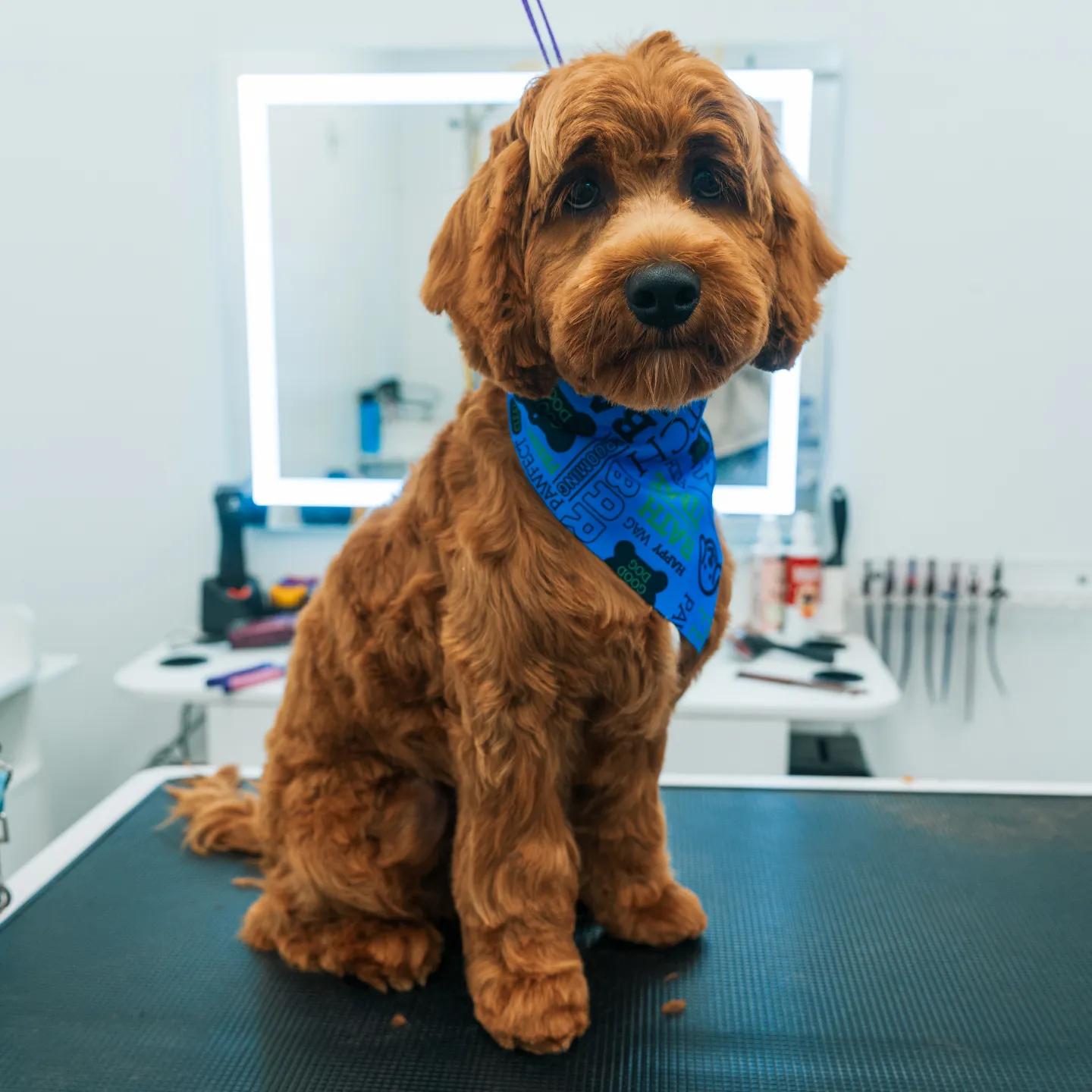
Setting an interval that carries the dog through it
Coat change catches people out because the puppy schedule was built for a coat that no longer exists. For a coated dog in or approaching the change, four to six weeks between full grooms is the range that holds — with daily brushing in between doing most of the work. Eight weeks and up is where we start seeing shave-downs, however good the intentions were.
Practically: book the next appointment before you leave, and tell us the dog is in coat change so we schedule enough time. Bath and brush runs $45 to $125 depending on weight, a full groom with haircut $85 to $165 — banded by size, smallest to largest, and you can see the range and pick a time yourself on our booking page. That is still unusual here: of eighteen Long Island salons we checked from their own websites, only seven let you book online and only three publish any prices.
We are at 16 Laurel Rd — grooming only at this location, no daycare or boarding. Coat change usually gets obvious right when the dog is going more places: the Town of Huntington off-leash run on Deposit Road, the sidewalks along Larkfield Road, Cow Harbor Park at the foot of Main Street in Northport. More outdoors means damp coat, debris and harness friction, which is exactly what a changing coat does not need. Brush after the outing, not the next weekend. More about the East Northport salon.
Questions people actually ask
How long does coat change last?
Commonly a few months, though some dogs move through faster and some drag it out. You will know it is over when your normal routine stops finding new tangles every couple of days.
At what age should I expect it?
Somewhere in the first year, and for most coated dogs it is the back half of that year rather than the front. There is no fixed date — go by how the coat feels under your hands, not by the calendar. When the comb starts catching in places it never used to, you are in it.
Will shaving him make the adult coat grow back wrong?
What grows back is the adult coat he was always going to have. It often feels coarser or curlier than the puppy coat, and people blame the clipper. The timing just overlaps.
Should I book more often, or just brush more?
Both, but brushing does the heavy lifting. A four-week groom on a coat nobody touches in between still ends in a short haircut.
My dog hates being brushed now. What do I do?
Usually it started hurting somewhere — a mat that got tugged. Go back to very short sessions on easy areas and leave the tight spots to us. If he reacts to being touched in one specific place rather than to brushing generally, have a vet look at that spot.
Can you just do the mats and skip the full groom?
Tell us when you book and we will look. Small isolated mats can often be worked out during a bath and brush. Widespread felt takes real time and, past a point, is not fair on the dog.
Get ahead of the coat change.
Pick a time online, tell us the coat is changing, and we will set the interval that keeps the length.
See pricing & book ›16 Laurel Rd, East Northport, NY 11731 · Tue–Sat 9–5
Ready to Pamper Your Pet?
Book a grooming appointment today and give your furry friend the spa treatment they deserve.
Book an Appointment