

Pool Chlorine and Your Dog's Coat: The After-Swim Rinse
Lillian Ruff Pet Spa
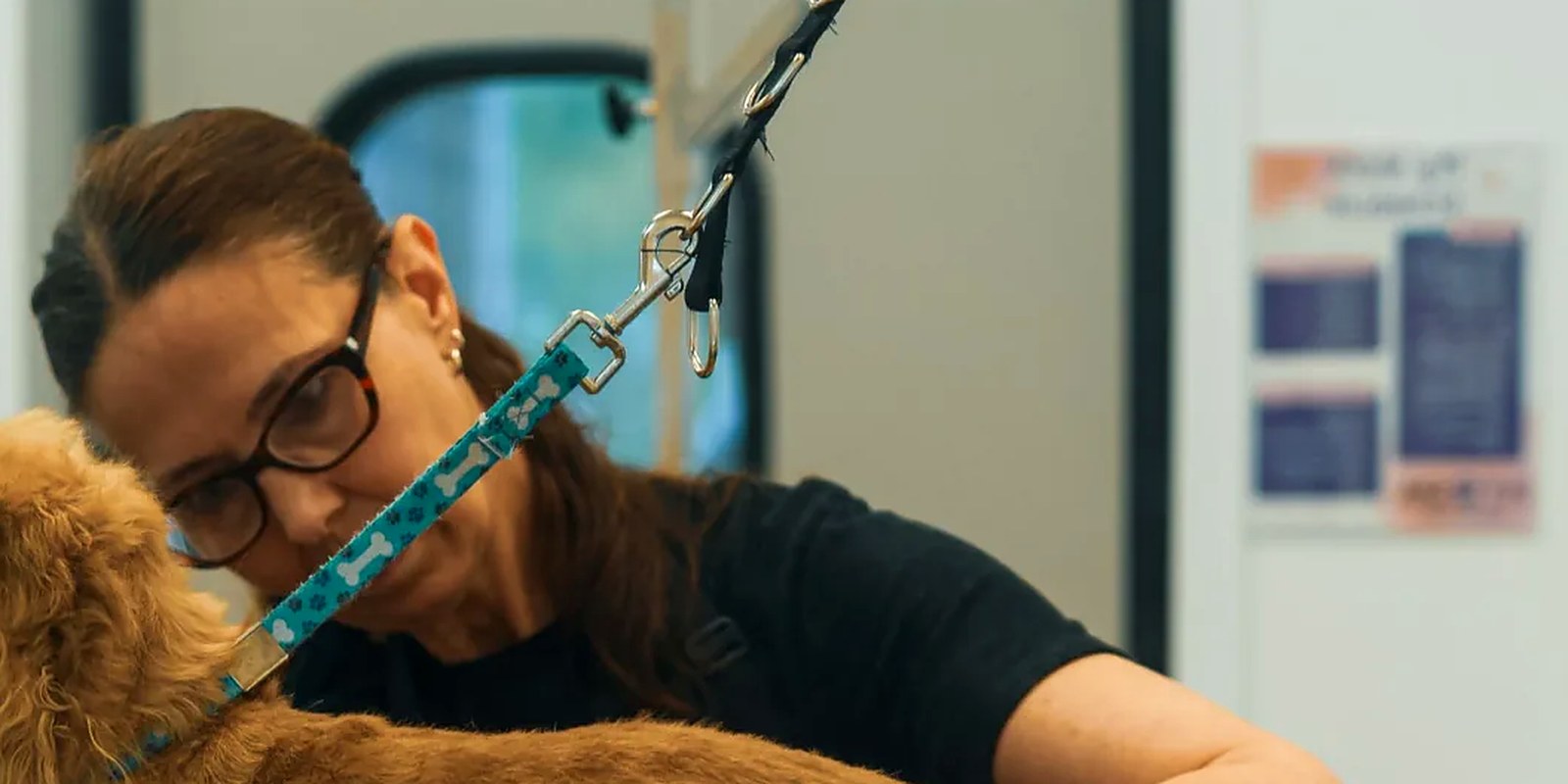
If your dog swims in a backyard pool, the single most useful thing you can do for their coat takes about four minutes and costs nothing: rinse them with plain water before they dry off. Everything below is detail stacked on top of that one habit.
Rinse with plain cool water straight after the swim, dry the coat all the way to the skin, then check ears and folds. Book a bath when the coat stays gritty after a rinse or stops drying evenly.
It is worth knowing where dogs can legally get in the water around here, because it narrows things. Town of Huntington code keeps dogs off all town beaches except paved areas and boardwalks. Sunken Meadow State Park allows leashed dogs only in its undeveloped eastern portion, not on the beach, and Caleb Smith State Park Preserve in Smithtown bans pets entirely. So for plenty of local dogs, swimming means a backyard pool — and treated pool water does something different to a coat than salt water does. That is what the rest of this is about.
What pool water leaves behind in fur
Two separate things happen when a dog swims in a treated pool, and they need different fixes.
The first is stripping. Chlorinated water is an oxidizer, and it lifts the natural oil off the hair shaft the same way it does on human hair. A coat that has lost that oil feels rougher, tangles more readily, and looks flat rather than glossy. On a curly or wavy coat, the loss of slip is what turns a normal week's worth of tangles into felted matting.
The second is deposit. Pool water is not just chlorine — it carries dissolved minerals, stabilizer, and often copper from algaecides or copper plumbing. When the dog dries off in the sun, the water evaporates and everything that was dissolved in it stays behind on the hair. That is the fine grit you feel when you run a hand backwards through a pool dog's coat in August.
The green tint people notice on white and cream dogs gets blamed on chlorine, but the usual culprit is copper. Oxidized copper binds to the hair shaft and shows as a green or brassy cast. It shows up on light coats first for the simple reason that there is no pigment to hide it.
A pool dog does not need more shampoo. It needs more water.
The plain-water rinse, done properly
This is a hose or a shower head and nothing else. No shampoo, no conditioner, no wipes.
Wet the coat before the swim
A coat already saturated with clean water absorbs less pool water. Thirty seconds with the hose before they jump in genuinely reduces how much residue ends up in the fur.
Rinse within a few minutes of getting out
The deposit happens as the water evaporates. Rinse while the coat is still wet and most of it goes down the drain. Rinse an hour later and you are washing dried minerals off the hair shaft instead.
Use cool or lukewarm water
Hot water on already-stripped skin makes itching worse. Cool is also more comfortable for a dog who has been in the sun.
Push the water down to the skin
Water runs off a coat rather than through it. Work your free hand against the lay of the coat, section by section, so the rinse actually reaches the base of the hair.
Get the spots everyone skips
Chest, armpits, belly, groin, under the tail, and between the toes. These sit lowest in the water and hold residue longest.
Rinse the collar and harness too, or at least take the collar off while the dog dries. Wet webbing sits flat against the neck, holds pool water against the skin for hours, and is a common reason a dog is scratching at one spot on an otherwise clean coat.
Resist the urge to shampoo daily. Shampoo also removes coat oil, so a dog that gets bathed after every pool session ends up drier than one that gets rinsed after every session and properly bathed occasionally.
Drying a thick coat so damp fur is not sitting on skin
This is the part that causes real trouble, and it is invisible. On a double-coated or dense curly dog, the outer layer dries in the sun within the hour while the undercoat stays wet against the skin — sometimes for most of a day. Warm, dark, damp, and airless is the exact condition skin does not like.
| Coat type | What goes wrong | What to do at home |
|---|---|---|
| Double coat (shepherd, husky, golden, corgi) | Undercoat holds water long after the top looks dry | Squeeze the water out by hand, towel by pressing, then air with real airflow and part the coat to check the base |
| Curly or wavy (doodle, poodle, bichon) | Tangles set hard as the curl dries down | Brush it out while it is drying, not after, working in sections down to the skin |
| Short, smooth (lab, beagle, pit mix) | Very little — usually dries fine | Towel and let them be. Just check ears and skin folds |
| Long silky (shih tzu, maltese, cavalier) | Friction damage from rubbing with a towel | Blot, never scrub. Comb through gently while damp |
Two things to avoid. Do not rub a thick or curly coat dry with a towel — the motion knots it. Press and squeeze instead. And do not put a wet dog in a crate to "dry off"; a crate has no airflow, and that is precisely the environment you are trying to avoid.
Household hair dryers are a poor substitute for the dryers groomers use. A grooming dryer moves unheated, high-velocity air that pushes water out of the undercoat mechanically. A hair dryer works by heat, which dries the coat surface, irritates skin, and can burn if held still.
If you find a warm, wet, red patch of skin that the dog will not stop licking or chewing, do not treat it at home and do not book a groom. Irritated skin can turn raw very quickly. That is a call to your vet.
Ears, folds, and the signs that mean a vet, not a groomer
Ears are the part most people forget. A drop ear — spaniels, retrievers, hounds, most doodles — folds a flap of skin over the canal and holds moisture against it after a swim. Upright ears drain and air out far more readily, which is why the same pool affects two dogs differently.
After a swim, lift the ear, wipe the visible part of the flap with a dry cloth, and let it air. Do not push cotton or liquid into the canal. If your dog is a heavy swimmer, ask your vet whether an ear-drying solution is appropriate for them — that is a veterinary call, and it varies by dog.
Wrinkled faces and tail pockets need the same treatment: dry the fold, gently, every time.
Normal after a swim
- A shake, a scratch, then settling
- Coat feels slightly rougher until the next bath
- Mild flakiness that improves with rinsing
Call your vet
- Head shaking or tilting that keeps up
- Smell, redness or discharge from an ear
- A raw, weeping or fast-spreading skin patch
- Persistent chewing at one spot
- Squinting or a cloudy eye
We are groomers, not vets. What we can do is notice — a bath and a full brush-out puts hands on every inch of a dog, so we often spot an ear or a patch of skin before an owner does, and we will tell you to get it looked at. We will not diagnose it.
Swim season overlaps almost exactly with New York State's deer-tick nymph surveillance window, May through September. A post-swim towel-down is the easiest moment of the day to run your hands over ears, armpits and groin and actually check. Suffolk County recorded a 2025 nymph density of 61 per 1,000 m², with about 27 percent carrying the bacterium behind Lyme, so it is worth the ninety seconds.
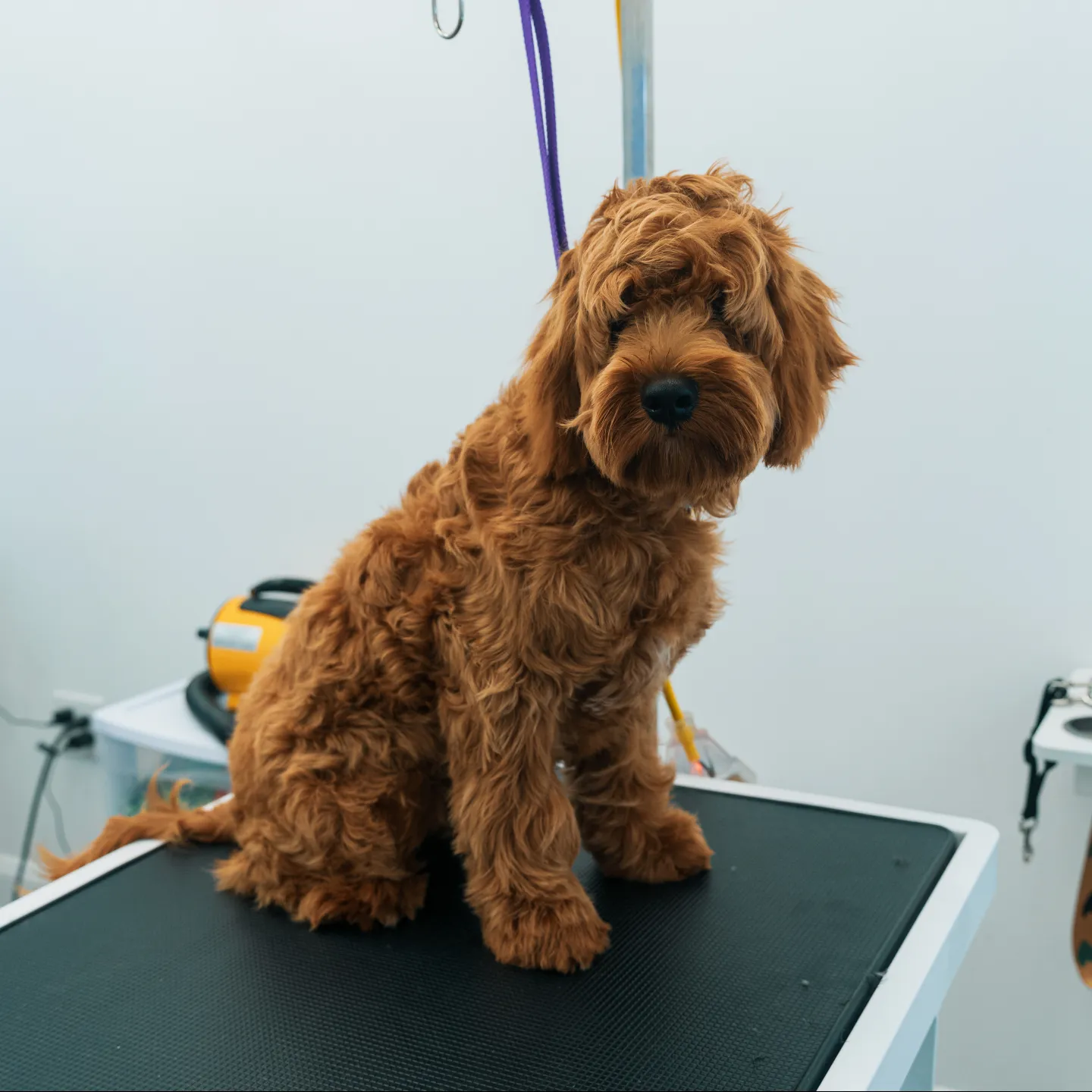
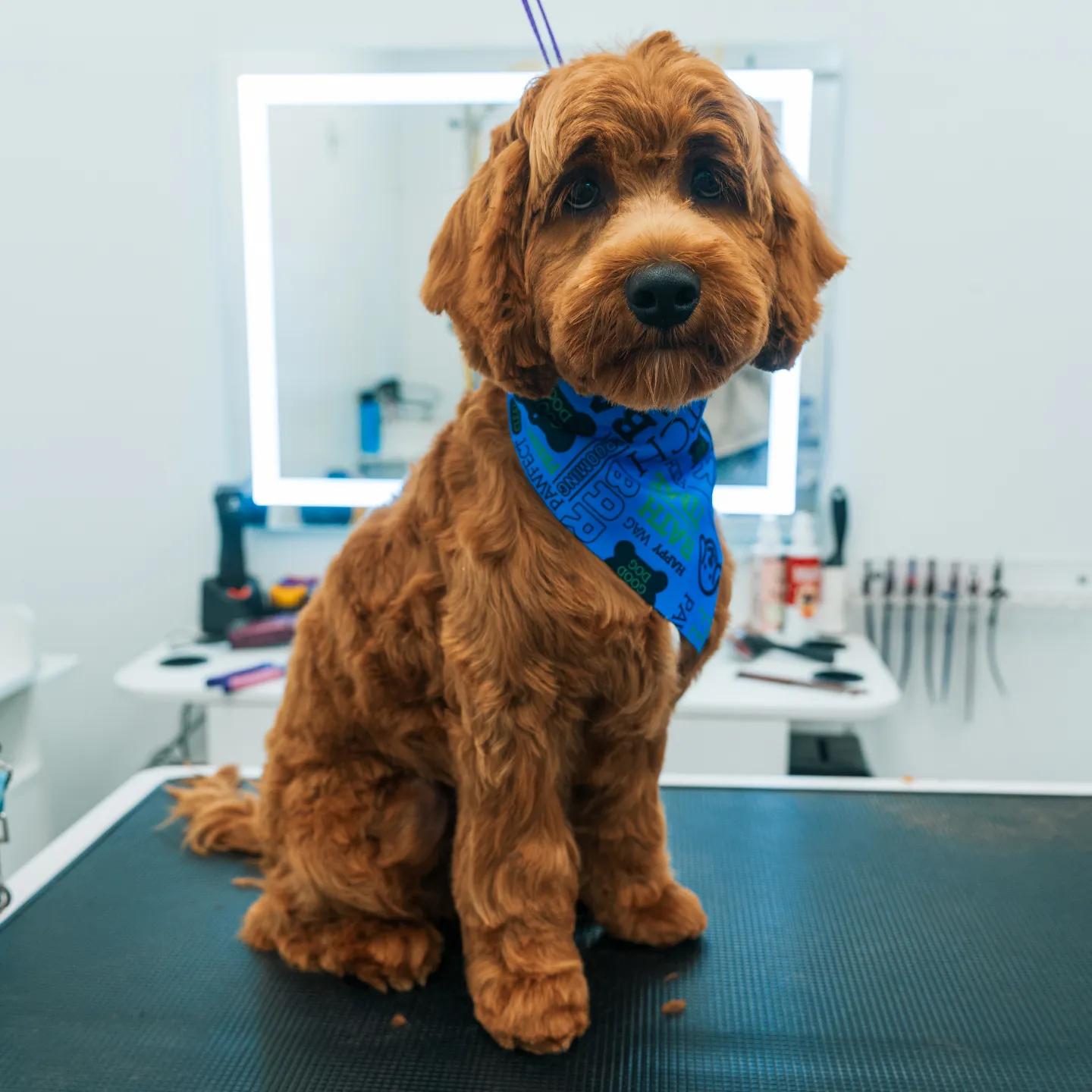
Fitting a Bath & Brush into a summer of swimming
Here is the honest version. A short-coated dog who swims in a well-maintained pool and gets rinsed properly may not need a single extra salon visit all summer. If that is your dog, keep rinsing and save the money.
The dogs that do benefit are the ones where the home rinse has stopped being enough:
- The coat still feels gritty or squeaky after a thorough rinse
- A light coat has taken on a brassy or green cast
- The comb catches at the skin rather than gliding — early matting
- The undercoat is not drying out fully between swims
Our Bath & Brush is priced by weight, running from $45 for the smallest dogs up to $125 for the largest. It is a proper wash, a full brush-out and, importantly, a high-velocity dry that gets the undercoat genuinely dry rather than surface-dry. A full groom with a haircut runs $85 to $165, also by weight. If your dog is heading into a swimming summer, a shorter, tidier summer trim is easier to rinse and much faster to dry.
One practical note for pool households: our East Northport salon is closed Sunday and Monday. If the pool gets used hardest on the weekend, a Tuesday appointment is the natural reset, and a Saturday one is the tidy-up before it. You can see the full price list and book online at lillianruffpetspa.com/grooming — no phone tag, and you pick the slot yourself.
Questions people actually ask
Is a saltwater pool better for my dog's coat?
Somewhat, but not as much as people hope. Saltwater pools still generate chlorine — that is how they sanitize. You get less of the harshness of a heavily dosed chlorine pool, but you add salt residue that also dries the coat. The rinse routine is identical either way.
My white dog has gone slightly green. Will one bath fix it?
Often yes, if you catch it early. It is usually copper deposit rather than a stain in the hair itself, and a proper wash with a good clarifying step will lift most of it. A tint that has built up over a whole season may take more than one visit to fully clear.
How often can I bathe a dog that swims most days?
Rinse daily with plain water. Shampoo far less often — for most dogs every few weeks is plenty, because every shampoo takes more oil out of an already stripped coat. If you are unsure for your specific dog, ask us when you are in.
Should I shave my double-coated dog for the summer so it dries faster?
Generally no. A double coat insulates against heat as well as cold and shields the skin from sun, and it does not always grow back the same. A thorough de-shed removes the dead undercoat that traps water without removing the protective layer. That is the better answer for a swimming dog.
Do you groom at the pool or come to the house?
No — we are a salon. You bring the dog to 16 Laurel Rd in East Northport. If a mobile service is what you need, that is a genuinely different offering and worth looking into separately.
The coat is a mess after a weekend of swimming. How soon can I get in?
The booking page shows real availability, so that is the accurate answer at any given moment — take the earliest slot that suits you. In the meantime, rinse with plain water, get the undercoat as dry as you can, and comb in small sections down to the skin rather than raking across the top. That keeps a tangled coat from tightening further before the appointment.
Reset the coat mid-season.
Pick your slot online, see the price for your dog's weight before you book, and we will get the undercoat properly dry.
See pricing & book ›16 Laurel Rd, East Northport, NY 11731 · Tue–Sat 9–5
Ready to Pamper Your Pet?
Book a grooming appointment today and give your furry friend the spa treatment they deserve.
Book an Appointment