

Pollen Season and Your Dog's Coat: What a Bath Rinses Off
Lillian Ruff Pet Spa
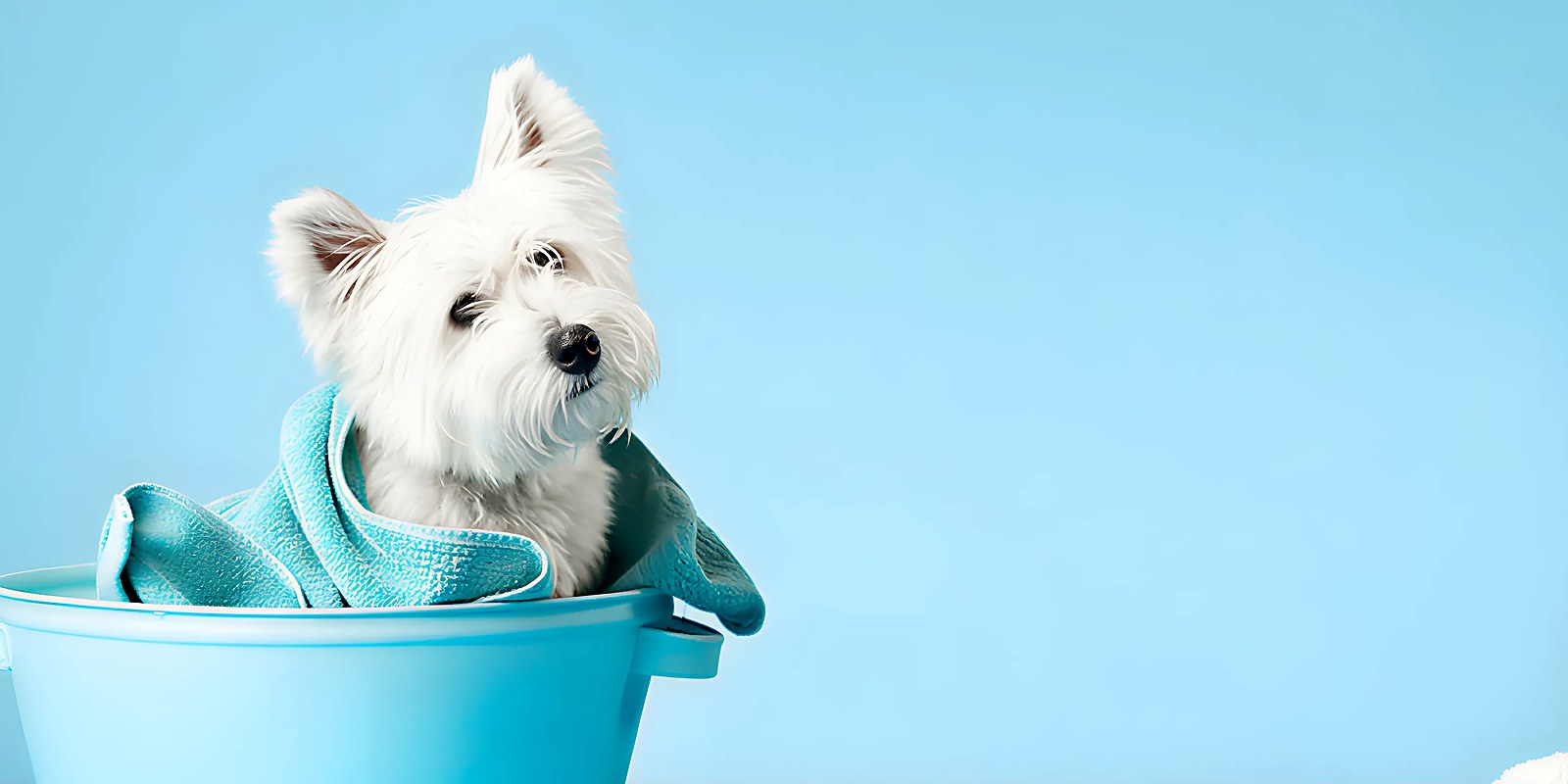
Your dog does not have to roll in anything to come home carrying half the neighborhood. A coat is very good at picking things up — pollen, road dust, grass clippings — and redistributing it onto your floor, your couch, and your dog's own skin. A bath takes a lot of that off. What it does not do is treat an allergy.
Washing and rinsing a coat removes what is sitting on the hair, including pollen. It does not change what your dog's immune system is doing with what it has already inhaled or absorbed. If your dog is genuinely itchy — chewing at the feet, red skin, ear trouble — that is a vet conversation first and a grooming conversation second.
The coat as a collector
Think about where the coat goes on a walk. The belly and the backs of the legs push through grass. The feet are on lawn and sidewalk the whole time. The face goes into everything. The back and shoulders catch whatever drifts down from the trees.
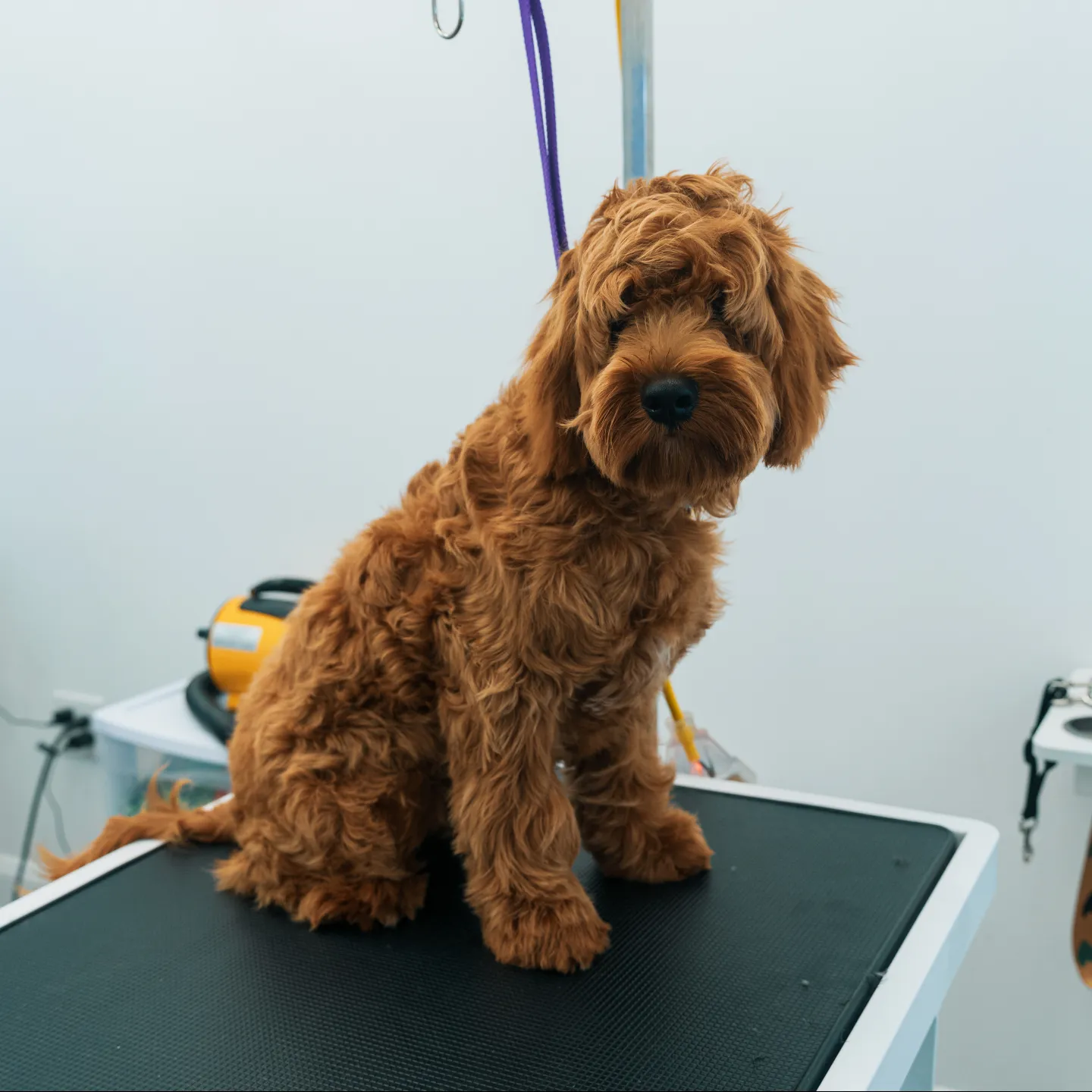
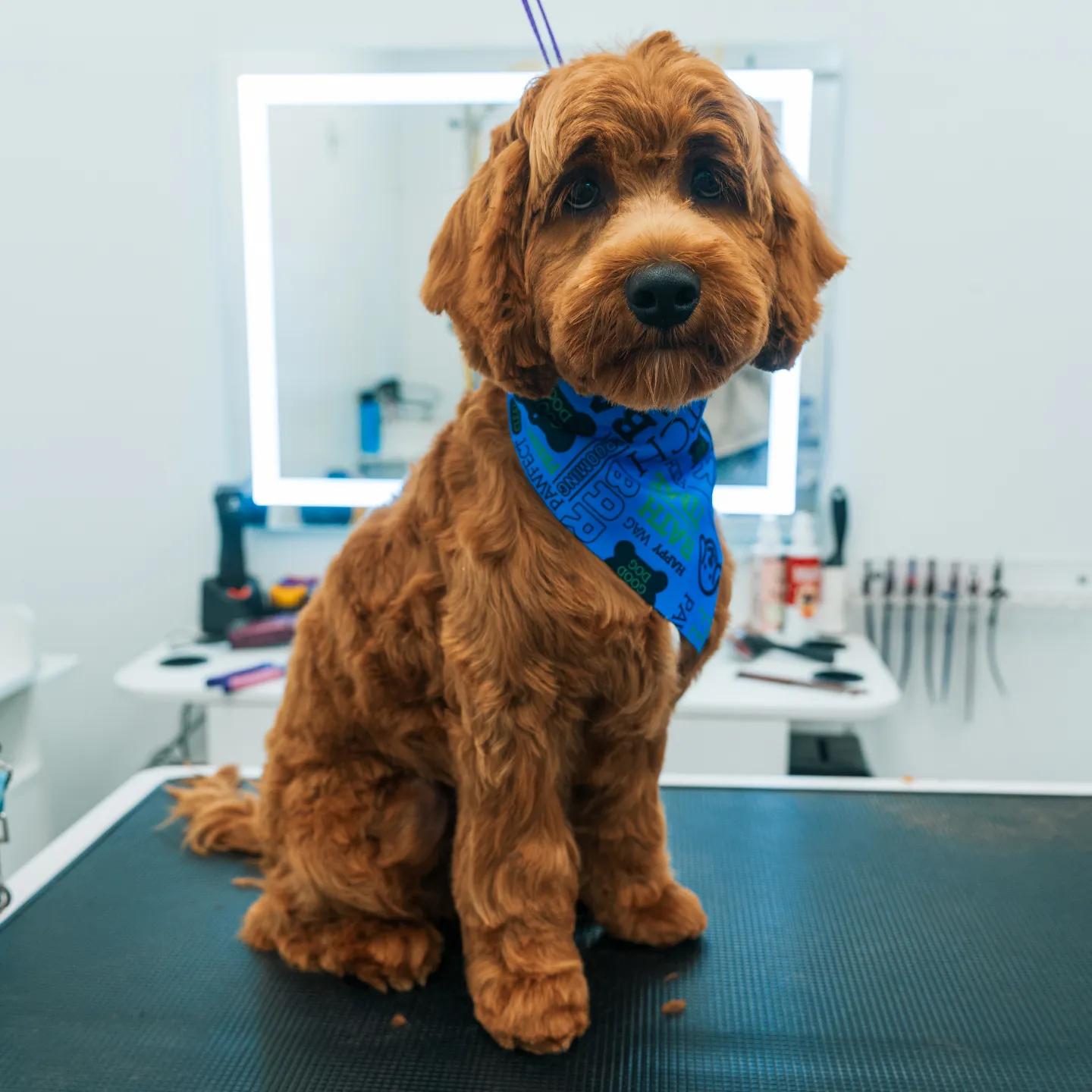
Coat type decides how much of it stays. A short, smooth coat sheds debris on its own. A curly or wavy coat — doodles especially — holds onto everything, because the hair does not release what it catches. Double coats trap it in the undercoat, where a surface rinse never reaches unless the coat is brushed out first.
Pollen does not run on a schedule you can plan around. It comes in waves through the warm months and the weeks shift year to year, so a local forecast tells you more about timing than a groomer can.
What a bath removes, and what it can't touch
A real bath and rinse will
- Lift pollen, dust and loose dirt off the hair
- Clear the feet and belly — the parts that were in the grass
- Cut how much debris transfers to bedding and furniture
- Loosen dead coat so brushing pulls it out instead of packing it against the skin
It will not
- Stop a reaction that is already underway
- Reach anything inhaled or absorbed through the skin
- Treat a skin infection, a yeast problem or an ear issue
- Replace anything your vet has prescribed
Two things matter more than which shampoo goes on. The first is the rinse. Product left in a coat is an irritant in its own right, and thick or curly coats hide it well — a coat can look clean and still be carrying product down at the skin. The second is the brush-out. A bath on a matted coat washes the outside of the mat; water gets in, does not come out, and the skin underneath stays damp for hours.
The rinse does more of the work than the shampoo does.
Wiping down between baths
You do not need to bathe a dog after every walk, and you should not — over-washing strips a coat and leaves skin drier than it started. A wipe-down takes ninety seconds and does most of the job.
Feet first
A damp cloth over the pads and between the toes. The highest-value thirty seconds you will spend, and when you would spot a burr or a tick.
Belly and inner legs
The parts that pushed through grass. Sparse coat here, so it wipes and dries fast.
Face, gently
Around the muzzle and under the eyes with a plain damp cloth. Nothing scented, nothing in the eyes.
A quick comb
Behind the ears, the armpits, the tail base. That is what stops a mat forming.
Do not leave feet damp. Trapped moisture between the toes and in the armpits causes its own problems. Towel dry properly afterward — that matters more than what you wiped with.
If your dog is itchy, talk to your vet first
This is where we stop being useful. Constant licking of the paws, red skin, hot spots, a smell off the coat or ears, hair loss in patches — none of that is a grooming problem, and none of it is something a groomer can diagnose. It could be environmental, dietary, parasitic, bacterial, or several at once.
What a groomer offers is a set of hands on your dog every few weeks and a decent memory. We notice when skin that was fine last time is angry this time, when a dog who tolerated having its feet handled now pulls away, when one ear smells different from the other. We tell you; your vet tests and treats. Getting that order right saves you money and your dog time.
If your vet has prescribed a medicated shampoo with a specific contact time, put it in your booking notes rather than assuming we will work it out on the day. Same for anywhere your dog will not be handled — usually feet and ears.
Walking around East Northport when everything is in bloom
None of this is a reason to walk your dog less. It is a reason to keep a towel by the door.
The Town of Huntington's off-leash dog run is at the Town Animal Shelter, 106 Deposit Road, East Northport 11731 — the same hamlet as our salon. It is open Monday to Friday 8am to 6pm and Saturday and Sunday 9am to 4pm. Entry requires a Town-issued permit: Huntington residency, a licensed dog, current rabies vaccination, at least four months old, two dogs maximum per visit. Permits are free, from the shelter office.
For leashed walks, the Town names several on-leash routes: the Jerome Ambro Memorial Wetlands Preserve off Seaside Court in Northport, the Woodland Trail at Dix Hills Park, the upper paved path at Sunshine Acres Park on Town Line Road in Commack, Frazer Drive Park in Greenlawn, and Phragmites Park on Fort Salonga Road in Centerport. Leashes must be six feet or shorter. Northport Village Park at the foot of Main Street allows leashed dogs on paved paths, useful on a day you would rather stay out of tall grass.
Town code also keeps dogs off all town beaches except paved areas and boardwalks. And any walk through grass is a tick check as well as a pollen problem — New York State's deer-tick surveillance runs a nymph season from May through September and an adult season from October through December, and in Suffolk County in 2025, 26.6% of nymphs and 52.8% of adults tested positive for the bacterium that causes Lyme. Check the feet, armpits and ears when you get home.
Questions people actually ask
Will a bath stop my dog's itching?
It may reduce it, because there is less irritant sitting on the skin. It will not stop it if the cause is an allergy, an infection or parasites. If the itching carries on once a clean coat has dried, it was never a dirt problem.
How often can I bathe a dog with sensitive skin?
Ask your vet, because it depends on the cause. Left to a groomer's judgment, we would rather see a regular schedule with thorough rinsing than constant washing at home. Over-bathing dries skin out.
Can I just use wipes instead of a bath?
For feet and belly between appointments, yes. They will not clear a full coat, do nothing for an undercoat, and will not undo matting. Use plain unscented ones and dry the area.
Would shaving the coat down help?
Not as a first move, and on a double coat a shave-down brings its own problems with sun exposure and regrowth. A shorter trim on a curly or wavy coat does make debris easier to manage. Tell us what you are trying to solve.
Do you groom cats?
No. Dogs only.
Should I book a groom or call the vet first?
If the skin is inflamed, broken, smelly or the dog is uncomfortable — vet first, every time. If the dog is fine and the coat is just dirty, book the groom. If you cannot tell, the vet visit is the one that rules things out.
Get the coat clean, properly.
Pick a time that suits you, add a note about anything sensitive, and we will read it before your dog walks in.
See pricing & book ›16 Laurel Rd, East Northport, NY 11731 · Tue–Sat 9–5
Ready to Pamper Your Pet?
Book a grooming appointment today and give your furry friend the spa treatment they deserve.
Book an Appointment