
Brushed Every Day and Still Matted? Line Brushing Explained
Lillian Ruff Pet Spa
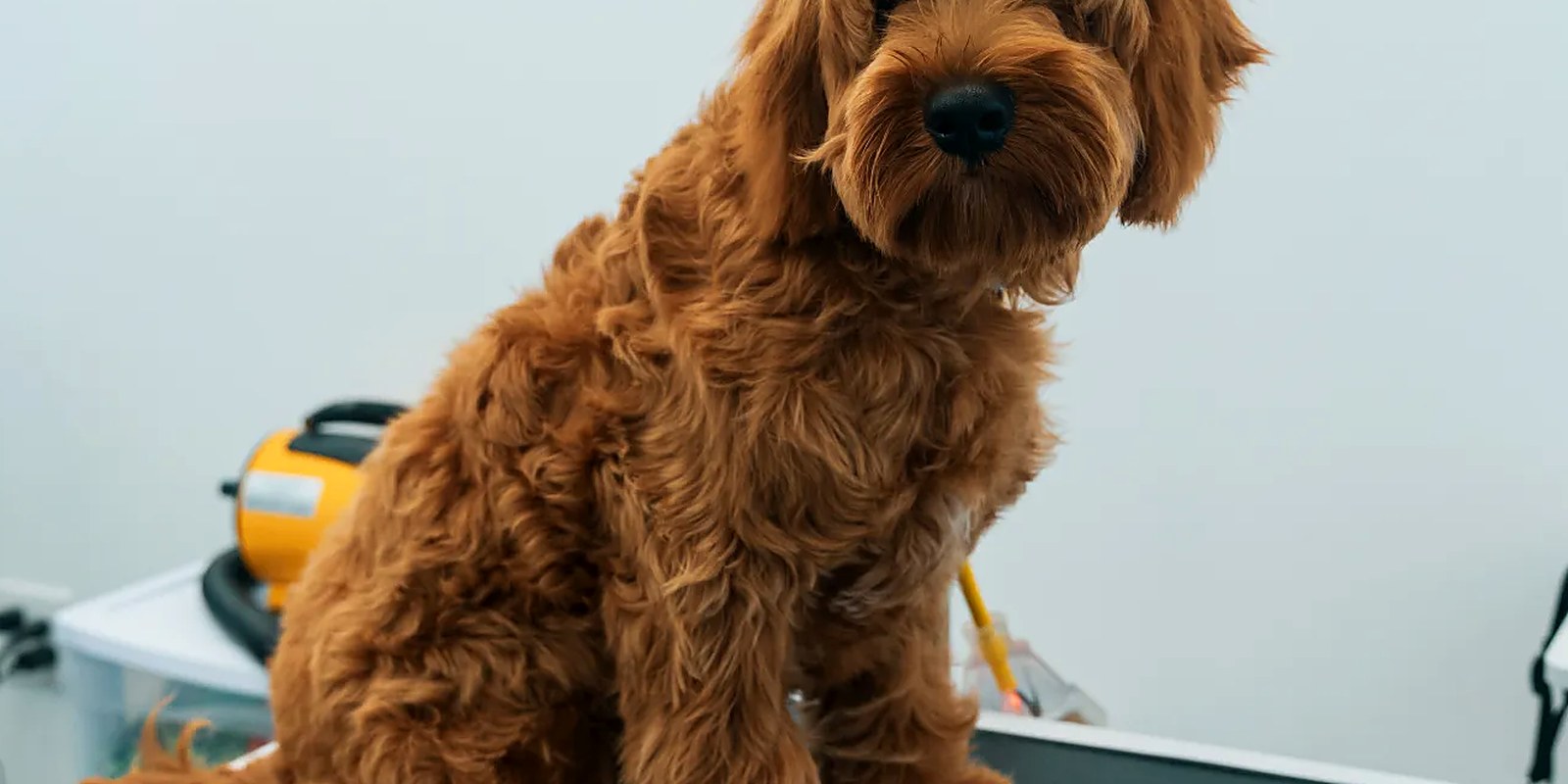
You brush him every day. The coat on top looks glossy, it moves nicely, the brush glides through without catching. Then someone runs a steel comb behind his ear and finds a mat the size of a walnut. That does not mean you have been lazy. It means the brush has been doing the top layer while the tangles quietly built up underneath it.
Most home brushing skims the outer coat. Mats form at the base, against the skin. Line brushing — parting the coat and working one thin row at a time — is the technique that reaches them, and a comb, not a brush, is the only honest way to check whether you got there.
Why the top coat can look perfect over a solid undercoat
Think of a wool rug. You can run a broom over the pile all day and it will look clean and combed. The grit sitting down at the backing never moves. A slicker brush on a curly or double coat behaves the same way: the bristles are short, the coat is deep, and the brush rides along the outer inch or so where there is no resistance.
Underneath, three things are happening at once. Dead undercoat is shedding but has nowhere to go, so it stays trapped in the live coat. The dog moves, and that motion twists the trapped hair. Moisture — rain, a puddle, a snowy yard, a wet towel dry — swells and then shrinks the fibers, which is exactly how felt is made. Poodle-type and doodle coats mat this way because the hair is curled and grips itself. Double-coated breeds mat this way because there is a whole dense layer sitting under the guard hairs.
So the coat can pass the eye test and the brush test and still be matting at the skin. It is one of the most common things groomers have to explain, and almost every owner it happens to has been brushing regularly.
What line brushing actually is
Line brushing is slow and it is not complicated. You are working the coat in horizontal rows from the skin outward, so that every row you finish is genuinely clean all the way down before you move up.
Get the dog settled and start low
Begin at the bottom — the lowest point of a leg, the belly line, the base of the neck. You are going to work upward.
Part the coat with your free hand
Push the hair up and hold it, so you can see a clean line of exposed skin. That parted line is your working row.
Brush only the hair below the part
Small strokes, brush angled so the pins go in near the skin and come out through the ends. Not long sweeping passes over the top.
Comb that row before you move
If the comb passes from skin to tip and falls out the end, the row is done. If it snags, that row is not done.
Release a little more coat and repeat
Move your parting hand up half an inch. New row. Keep going until you reach the topline, then start the next body section.
A full line brush on a medium doodle is a genuine 30 to 45 minutes at home, not five. That is the honest number, and it is the reason most coats do not actually get line brushed. A light mist of leave-in conditioner or plain water helps — brushing a bone-dry coat snaps hair and builds static, which makes the next tangle easier.
Put the brush down and pick up a comb
This is the single most useful habit to build, and it takes ninety seconds.
Use a metal comb with wide teeth on one end and fine on the other. Set the teeth flat against the skin and draw them out through the coat. It should travel the full depth and exit the ends freely. If it stops, lifts the skin, or you have to tug, there is a mat there — no matter how good the brush felt.
Test the spots below, not the back. The back is almost always fine. The back is what you have been brushing.
The friction zones that mat first
Mats do not appear randomly. They form wherever the coat is rubbed, wherever it stays damp longest, and wherever a brush is awkward to use. Which is, unhelpfully, the same list.
| Where | Why it mats | What you will feel |
|---|---|---|
| Behind and under the ears | Thin, soft hair rubbed by the ear leather every time he shakes | Comb catches within the first inch |
| Under the collar or harness | Constant pressure and friction, and it never gets brushed because the strap is on | A flat, felted band you can lift as one piece |
| Armpits and chest | Skin on skin with every stride, and most dogs dislike the leg being lifted | Dense pads that move with the leg |
| Groin and inside the back legs | Rubbing, plus the first area to get wet from grass or snow | Comb will not enter at all |
| Base of the tail and rear | Sitting, plus soiling that hardens in place | Crusted or clumped rather than tangled |
| Leg feathering and between the pads | Picks up ice, salt grit, burrs and mud, then dries around them | Small tight knots with debris in the center |
Two local habits create a lot of the mats we see. The first is the walk-then-towel routine: a coat rubbed with a towel while damp is a coat being felted, so blow it dry or at least comb it out before it dries on its own. The second is road salt and sand in the leg feathering and between the pads — rinse the legs and feet with plain warm water after a walk on treated sidewalks, then comb them dry. If your dog runs at the Town of Huntington off-leash run on Deposit Road, check the armpits and groin that same evening rather than the following week.
When a mat is already tight to the skin
There is a point where brushing out stops being the kind option. A mat that has closed against the skin has to be pulled away from that skin to be broken up, and the dog feels every second of it. Underneath a tight mat the skin is often damp, pink and thin, because air has not reached it and the mat has been tugging at it with every step.
Brushing out is reasonable when
- The comb can still get behind the mat at the skin
- It is isolated — a few spots, not a layer
- The mat lifts and moves freely
- Your dog is comfortable being handled there
Clipping is the kinder call when
- The mat is flat to the skin and will not lift
- Mats have joined into a sheet across the body
- The dog flinches, freezes or turns toward your hand
- There is any smell, moisture or heat coming off the area
A short coat grows back. An hour of dragging on sore skin is remembered a lot longer than that.
Two things worth saying plainly. A shave-down is not a failure or a punishment — it is the humane answer to a coat past the point of rescue, and it gives you a clean start. And if the skin under a removed mat looks raw, red or weepy, or smells off, that is a vet visit, not a grooming question. Groomers see skin every day and will point out what they find, but diagnosing and treating it is a veterinarian's job.
Booking the reset, then keeping it
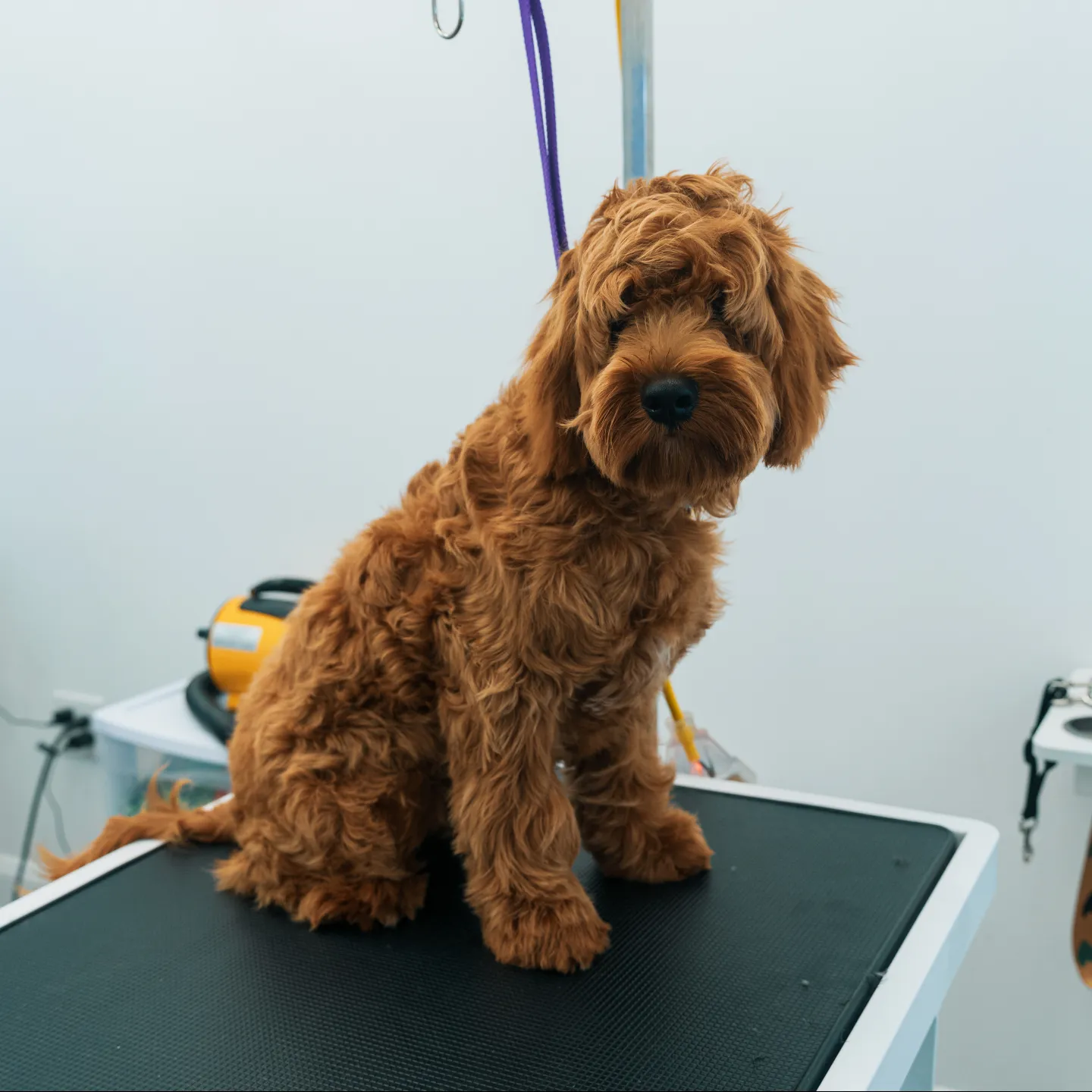
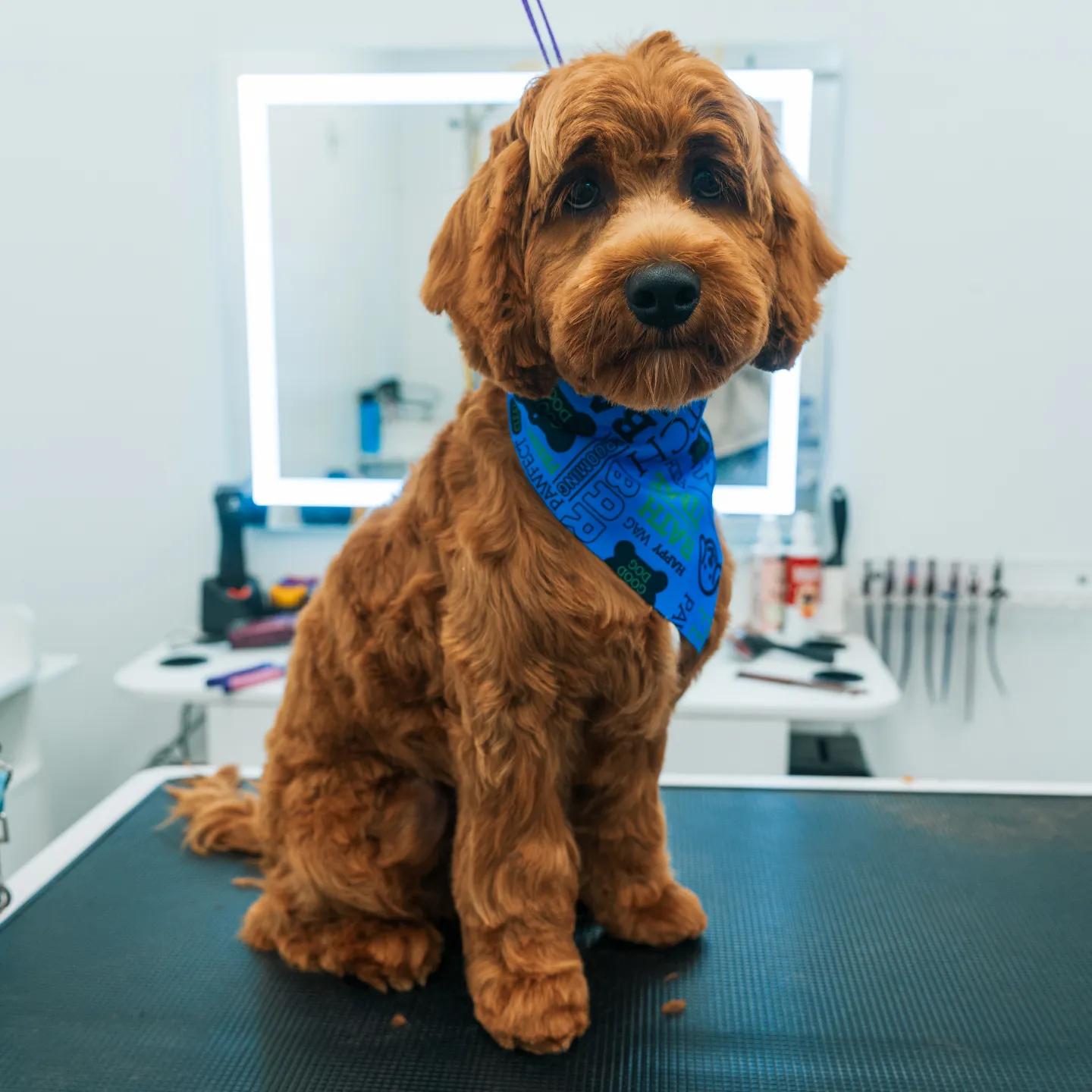
The realistic plan is not "brush harder." It is: get the coat back to zero once, then maintain a coat that is genuinely maintainable. A groom that starts from a clean, comb-through coat is faster and calmer, and it gives you the haircut you actually asked for. A groom that starts from a matted coat spends its time on removal instead.
Pricing is banded by your dog's weight, smallest to largest, and it is published on the site — you can see the number before you commit, which is not something most salons around here do. Booking is online, so you can pick a time without a phone call.
And the part people do not expect a groomer to say: if the comb passes cleanly through every spot on that friction-zone list, you do not need an appointment right now. Come at your usual interval. The comb tells you, not the calendar.
Questions people actually ask
I brush him every single day. How is he still matted?
Because daily surface brushing and line brushing are different jobs. Five minutes with a slicker over the back and sides keeps the outer coat looking good but never reaches the base. Ten focused minutes on ears, armpits, collar line and groin will prevent more matting than an hour over the topline.
What tools do I actually need?
A slicker brush and a metal comb with both wide and fine teeth. The comb is the important one — it is the only tool that tells you the truth. A dematting rake helps on loose tangles but it cuts hair, so it is easy to thin a coat badly with it.
How often should a doodle coat be line brushed?
For most curly and wavy coats kept in a longer trim, a genuine full line brush every two to three days, plus a quick comb check on the friction zones daily. Shorter trims buy you more time, which is the real reason many owners settle on a shorter length.
Can you just brush the mats out instead of clipping?
Sometimes, and we will if it is safe and the dog is comfortable. When mats are tight to the skin or have joined up, brushing them out means a long stretch of pulling on skin, so clipping is the humane option. We will show you what we found and talk it through rather than surprise you.
Will shaving ruin my dog's coat?
On single-coated and curly breeds it grows back as it was. On double-coated breeds, regrowth after a close shave can come back uneven in texture, which is why a shave-down there is a last resort rather than a routine choice — and one more reason to keep the undercoat combed out instead.
Do you groom cats, or do color and show trims?
No to all three. East Northport is dogs only, and it is grooming only at this location — no daycare or boarding here.
Start from a clean coat.
Book a bath and brush or a full groom online, see the price for your dog's weight before you confirm, and we will show you exactly where his coat needs the work.
See pricing & book ›16 Laurel Rd, East Northport, NY 11731 · Tue–Sat 9–5
Ready to Pamper Your Pet?
Book a grooming appointment today and give your furry friend the spa treatment they deserve.
Book an Appointment