
Husky Coat Care: Blow-Outs, Not Shave-Downs
Lillian Ruff Pet Spa
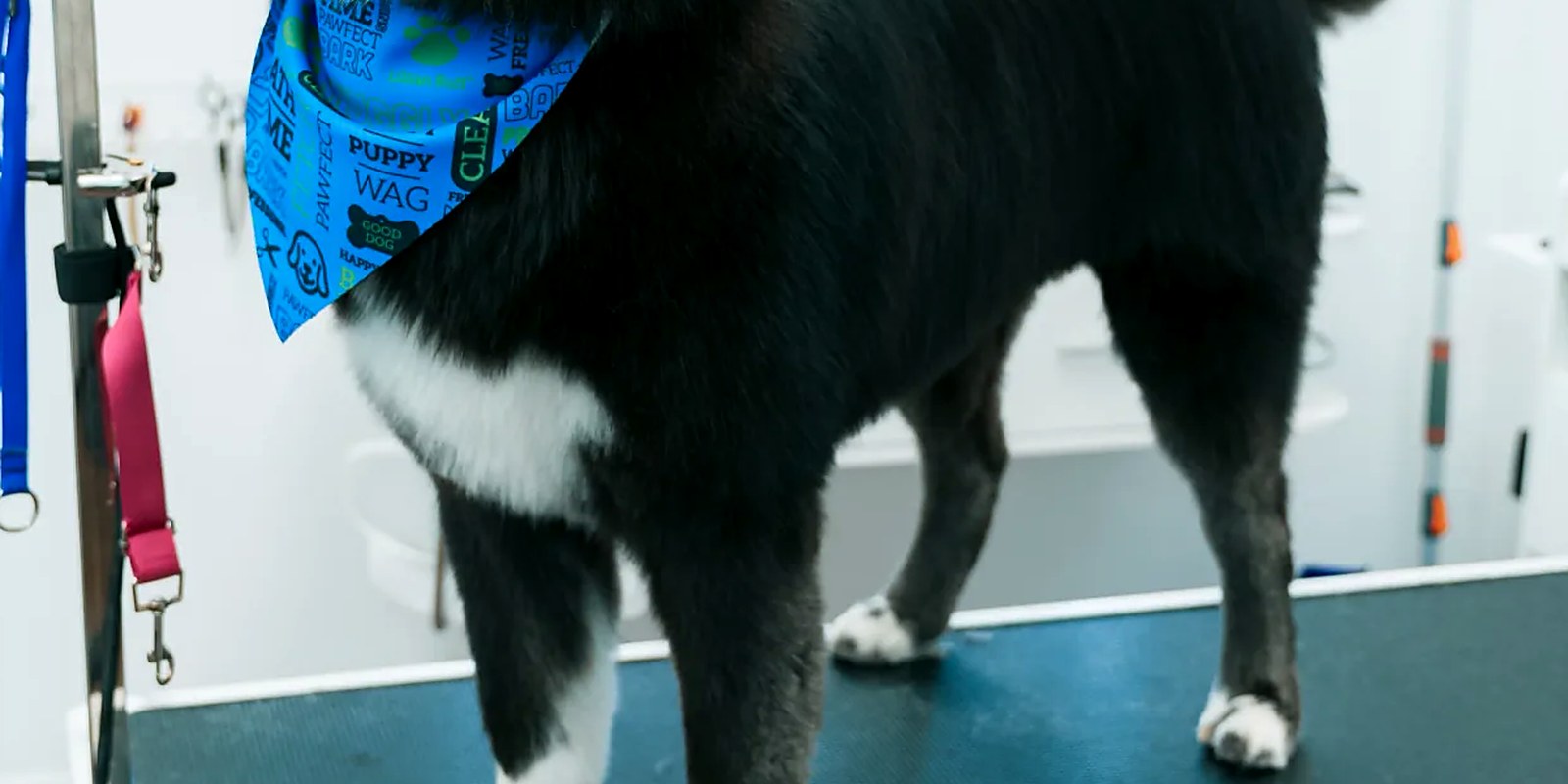
If you own a Husky, a Malamute, a German Shepherd or any other double-coated dog on Long Island, you have probably had the same thought around the first warm week of the year: he would be so much more comfortable if we just took it all off. We understand the instinct. We still won't do it, and this is the honest explanation of why, plus what we do instead.
A double coat is not a winter jacket you can take off in summer. The fix for a shedding Husky is a bath and a full high-velocity blow-out that pulls the dead undercoat out — not a clipper. It's a longer appointment than most dogs need, and it's booked ahead, not walked in.
What the undercoat is actually for
A double coat is two different hairs doing two different jobs. The outer guard coat is the coarse, longer layer — it sheds water, takes the abuse of brush and pavement, and shields the skin from sun. Underneath sits the undercoat: short, dense, woolly, packed close to the skin. It works by trapping air.
Trapped air is insulation, and insulation does not know which direction you want it to work in. The same layer that holds warmth in during a cold snap also slows heat from reaching the skin on a hot afternoon. That is why the coat is not simply a burden in July — provided it is clean and open rather than packed solid with dead hair.
And the cold half of the year here is genuinely cold. Using NOAA's 1991–2020 climate normals for Long Island MacArthur Airport in Islip, the closest official station to us, the mean daily minimum sits below freezing in December, January and February, and normal snowfall runs about 10.3 inches in January and 9.4 in February.
Why we won't shave a Husky or Malamute
This is one of the few things we will say no to outright. Not to be difficult — because the request usually doesn't get the owner what they actually want.
What a blow-out does
- Removes the dead undercoat, which is the part causing the shedding
- Opens the coat so air moves through it again
- Leaves the guard coat intact to shield skin from sun
- Gets an enormous amount of hair out of your house in one go
What a shave-down does
- Cuts guard hairs and undercoat to the same length, so the dog still sheds — now in short bristly pieces that weave into fabric
- Exposes skin that has never had direct sun on it
- Removes the layer that was slowing heat transfer at the skin
- Risks patchy, woolly or texture-changed regrowth — and on some dogs the guard coat never fully returns
That last point is the one owners are rarely warned about before the clippers come out. There is no way to look at a coat and promise it will grow back exactly as it was. Once it's off, you are waiting to find out.
Shaving a double coat doesn't stop the shedding. It just changes the length of what you're vacuuming.
Sometimes a coat has to come off for medical reasons — surgery, a wound, a skin condition, or matting so severe that brushing it out would hurt the dog. That is a veterinarian's call, not ours and not a marketing decision. If your dog has hot spots, bald patches, an odor, or skin that looks angry under the coat, see your vet before you book a groomer. We spot things and tell you; we don't diagnose.
What a proper de-shed appointment involves
The reason this works is the order of operations. Brushing a dry, dirty double coat mostly moves hair around. Water, product and forced air do the actual lifting.
Rake out first
A pass with an undercoat rake before the bath, to take off whatever is already loose and to find any mats hiding behind the ears, in the armpits, and along the britches and tail.
Bath, and then rinse longer than you think
A proper wash down to the skin, worked through the undercoat rather than sitting on top of it. Conditioner helps dead hair let go. Leftover shampoo in a dense coat is what causes itching a week later, so the rinse is the part we take our time over.
The blow-out
High-velocity drying, section by section, driving air down to the skin. This is where the volume of hair comes out — it is genuinely startling the first time you see it. It also dries the undercoat all the way through, which towel-drying at home does not.
Rake and comb through
Second rake pass on a clean, dry, open coat, then a metal comb to confirm it moves cleanly from skin to tip everywhere — including the spots dogs don't like having handled.
Tidy, not haircut
Nails, ears, pads and a sanitary trim. The body coat is left alone. No clipper work on the jacket.
On price: our published grooming rates are $45 to $125 for a bath and brush, and $85 to $165 for a full groom with a haircut, and they are scaled by the dog's weight. The thing worth knowing before you call is which service a de-shed actually is: it's a bath and brush, not a haircut. We are not clipping the jacket, so the haircut range isn't the one to look at. For the figure that applies to your own dog, the current pricing is published by weight on the grooming page, and you can book from there.
Be realistic about the clock, too. A coat in full blow takes considerably longer than a short-coated dog of the same weight, and it's an appointment we schedule in advance rather than squeeze in. Tell us on the booking that it's a double coat so the time is set aside properly.
The heavy weeks, and booking around them
Here is where we'll be straighter with you than most grooming pages: we can't hand you dates. Owners describe a couple of heavy periods a year, but it varies enormously by individual dog, by how much time it spends outdoors, and by the year. Some double coats drift all year instead of dumping.
So book off the coat, not the calendar. It's starting when:
- Hair comes away in tufts in your hand rather than in single strands
- You can see the coat lifting or separating in clumps, often on the hips and behind the shoulders
- A rake fills up in three or four strokes
- The comb stops running cleanly to the skin in the usual trouble spots
When that's happening, a bath and blow-out is worth booking promptly, because a packed undercoat is the thing that traps damp against skin and starts mats. Between blows, many double-coated dogs do perfectly well on a routine bath-and-brush every couple of months plus your own maintenance at home. We would rather tell you that than sell you a standing appointment you don't need.
One local reason to keep this coat open: ticks. A dense undercoat is an excellent hiding place, and a blow-out is the most thorough tick check your dog will get. If you use the Town of Huntington off-leash dog run at 106 Deposit Road, East Northport, or on-leash trails like the Jerome Ambro Memorial Wetlands Preserve in Northport, Frazer Drive Park in Greenlawn or the Dix Hills Park woodland trail, run your hands over the whole dog after — and remember Huntington requires a town permit, a licensed dog and current rabies for the dog run. Our East Northport salon is on Laurel Road, open Tuesday through Saturday.
| Deer tick stage | NYSDOH surveillance window | Suffolk County, 2025 |
|---|---|---|
| Nymphs | May to September | 61.04 per 1,000 m²; 26.6% carried the Lyme bacterium |
| Adults | October to December | 52.8% of those collected tested positive |
Those are New York State Department of Health surveillance figures, not ours. The practical takeaway is that there is no month of the walking season when checking a thick coat is wasted effort, and that tiny nymphs in summer are the ones you'll miss under undercoat. Tick prevention itself is a conversation for your veterinarian.
The rake and the shampoo that keep it manageable between visits
You don't need a drawer of tools. You need three, used gently and often.
Work in sections, brushing a line at a time from the skin outward rather than skimming the top. Ten minutes a few times a week beats an hour once a month, and it keeps the dog patient about being handled — which pays off on the table.
On shampoo: use something made for dogs, dilute it properly, and get it moving through the undercoat rather than lathering the surface. Then rinse past the point you think you're finished. And dry all the way down — a double coat that feels dry on the outside can still be damp at the skin, and damp at the skin is where odor and hot spots begin. If you're not sure what's right for your dog's coat, ask us at the appointment; our Ronkonkoma location also has a retail shop, so it's worth asking what's on the shelf rather than guessing online.
Questions people actually ask
Won't shaving him keep him cooler in the summer?
Not the way people expect. Cutting the coat short leaves the skin exposed and removes the layer that was slowing heat at the surface, and the dog still sheds. A clean, open, thoroughly dried coat plus shade, water and walking at the cooler ends of the day is the better plan. If your dog is struggling in heat, that's a vet conversation.
Someone already shaved my dog. What now?
Grow it out and don't repeat it. In the meantime keep him out of direct midday sun, keep the skin clean, and stay on top of brushing as the coat comes back so the new growth doesn't tangle with what's left. Regrowth can be uneven and can take a long time. If the skin itself looks irritated or bald patches aren't filling in, see your veterinarian.
How often does a Husky actually need a groomer?
Less often than a poodle mix, but more thoroughly when it happens. Plenty of owners handle normal weeks at home with a rake and comb, and come to us for the bath and full blow-out when the coat starts letting go, or on a regular bath-and-brush schedule every couple of months. We'll tell you honestly at the appointment what your dog's coat needs.
Which service do I book, and what does it cost?
Book the bath and brush — that's the service a de-shed falls under, since we're not cutting the coat. Our published bath-and-brush pricing runs $45 to $125 and is set by the dog's weight, so the grooming page will show you the figure for your dog rather than us guessing at it here. The full groom with a haircut, $85 to $165, is the other service and it isn't what a double coat needs.
Do you groom other double-coated breeds?
Yes — Malamutes, German Shepherds, Golden Retrievers, Bernese, Australian Shepherds and similar coats get the same approach. Two things we don't offer at all: hand-stripping and creative coloring. We also don't groom cats.
Can he be de-shedded while he's boarding?
Boarding is at our Ronkonkoma location, not East Northport, and every boarding stay there includes full-day daycare. Worth knowing before you plan it: Suffolk County Code § 302-13 requires a current health certificate from a licensed veterinarian for any dog boarding at a kennel — rabies, distemper, hepatitis, parainfluenza, parvovirus and coronavirus within the past year, unless an approved three-year vaccine is certified by the vet — and bordetella within the past six months. Bordetella is the one owners most often have lapsed without realizing. Confirm current requirements with your vet and with us before the stay.
How long will the appointment take?
Longer than a short-coated dog of the same size — the drying alone is most of the work. We'll give you a realistic window when you book. It isn't a walk-in or same-day service.
Book the blow-out, keep the coat.
Tell us it's a double coat when you book so we schedule the time properly, and we'll show you what comes out and what to do at home between visits.
See pricing & book ›835 Portion Rd, Ronkonkoma · open 7 days, 9–5 · also 16 Laurel Rd, East Northport · Tue–Sat, 9–5
Ready to Pamper Your Pet?
Book a grooming appointment today and give your furry friend the spa treatment they deserve.
Book an Appointment