

Grooming a Deaf or Blind Dog: How We Adapt at the Table
Lillian Ruff Pet Spa
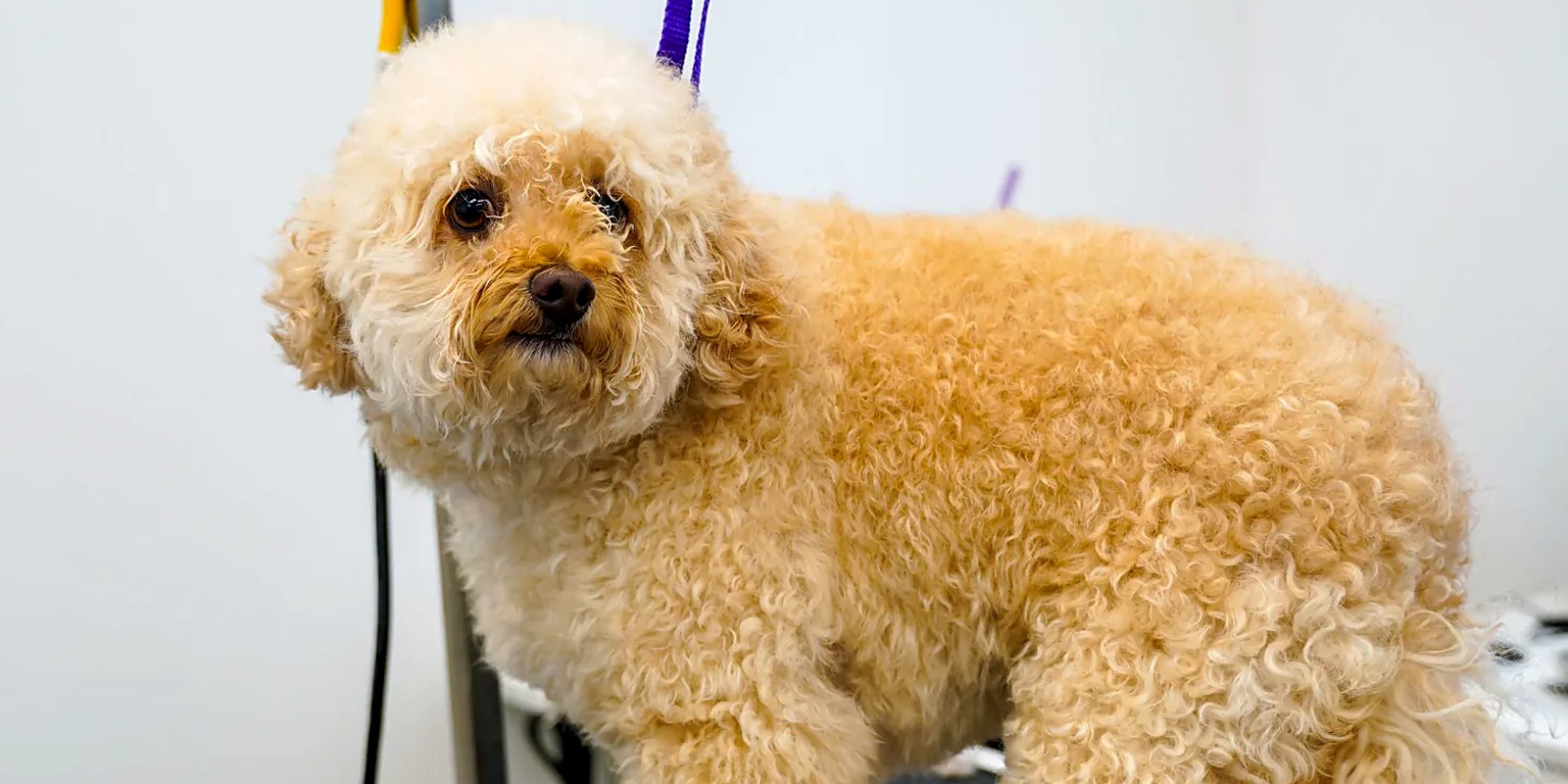
A dog who can't hear the clippers switch on, or can't see the hands coming, isn't a harder dog to groom. They're a dog running on a different set of instructions. Most of the trouble people describe at home or in a salon comes from surprise, not temperament — and surprise is the part we can design out.
Tell us at drop-off that your dog is deaf or blind, and how long it's been that way. Everything else — how we approach, the order we work in, how much we talk, when the dryer comes on — gets rebuilt around that one sentence.
Why the usual cues don't land, and what replaces them
A normal groom runs on a lot of invisible scaffolding. The dog hears the tub filling and understands what's next. They watch a hand travel toward a shoulder and brace for it a half-second before it arrives. They hear the clipper start across the room, so the buzz on the skin isn't news. None of that is training. It's just information arriving early.
Take away one channel and the dog is working on partial information. The touch still lands, but it lands out of nowhere. That's why a deaf dog can be perfectly relaxed for twenty minutes and then whip around at a hand on the hindquarters. It isn't aggression and it usually isn't fear. It's a dog who was asleep on the job and got woken by a stranger.
So we replace the missing channel with ones the dog still has.
Approaching a dog that can't see or hear you coming
The first ninety seconds sets the tone for the whole appointment. For a deaf dog, we get into their field of vision before we get into their space. For a blind dog, we do the opposite — voice first from a few feet out, and keep talking the entire way in, so the hand and the sound belong to the same person.
Arrive where they can register you
Deaf: step into the line of sight, low, from the front or the shoulder — never from behind. Blind: start talking before we're within reach.
Let the hand be seen or smelled
A flat hand offered at chest height, held still. Deaf dogs read hands the way hearing dogs read tone. Blind dogs want to smell it first.
First touch on the shoulder or chest
Not the face, not the tail end, not over the top of the head. Firm and steady beats light and quick — a tap feels like a jolt, a settled palm feels like a person.
Hold it for a second before anything else
That pause is the whole trick. It says "I'm here and I'm staying," and it costs three seconds.
If your dog is asleep when we come to collect them, we don't wake them with a hand out of nowhere. A deaf dog often feels footsteps through the floor before anything else, so we walk up rather than appear, and the first contact is a slow settled hand on the shoulder.
Clippers, dryers and vibration for a deaf dog
Here's the bit people don't think about. A hearing dog gets a warning from the clipper. It switches on, it whines for a second, and by the time it touches skin the dog has already placed it. A deaf dog's first notice is the vibration landing on their body.
So the clipper gets introduced through touch instead. We run it, rest the back of the housing against a shoulder or along the back where the dog is least sensitive, and let them feel what it is before it does anything. The head, feet, belly and sanitary areas come later, never first.
Dryers are the bigger issue, and it's rarely the noise. High-velocity air is pressure — a deaf dog feels a strong push arriving from a direction they can't identify. We start low, at a distance, on the back, with a hand kept on the dog so the source of the air and the source of the reassurance are obviously the same. Plenty of dogs do better with towels and more patience than with a dryer at all, and that's a fine outcome.
Usually works
- Letting the dog feel the clipper on a shoulder before it's used
- Working the head with the dog able to watch the hands
- A hand that never fully leaves the body
- Same order every time, so the routine itself becomes the cue
- Slower, quieter drying even if it takes longer
Usually backfires
- Clipping the head from behind where the dog can't see
- Quick taps to get attention — they read as a startle
- Full-pressure air straight onto a dog who hasn't felt it yet
- Moving the dog to a different table mid-appointment for no reason
- Assuming a dog who tolerates clippers will tolerate a grinder
That last one catches people out. A nail grinder sends vibration straight up the toe and into bone, which some deaf dogs find far more intrusive than a clipper on the coat. If you already know your dog is fine with one and not the other, that's genuinely useful to us.
Keeping a blind dog oriented through the appointment
Blind dogs are often calmer about the tools than sighted dogs are. Clippers don't look like anything. What unsettles them is losing track of where they are and who's holding them.
The fix is repetition and a running commentary. Same table, same position, and a voice that keeps going even when there's nothing interesting to say. It isn't for the groomer's benefit. It's a beacon — it tells the dog which direction the room is facing.
A blind dog doesn't need quiet. A blind dog needs a voice in the same place, saying what happens next.
Two specifics matter more than the rest. First, the dryer erases the voice, so we pause it to speak and keep firm contact while it's running. Second, being lifted is the single biggest startle in the whole appointment — more than the bath, more than the clippers. A hand under the chest, a beat of warning, then the lift. Never scooped from above without notice.
A blind dog who braces, stiffens or leans hard into the groomer is usually managing their balance, not objecting. We support the hindquarters rather than correcting the lean. And if you want to send a towel or blanket from home in the bag, do — familiar smell does real work on a table that smells of nothing they recognize.
What to tell us at drop-off so nothing surprises anyone
Five sentences at the counter changes the whole appointment. This is the list worth having ready, and it's worth repeating at every visit rather than assuming it's on file.
| Tell us | What it changes |
|---|---|
| Deaf, blind, or partial — and how long | A dog who lost sight last month behaves nothing like one who has been blind for years. Recent loss means slower everything. |
| How they prefer to be woken | Tells us where the safe first touch is, and whether waking is a flashpoint at all. |
| Any hand signals you use at home | If "sit" or "good" already has a gesture, we'll use yours instead of inventing one. |
| Where they don't like being handled | Feet, ears, tail, hind end — we plan the order around it rather than discovering it mid-groom. |
| How they are about being picked up | Decides whether the dog is lifted at all, and how we get on and off the table. |
| Anything a vet has said about standing or handling | Sensory loss often travels with stiff hips or a sore back. We work around it, but only if we know. |
If the sight or hearing loss is new, or your dog has recently started bumping into furniture, misjudging steps or ignoring you when they never used to — book a vet, not a groomer. We're happy to groom them either way, but sudden change is a veterinary question and nobody at a grooming table should be guessing at it.
We'll also tell you honestly when a full haircut isn't the right call. If the coat is in decent shape and you're booking mostly because an older dog looks scruffy, a bath and brush is shorter, easier on them and cheaper — grooming here is priced by weight, with bath and brush running $45 to $125 and a full groom with haircut $85 to $165 depending on size. For a dog who finds handling hard, less time on the table is a feature, not a compromise.
Away from the salon, a couple of local specifics are worth knowing. The Town of Huntington's off-leash dog run sits at 106 Deposit Road, right here in East Northport — free permit, but it requires Huntington residency, a licensed dog and current rabies vaccination, and it's off-leash, which many deaf and blind dogs simply don't enjoy. The town's named on-leash walking spots tend to suit them better, and town rules cap leashes at six feet. Dogs are also kept off Huntington town beaches except on paved areas and boardwalks. And if your walk runs along Larkfield Road, the hamlet's main commercial strip, a deaf dog stays on lead — the recall you'd normally rely on isn't there.
Questions people actually ask
My dog is deaf. Will you notice, or should I say something?
Say something. Deaf dogs read hands, posture and floor vibration so well that plenty of them pass for hearing through the first ten minutes of an appointment. The way we'd otherwise find out is a startle, and by then we've already spent the goodwill we needed.
Is a deaf dog more likely to bite a groomer?
Not because they're deaf. The risk is startle, not temperament, and startle is largely preventable with approach, contact and order of work. A deaf dog who's handled predictably is often one of the easier dogs on the table.
My blind dog is fourteen and hates being fussed with. Is it worth booking at all?
Often yes — but maybe not the appointment you were picturing. If the coat is in reasonable shape, a bath and brush is the shorter, gentler option: no haircut, less time standing, less handling around the face and feet. We'd rather do that well than push a fourteen-year-old through a full haircut they don't have the patience for. And if your dog is genuinely distressed on the table, we'll stop and tell you straight instead of finishing for the sake of finishing.
My deaf dog is fine with clippers but panics at the dryer. What now?
Very common, and it's usually the air pressure rather than the sound. Lower speed, more distance, starting on the back rather than the sides, and a hand kept on the dog the whole time helps. Towel drying with more time on the table is a perfectly good substitute for dogs who never make peace with it. Tell us up front and we'll plan for it.
Can you groom a dog who is both deaf and blind?
Yes. Everything moves to touch — a settled hand as the "I'm here" signal, contact that never fully breaks, and one consistent order of work so the routine itself becomes the language. It's slower, and slower is the point.
Does any of this cost extra?
No. Pricing is by weight, the same bands as any other dog: bath and brush from $45 to $125, full groom with haircut $85 to $165. What changes is how we work, not what we charge.
The East Northport salon is grooming only — no daycare, no boarding, no retail floor at this location — which for a dog with sensory loss is quietly helpful. There's no group of daycare dogs to walk past on the way in, and no boarders coming and going in the background all day. Fewer things happening at once is easier on a dog who is navigating on partial information, and it makes the predictable order of work far easier to hold to.
Book it, and tell us about your dog.
Pick a time online and add a note about the hearing or vision loss — we'll plan the appointment around it before your dog walks in.
See pricing & book ›16 Laurel Rd, East Northport, NY 11731 · Tue–Sat 9–5
Ready to Pamper Your Pet?
Book a grooming appointment today and give your furry friend the spa treatment they deserve.
Book an Appointment