
Greasy, Waxy Dog Coat: Why It Feels Dirty Days After a Bath
Lillian Ruff Pet Spa
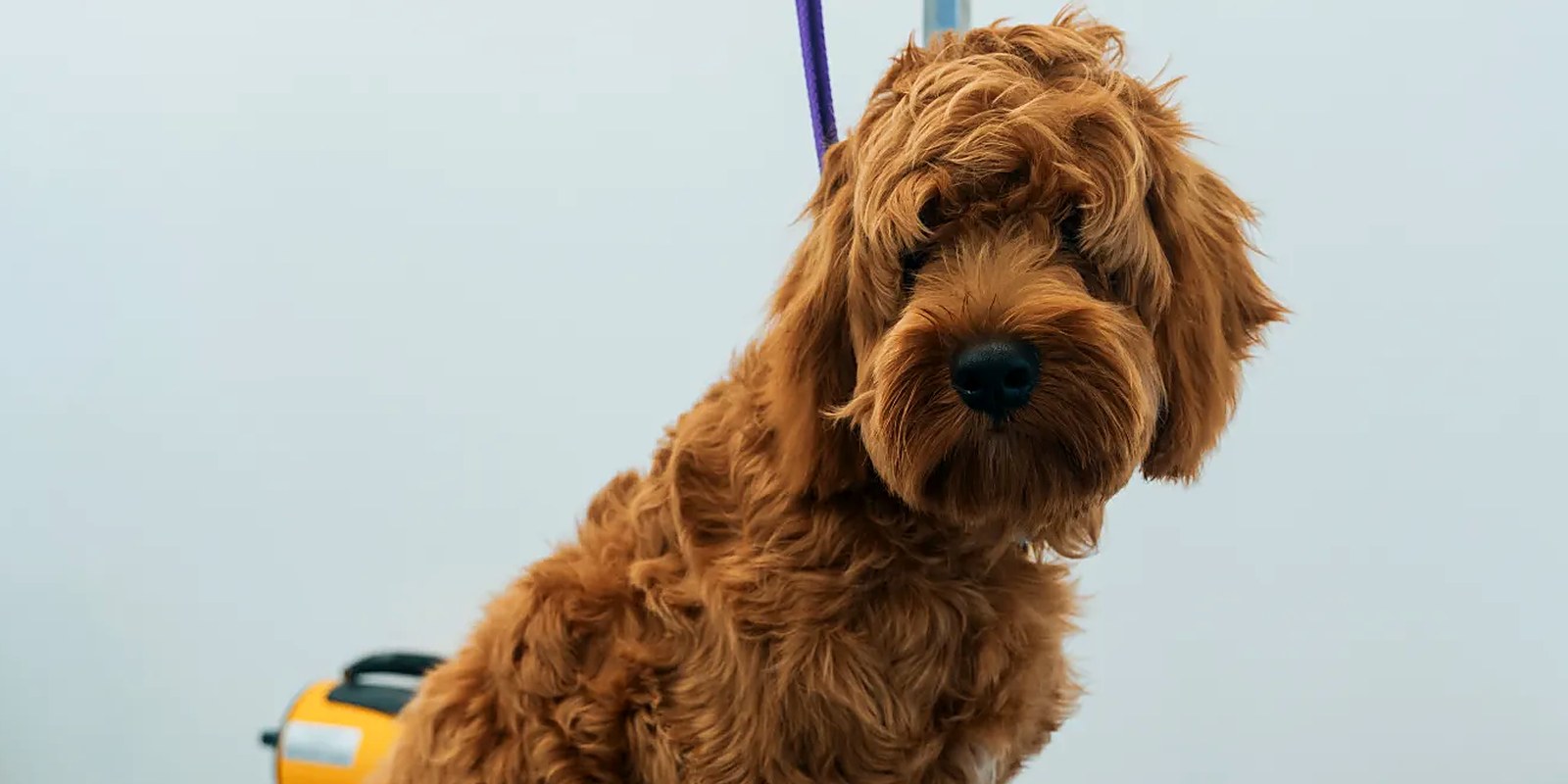
You pet your dog a few days after a bath and your hand comes away feeling slightly waxy. Not gritty, not dusty — slick. The coat lies flat at the roots, the skin under the collar feels tacky, and there is a smell that turns up on your fingers before it turns up in the room. That is a greasy coat, and it is a different problem from a dry one, with a different fix.
Greasy is an oil problem, not a dirt problem. Most cases come down to one of three things: the coat never got dried all the way down to the skin, the shampoo was too mild for the amount of oil sitting in it, or the skin itself is producing more oil than it should. The first two are grooming. The third is a conversation with your vet.
What a greasy coat feels like versus a dry, flaky one
People bring us both problems using the same words — "his coat looks terrible" — but they are opposites, and treating one like the other makes it worse. A moisturizing conditioner is exactly right for a dry coat and exactly wrong for a greasy one.
Reads as greasy
- Hair separates into little clumps or spikes rather than lying as one sheet
- Feels slick or tacky at the base, near the skin, not at the tips
- Odor returns within a day or two of a bath
- Worst along the back, the tail base, under the collar, behind the ears
- Dirt and dust stick to it instead of shaking off
Reads as dry
- Flakes lift out onto your hand or the floor when you brush
- Coat feels rough or straw-like at the ends
- Static — hair clings to your sleeve
- Little to no smell
- Brushing makes it look better immediately
You can have both at once, which confuses everyone. Waxy scale sitting on greasy skin is common on older dogs and on dogs with a long-standing skin issue. If you are unsure which you are dealing with, part the coat down to the skin and press a fingertip flat against it for a second. Grease transfers. Dry does not.
Why over-bathing and under-bathing can both end here
Skin makes oil continuously. Every coat is carrying some. The question is only whether it is being removed at roughly the rate it arrives.
Notice that two of those four are about rinsing and drying, not washing. Washing is the easy part of a bath. Getting every trace of product out of a double coat, and then drying that coat all the way to the skin, is the part that takes time and the part most home baths skip.
A coat that smells again within 48 hours of a genuinely thorough bath is telling you something a bath cannot fix.
Coats and breeds that carry more oil to start with
Some of this is not a problem at all — it is the coat doing its job. Water-resistant coats are water-resistant because they are oiled. Knowing which category your dog falls into tells you whether you are fighting biology or fixing a maintenance gap.
| Coat type | What you notice | What actually helps |
|---|---|---|
| Double coats — retrievers, shepherds, huskies | Slick topcoat, dense undercoat that traps oil and dander at skin level | Thorough undercoat removal and a forced dry to the skin; the bath alone will not reach it |
| Spaniels and hounds with heavy, pendulous ears | Ears, ear leather and the ruff go greasy and smell first | Focused work on ears and the underside; ongoing ear problems belong with the vet |
| Wiry coats kept clipped rather than stripped | Texture softens over time and starts holding oil the way it never used to | Realistic expectations — a clipped wire coat behaves differently, and needs washing more often |
| Curly and doodle coats | Oil plus product residue plus loose hair equals matting close to the skin | Shorter intervals, a full rinse, and honest brushing between visits |
| Short smooth coats with folds — bulldog types, pugs | The coat looks fine; the folds and the tail pocket are where it collects | Cleaning and drying inside the folds specifically, every single time |
When it stops being a grooming problem
Persistent greasiness with a strong smell, red or inflamed skin, skin that has gone dark and thickened, hair thinning in a pattern, constant scratching or licking, repeat ear infections, or a change in appetite, thirst, weight or energy. Any of those, and the coat is a symptom. We are groomers — we notice these things and tell you, and that is where our job ends.
We are not diagnosing anything and neither should the internet. What we can tell you honestly is what we see on the table: when the skin underneath is angry and the smell comes back almost immediately, a degreasing bath buys days, not weeks, and you will be back with the same complaint. That is not a reason to skip the bath — a clean coat is easier for a vet to examine — but it is a reason not to expect grooming to solve it. If your dog is already under veterinary care for skin, tell us what they said and what you are using at home, and we will work around it rather than across it.
What a degreasing bath can and cannot do
Look before we wash
Where the oil actually sits, whether there is matting hiding under it, and whether the skin looks like something we should be flagging to you.
Wash twice, deliberately
A first pass to lift surface oil and a second with contact time so the product can do its work rather than being rinsed off on contact.
Rinse past the point it seems done
The unglamorous step that decides the result. Water through the coat, not over it, until it runs clear and the hair squeaks rather than slides.
Dry to the skin
Forced air right down to the base, not a towel and a warm room. A coat that is dry on top and damp underneath is where the smell comes back from.
Brush out and check the trouble spots
Tail base, collar line, behind the ears, folds. If the grease is coming back to the same place every time, that is worth knowing.
The Town of Huntington's off-leash dog run is at 106 Deposit Road, in the same hamlet and the same ZIP as our salon — roughly two-thirds of an acre with waste stations, running water and a pavilion for shade or rain. It is open Monday to Friday 8am to 6pm and weekends 9am to 4pm, and it needs a free Town permit picked up at the shelter office, with a licensed dog and current rabies vaccination. Whatever your dog gets into out there, an oily coat holds on to it and a clean, properly dried one lets most of it shake out in the driveway. If yours is coming home looking grubby after every visit and staying that way, the oil is usually doing more of the work than the outing is.
What to try before you book
- Rule out residue. If the last bath was at home, one careful rinse-only wash — warm water, no product, until the coat feels clean rather than slippery — tells you a lot.
- Dry properly. Towel, then a dryer on cool or low, moving constantly, working down to the skin. Never a hot dryer held in one place.
- Brush the trouble spots daily for a week. Tail base and collar line. Loose oily hair sitting in the coat keeps reseeding the problem.
- Stop adding leave-in products and sprays until you know what the baseline is.
- If it is back within a few days, book — either us or your vet, depending on what the skin looks like.
A bath and brush is often all a greasy coat needs, and it is the cheaper end of our menu — no haircut, no upsell. Prices are published by weight so you can see the number before you commit, and you can book online rather than trading voicemails. Our East Northport salon at 16 Laurel Rd is grooming only; daycare, boarding and retail are at our Ronkonkoma location, a short drive away.
Questions people actually ask
How often should I bathe a dog with a greasy coat?
More often than a dog without one, but the honest answer depends on the coat and on whether the skin is healthy. A reasonable starting point is every three to four weeks and adjust from what you observe — if the coat is fine at week four, stretch it; if it is greasy again at week two, something else is going on and that is worth investigating rather than out-washing.
Will a stronger shampoo fix it permanently?
No. A clarifying or degreasing shampoo removes what is there. It does not change how much oil the skin produces. If the cause is maintenance, one good bath plus a sensible routine holds. If the cause is the skin, it comes straight back.
My dog smells the day after a bath. What went wrong?
In our experience it is nearly always incomplete rinsing, incomplete drying, or both — damp coat at skin level is the usual culprit. If the bath genuinely was thorough and the smell still returns immediately, that points at the skin itself, and your vet is the right next call.
Should I shave the coat off to get rid of the grease?
Usually not, and especially not on a double coat, where shaving changes how the coat regrows without addressing the oil at all. Shaving is the right answer when a coat is matted to the skin and cannot be safely brushed out — that is a separate decision, and we will tell you plainly if we get there.
Can you tell me what is wrong with my dog's skin?
No, and anyone who does over a grooming table is guessing. We will tell you exactly what we saw and where, in plain language, so you can repeat it to your vet. That is genuinely useful — and it is the limit of what a groomer should be doing.
Is a bath and brush enough, or do we need a full groom?
If the coat length is fine and the issue is only oil and smell, a bath and brush is enough. Book the full groom when the coat also needs cutting or is getting close to matted. If you book the bigger service and we think you did not need it, we will say so.
Book a bath and brush.
Pick a time online, tell us where the grease sits, and we will dry the coat properly — right down to the skin.
See pricing & book ›16 Laurel Rd, East Northport, NY 11731 · Tue–Sat 9–5
Ready to Pamper Your Pet?
Book a grooming appointment today and give your furry friend the spa treatment they deserve.
Book an Appointment