

Dog Hates Having Its Paws Handled: A Plan That Helps
Lillian Ruff Pet Spa
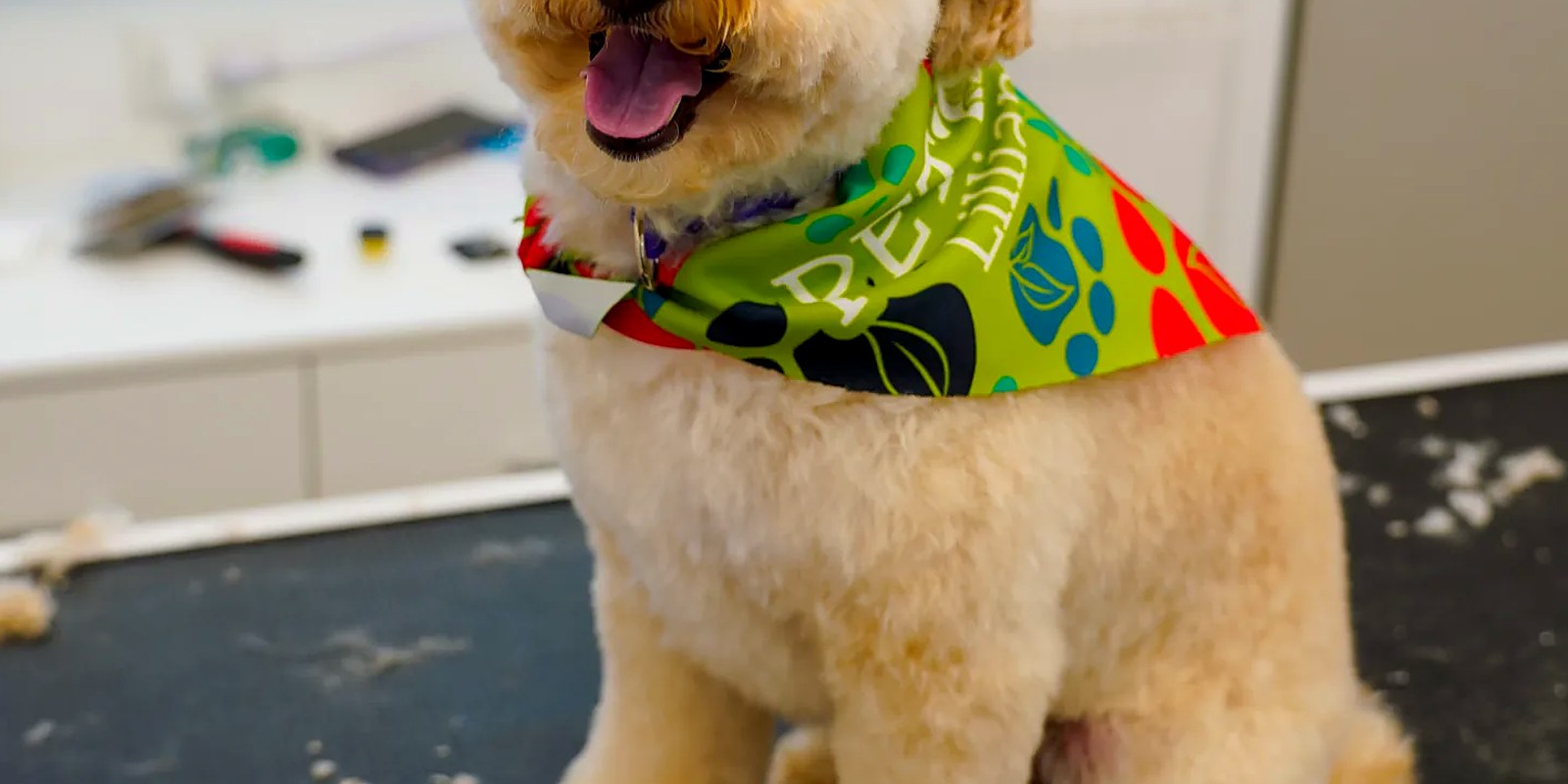
Feet are the last thing most dogs give up. A dog who lies flat for a bath, tolerates the dryer and holds still for a face trim will still snatch a paw back the moment you reach for it. That is normal, it is fixable in most cases, and in the meantime it does not have to mean skipping the appointment.
Nails still need doing while you train. Book the groom, tell us the feet are the problem, and we will work at the pace the dog gives us — even if that means one foot this visit and the rest next time.
Why feet are the most defended part of most dogs
Three things stack up at once, and it is worth understanding all three because the fix for each is different.
The first is anatomy. A dog's paw is dense with nerve endings and it is the surface they read the ground with. Restricting a foot is restricting the thing they balance and escape on. Grabbing it is, from the dog's side of the table, a genuine restriction of movement.
The second is leverage. To handle a foot you have to lift it, which means the dog is now on three legs. A dog who is not confident about being touched is now also not confident about staying upright. Half the wriggling you see is balance, not protest — and on an older dog with stiff hips or a slick floor at home, most of it is.
The third is history, and that is the one that actually matters most.
Past quicking, past restraint, or simple lack of practice
When an owner tells us their dog hates its feet touched, we are usually looking at one of three histories. Knowing which one you have changes the homework.
1. A nail was cut into the quick
The quick is the blood vessel and nerve running down the center of the nail. Cut it and the dog gets a sharp pain plus bleeding, and it takes exactly one incident to build the association. This is the most common cause we see, and it is often something that happened years ago with an owner, a vet, another salon or a previous groomer — nobody did anything malicious, the nail was just dark and the quick was further down than it looked.
The tell: the dog is fine with feet being touched in general, is fine having them dried, but escalates the moment clippers or a grinder come near.
2. Somebody held on too hard
If a dog pulled its foot away and the response was to grip harder, the dog learned that a hand on the foot is the start of a struggle it cannot win. That dog often gets pre-emptive — it reacts before the foot is even touched, at the reach.
The tell: the dog reacts to the approach rather than the contact, and it gets worse the longer a session goes rather than better.
3. Nobody ever practiced
The most common history of all, and the least dramatic. Puppies get handled everywhere for the first few months and then life gets busy, nails get done a few times a year by somebody else, and the dog simply has no filed experience of feet being neutral. This is not fear. It is novelty.
The tell: the dog is more confused than frightened. It pulls the foot back and then comes straight back for attention.
Signs you can work with at home
- Pulls the foot back, then re-engages
- Tolerates one foot but not the others
- Fine standing, difficult lying down
- Fine with you, difficult with strangers
- Better on carpet than on a slick floor
Signs to tell us about before you book
- Stiffening, freezing, whale eye at the reach
- Air-snapping or a genuine bite history
- Screaming before contact is made
- One specific foot only, and this is new
- Any reaction that has clearly worsened recently
A short daily handling routine to run at home
This works because it is short, it is boring, and you stop before the dog does. The whole thing should take under two minutes. Doing it once a day for two weeks beats doing it for twenty minutes on a Sunday.
Pick a moment when the dog is already settled
After a walk, on the couch, evening. Not when they are excited, and never as a lead-in to leaving the house. Sit beside them rather than looming over.
Touch the shoulder, then the leg, then stop
Day one may genuinely be nothing more than that. Reward with something they actually rate — cheese, chicken, not a dry biscuit. Then get up and walk away.
Work down the leg over several days
Shoulder, elbow, wrist, foot. Move one step further down only when the previous step is genuinely dull to the dog. If they pull away, you went too fast — go back a step, do not push through.
Hold the foot for one second, then release
Release before the dog withdraws it. That order matters enormously. If the dog pulls and then you let go, you have taught them pulling works. If you let go first, you have taught them the hold always ends.
Introduce the tool without using it
Clippers or grinder on the floor, dog gets a treat. Next day, in your hand. Next day, touching the nail with no cut. A grinder should be switched on nearby, then off, for several days before it ever touches a nail.
One nail. Then stop for the day.
One nail, calmly, then put the tool away while the dog is still relaxed. It feels absurdly slow and it is not. A dog who lets you do a single nail every evening is a dog who will give you a whole foot in a few weeks. The version where you hold them down and push through the lot can cost you a month of trust to win back, and you will still have to do the nails next time.
The single biggest change most owners can make: let go of the foot before the dog asks you to.
Two extra details that matter more than people expect. Do it on a non-slip surface — a bath mat or a rug — because a dog sliding on hardwood is fighting the floor, not you. And support the body. A hand or hip against the dog's shoulder so they are not balancing unaided removes a large slice of the resistance immediately.
Do not use a muzzle as a first resort at home. On a dog that is frightened rather than aggressive, a muzzle removes the warning signals without changing how the dog feels, and you can end up with a dog that goes from calm to bite with nothing in between. If you think you need one, that is a conversation to have with us or with your vet first.
What can still be done safely in the meantime
Here is the part owners usually do not know, and it is the reason we would rather you booked than waited.
A dog that hates its feet handled can still have a full, useful groom. Bathing, drying, brushing out, sanitary trim, face and body haircut — none of that requires a dog to be comfortable with sustained paw handling. Feet can be trimmed with the dog standing and weight-bearing, which many paw-shy dogs find far easier than having the leg lifted.
On nails specifically, the options in order of how much the dog has to tolerate:
| Approach | What it asks of the dog | Best for |
|---|---|---|
| Front feet only, this visit | Two feet of handling, then done | Dogs who start fine and deteriorate |
| A few nails, then stop | Under a minute of contact | Dogs with a quicking history |
| Grinder instead of clippers | Longer contact, but no pinch and no sudden pressure | Dogs frightened of the clipper specifically |
| Standing rather than lifted | Balance stays intact | Seniors, stiff dogs, big dogs |
| Split across visits | Small, repeated, always ends well | Almost every genuinely paw-shy dog |
We would rather do a few nails properly and hand you back a dog who still thinks the salon is fine than push through every last one and undo six months of your work at home. Nails that are slightly long for another three weeks are a much smaller problem than a dog who now refuses the door.
Sudden new sensitivity in one foot is a vet check, not a training problem
This is the important exception, so it gets its own section.
If a dog who has always been fine with its feet suddenly objects — and especially if it is one specific foot — that is not behavior. That is a dog telling you something hurts. Grass seeds and foreign bodies between the pads, a cracked or torn nail, an interdigital cyst, a cut pad, a burn from hot pavement in summer, arthritis in an older dog, or a nail bed infection all present as a dog who "suddenly hates having that paw touched."
We are groomers, not vets. We will tell you what we can see and feel — a swollen web, a split nail, heat in a joint, a smell that suggests infection — and we will always tell you when we find something. But diagnosis and treatment belong with your vet, and a sudden single-foot change should go to them before it goes to a training plan. There are several veterinary practices across the Huntington area; your own vet is the right first call.
Two things worth knowing locally. The Town of Huntington's off-leash dog run is at 106 Deposit Road here in East Northport, and dogs coming off any grassy area in Suffolk County should get a feet-and-legs check for ticks — nymph-stage deer ticks are active May through September per New York State's own surveillance windows, and between the toes is exactly where they are missed. Second: dogs walked mostly on Larkfield Road pavement wear their nails down naturally and often need less nail work than a dog exercised on grass and trails. If your dog is a pavement dog and its nails still click on the floor, that is worth mentioning when you book.
Questions people actually ask
How long does the home routine take to work?
For a dog with no bad history, often a week or two. For a dog with a quicking history, think in months rather than weeks — and expect progress to be uneven. The good news is you are not aiming for a dog who enjoys it. You are aiming for a dog who finds it boring.
Should I just get my dog sedated for nails?
That is a conversation for your vet, not for us, and it is a legitimate option for some dogs. But it is worth trying the desensitization route first, because sedation does not teach the dog anything — you are in the same position next time. For most dogs, staged handling gets there without it.
Will you muzzle my dog?
Only if the dog's safety or ours genuinely requires it, and never without telling you. Most paw-shy dogs are frightened rather than aggressive and are better served by going slowly. Tell us at booking what your dog does when it has had enough — that information is far more useful to us than a reassurance that they are usually fine.
Is a grinder better than clippers?
It depends on the dog. A grinder cannot pinch and takes the nail down gradually, which suits dogs who were quicked. But it makes noise, vibrates and takes longer, which suits noise-sensitive dogs less. We will use whichever your dog copes with better, and you can tell us if you already know.
My dog is fine at home but terrible here. Why?
Because at home nothing else is happening. In a salon there is noise, other dogs, unfamiliar smells and a table. A dog who has spare capacity at home may have none left by the time the feet come up. That is one more reason to tell us the feet are the issue at booking rather than at pickup — we can do them first, while the dog still has patience in the tank.
Can I bring my dog in just for nails?
Get in touch and we will talk it through. What we would not want is for you to skip a full groom you were going to book because you assumed the feet made it impossible — they usually do not.
Do you groom cats or do coloring?
No to both. East Northport is dog grooming only — no cats, no creative coloring, no show grooming. It is also grooming only as a location: daycare, boarding and retail are at the Ronkonkoma salon, a short drive away.
What to tell us when you book
Booking is online at our grooming page, and the more you tell us up front the better the visit goes. Specifically: which feet are the problem, whether it is the touch or the tool, whether anything happened that you know of, and what your dog does right before it has had enough. Nobody is going to judge you for a dog that hates its nails done. It is one of the most common things we handle.
Book the groom. Tell us about the feet.
Pick a time online, add a note about which paws are the problem, and we will work at your dog's pace — as many nails as they will give us, and no more.
See pricing & book ›16 Laurel Rd, East Northport, NY 11731 · Tue–Sat 9–5
Ready to Pamper Your Pet?
Book a grooming appointment today and give your furry friend the spa treatment they deserve.
Book an Appointment