

Do Groomers Pluck Ear Hair? Hairy Ear Canals Explained
Lillian Ruff Pet Spa
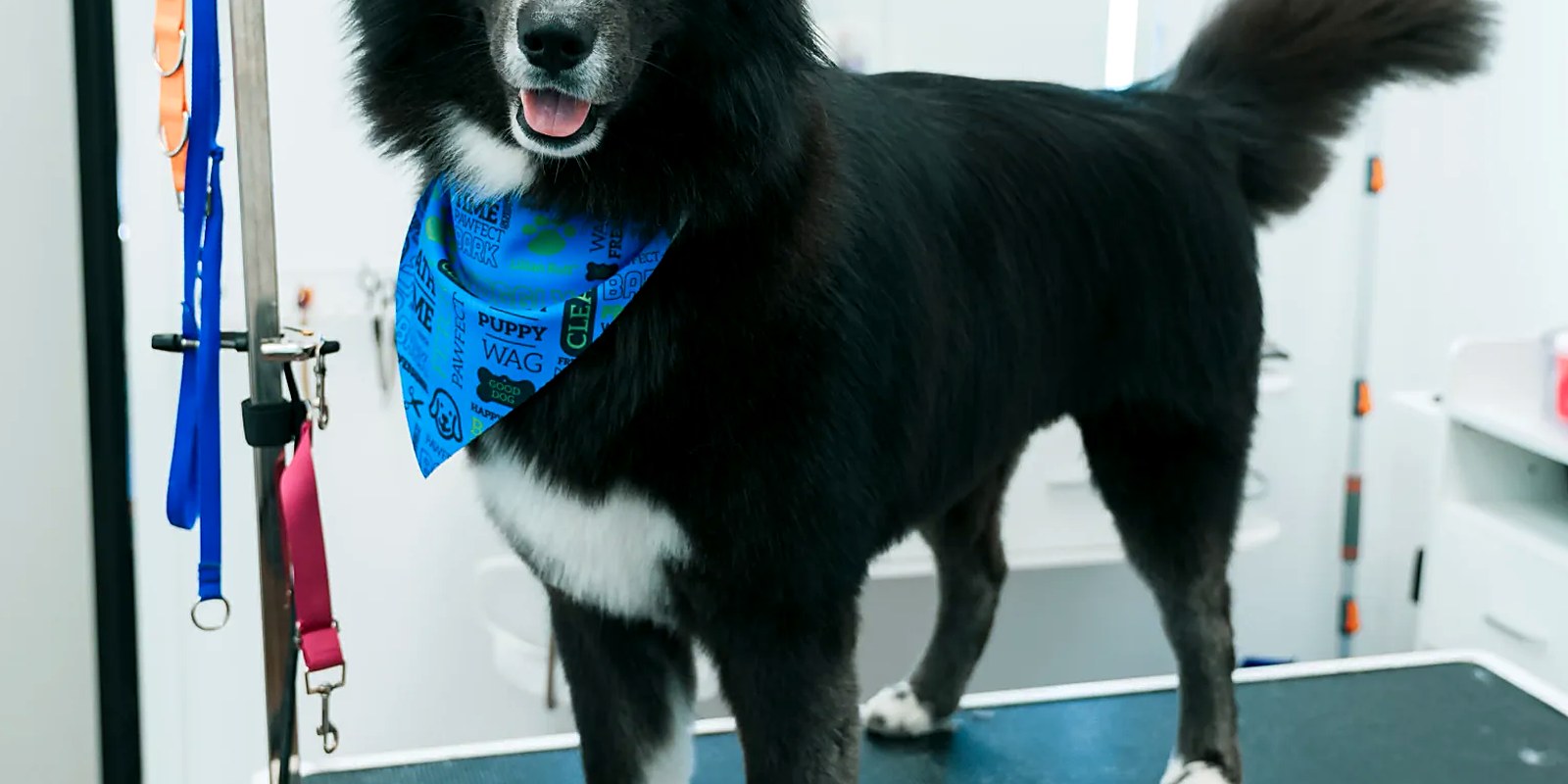
Some dogs grow hair inside the ear canal itself, not just on the outside of the flap. If yours is one of them, somebody has told you it must be pulled out — and somebody else has told you never to touch it. Both sounded certain. Here is what is actually going on, and how we handle ears at our East Northport salon.
Yes, groomers can pluck ear hair — and can also trim it, thin it, or leave it alone. It is your call, and an instruction from your own vet outranks any general rule you read online, including this page. With no instruction, our default is to leave a healthy, quiet ear alone and only clear hair that is genuinely packing the canal.
Which coats grow hair inside the canal, and why it matters
Every dog has hair on the outside of the ear. Only some coat types grow it down inside the canal, where it holds wax and slows the ear down in drying out. That is why an answer that is right for a Cocker Spaniel is irrelevant for a Lab.
Short-coated dogs — Labs, Beagles, Boxers, most pit-type mixes — normally have nothing in the canal to remove, so the debate passes them by entirely.
The plucking debate in plain terms, without picking a side for your dog
This is one of the few genuinely contested procedures in grooming. Experienced groomers and licensed vets land on opposite sides of it, and anyone telling you it is settled is overstating things.
Why some pluck
- Hair packed with wax can plug the canal opening.
- A blocked canal stays damp longer after a bath or a swim.
- Cleaner and medication reach the ear more easily when the canal is clear.
- Some vets specifically ask for it on dogs with a history of ear trouble.
Why others do not
- Pulling hair from a lined canal is an irritant, and irritated tissue can swell.
- Many dogs with hairy ears never have a problem, so there is nothing to fix.
- It is uncomfortable, and some dogs never forgive the person who did it.
- Plucking every dog by routine treats a preference as though it were medicine.
A quiet ear that has never given trouble is not a problem waiting to be solved.
Why your vet's opinion on your specific dog outranks any general rule
A groomer sees the outside of your dog. A vet can look down the canal with an otoscope, take a sample, and tell you what is actually in there. Those are different jobs, and only one of them ends in a diagnosis.
So the useful question is never "should dogs be plucked" — it is "what does my dog's vet want done with my dog's ears." Bring us an instruction and it becomes our instruction. If your vet has never raised the subject, read that as its own answer.
We do not diagnose ear infections, apply medication, or force an ear that is clearly painful. If something looks wrong we stop, finish the rest of the groom, and tell you what we saw so you can call your vet.
Trimming, thinning and cleaning as alternatives
There is a lot of middle ground between pulling every hair out and doing nothing at all.
| Approach | What it involves | Often suits |
|---|---|---|
| Leave it | Ears checked, outer flap cleaned, canal untouched. | No ear history, no visible blockage. |
| Trim and tidy | Hair at the canal opening and under the flap shortened so air moves and you can see in. | Doodles and spaniels whose ear hair mats into the coat. |
| Thin, do not clear | Only the loose, wax-laden hair taken, the rest left in place. | Canals that pack up on dogs who dislike a full pluck. |
| Pluck | Canal hair removed, usually with powder and fingers or forceps. | Dogs whose vet has asked for it, or owners continuing what has always been done. |
Home cleaning sits alongside all of these: a vet-recommended cleaner, a cotton ball on your finger, outer ear only. No swabs down the canal, and no daily flushing unless your vet asked for it. Drying the ear after a bath or a rainy walk costs ten seconds and does more good than most products.
Signs of an ear problem that mean a vet visit before any grooming
Grooming is not the answer to a sore ear. If you are seeing any of the following, book the vet first and the groom afterwards.
- A smell coming off the ear — yeasty, sour, or plain bad.
- Discharge of any color, or a dark, coffee-ground looking build-up.
- Redness, swelling, or heat inside the flap.
- Persistent head shaking, tilting, or scratching at one side.
- Flinching, yelping, or pulling away when you touch the ear.
- A soft, puffy flap that feels like a cushion.
None of that is a groomer's call to make. Our job is to notice it and hand it to the person qualified to name it.
You are also allowed to skip the groom entirely for a while. A dog on ear medication is usually better off left alone until the course is finished.
Most ear moisture around here does not come from the ocean — Town of Huntington code keeps dogs off town beaches apart from paved areas and boardwalks. Locally it is the bath, the rain, the yard pool and a hot walk that leave an ear damp. If your dog comes home wet from the town dog run on Deposit Road, dry the ears before you dry anything else.
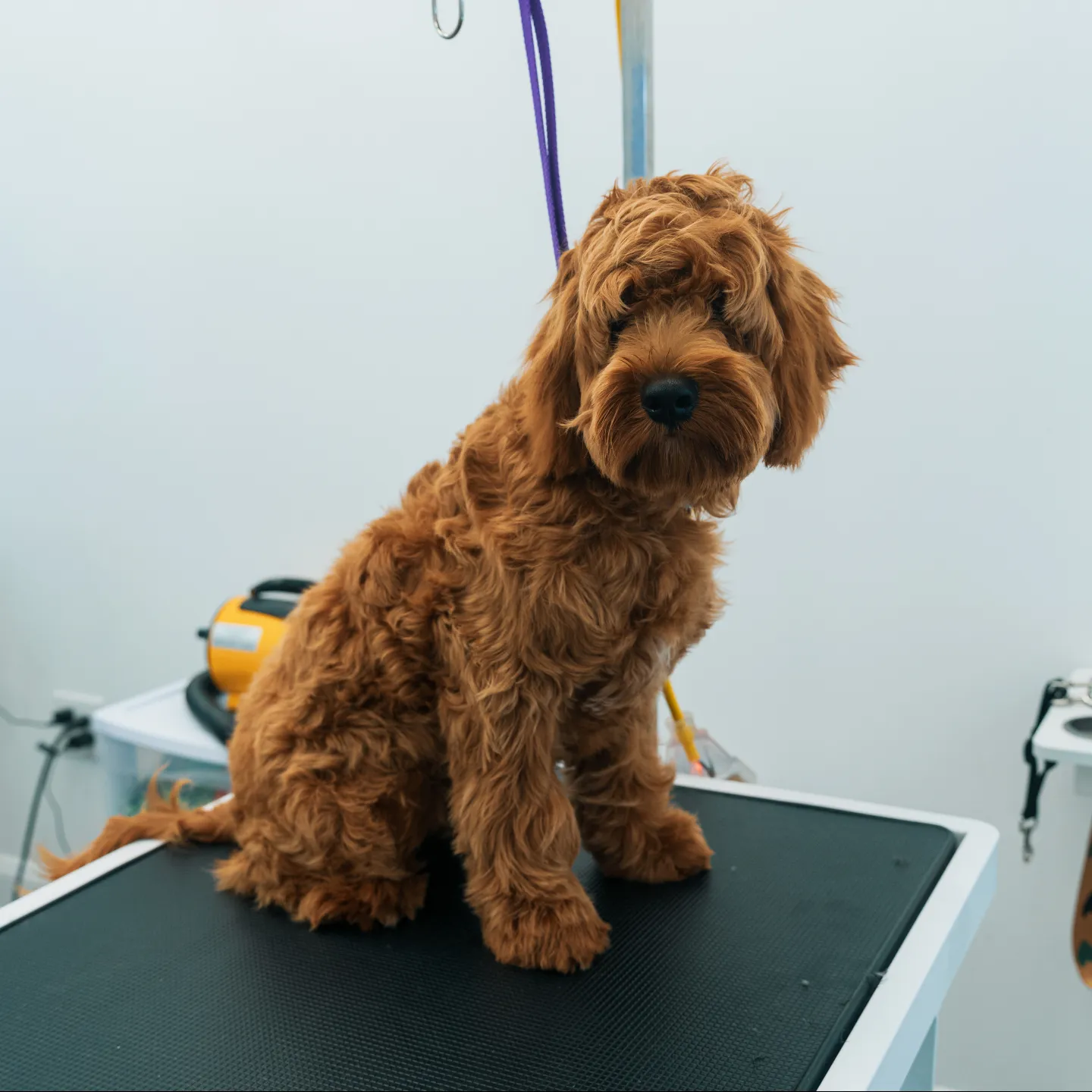
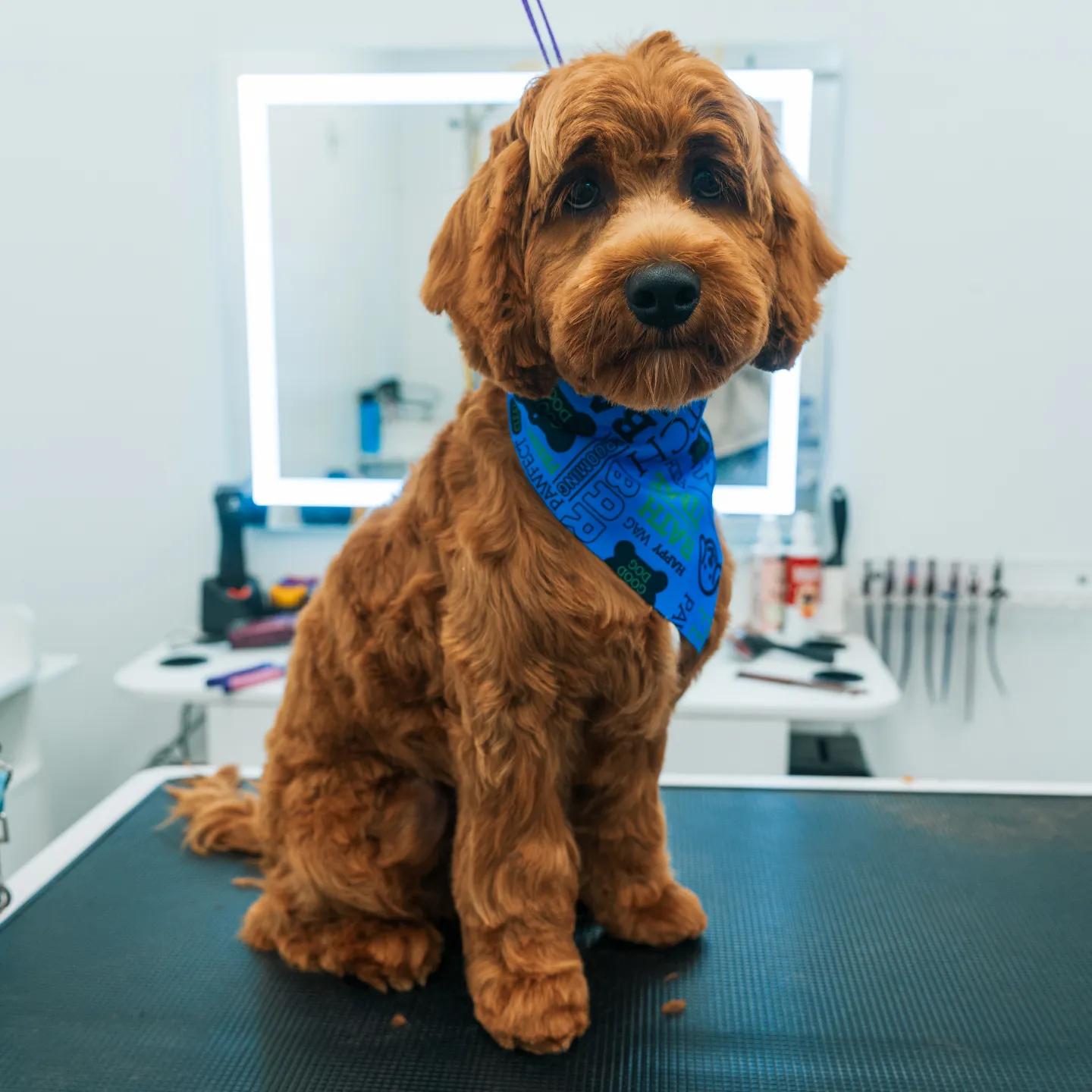
What to tell us you do and don't want done with your dog's ears
Ears are the part of a groom owners most often assume went without saying — in both directions. Say it at drop-off and there is nothing to be annoyed about later.
Say what has always been done
"Her old groomer plucked" and "nobody has ever touched them" both tell us something useful.
Pass on anything your vet said
A standing instruction or a recent infection: we want it before we start, not after.
Name your limit
"Trim only," "clean but do not pluck," or "leave the ears alone" are all reasonable answers.
Ask what we found
At pickup we will tell you how the ears looked. That is often the first sign an owner gets that something is changing.
Questions people actually ask
Does plucking hurt?
It depends on the dog, the amount of hair, and how it is done. Some dogs sit through it without reacting. Others clearly hate it, and once a dog decides ears are off limits, that opinion is hard to change. We watch the dog, not the clock.
My vet says pluck and a groomer told me never to. Who do I follow?
Your vet, for your dog. They have looked inside the canal and they know the history. A groomer's general policy is a starting position for dogs whose owners have no instruction, not a second opinion on a dog the groomer has never examined.
Can you clean the ears if my dog already has an infection?
No. An inflamed ear needs a vet, not a cleaner and not a bath. Get it looked at, then book the groom for once it has settled. We would rather move an appointment than work around a sore ear.
Should I be cleaning ears at home between grooms?
If your vet recommended a cleaner and a schedule, follow that. Otherwise, wiping the outer ear and drying it after baths and wet walks is usually enough. Over-cleaning a healthy ear can irritate it as easily as neglecting it.
My dog panics when anyone touches his ears. What then?
We work with what the dog gives us — sometimes that is a quick look, a wipe of the outer flap, and nothing more on the first visit. Ear handling gets easier over repeat appointments with the same routine.
If you are weighing up salons in the hamlet — and there are several on and around Laurel Road — the question worth asking is not whether they pluck, but whether they will follow your instruction and tell you what they saw. More about the East Northport salon here.
Book the groom, tell us about the ears.
Pick a time online, add a note about what you want done, and we will confirm it with you at drop-off.
See pricing & book ›16 Laurel Rd, East Northport, NY 11731 · Tue–Sat 9–5
Ready to Pamper Your Pet?
Book a grooming appointment today and give your furry friend the spa treatment they deserve.
Book an Appointment