
Corgi Shedding: Why Your Floors Look Like That
Lillian Ruff Pet Spa
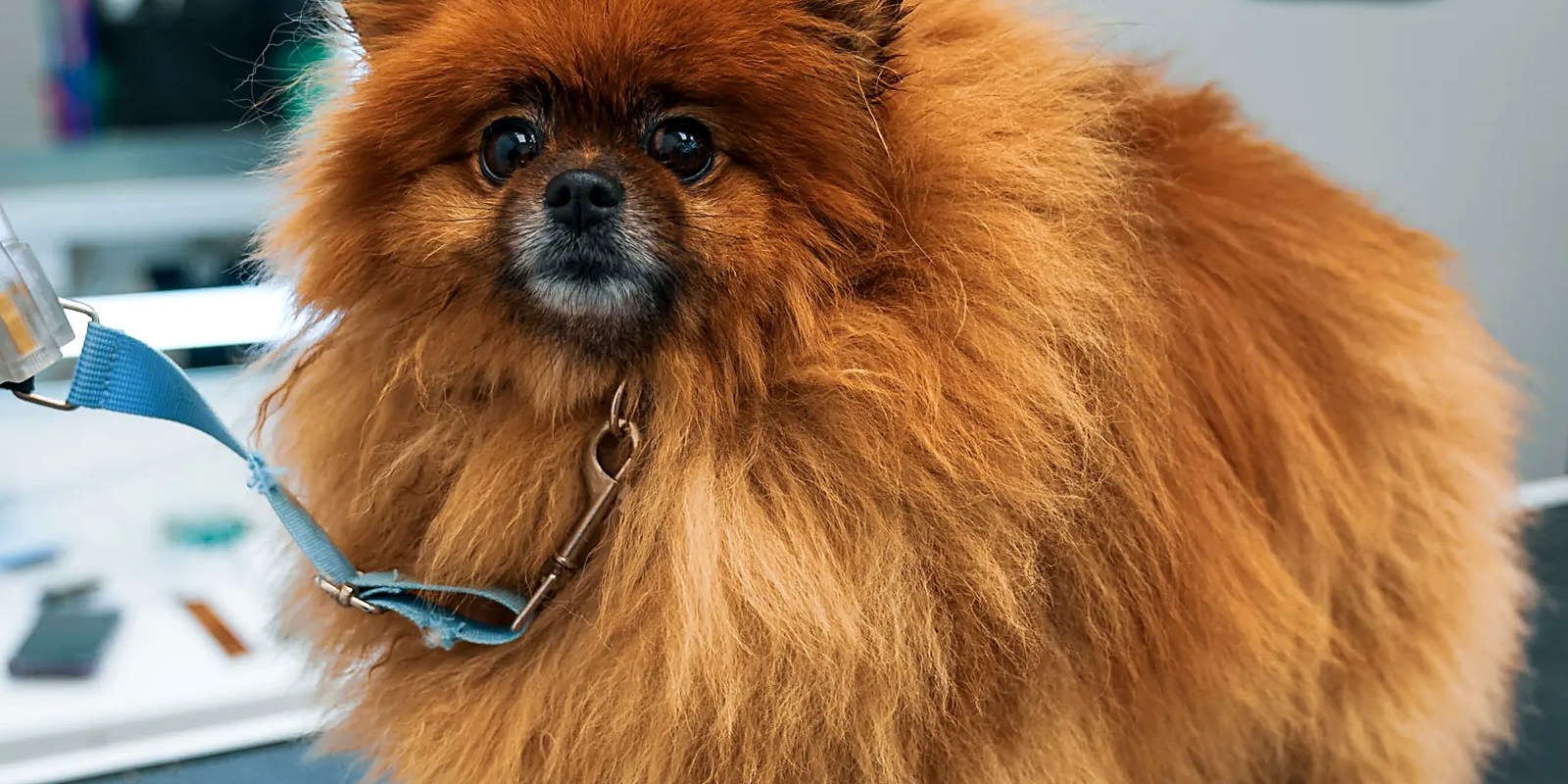
A Corgi is a short dog wearing a long-haired dog's coat. What you see on top is the guard hair. Underneath it is a dense wool undercoat, and that undercoat is what ends up on your floor, your couch, your car seat and the back of your black pants.
Corgis are double-coated. The fix is not a haircut — it is getting the dead undercoat out of the coat, in a bath and brush, before it works its way out on its own all over your house.
Most Corgi owners never book a groomer, and the reasoning is fair enough: the dog has no haircut to maintain. Nothing gets scissored, nothing grows into the eyes, there is no doodle matting to stay ahead of. So the dog goes years without a professional appointment while the vacuum runs twice a week.
That is the wrong test. Haircut dogs need a groomer because of length. Double-coated dogs need one because of volume.
The double coat hiding under a short dog
Run your fingers backward through a Corgi's hindquarters and you will feel two different textures. The outer layer is coarse, straight and weather-resistant. Under it sits a soft, dense layer packed close to the skin — that is the part that insulates, and the part that releases.
When it releases, it does not simply fall out. It works loose and then gets trapped in the standing guard hair, where it sits as a soft felt layer against the skin. That is why a Corgi can look perfectly fine on top and still shed constantly: the coat is holding a reservoir of dead hair that leaves a little at a time, every time the dog moves.
Two places it packs in worst: the britches at the back of the thighs and the ruff around the neck and shoulders. If you only ever brush the back, you are brushing the one area that needed it least.
What a de-shedding appointment actually removes
A bath and brush on a Corgi is not a cosmetic service. It is a mechanical one, and the sequence matters more than any single tool.
A real wash, down to skin
Shampoo has to get through the outer coat and reach the skin. On a packed double coat that takes work and rinsing takes longer than people expect. Loosening the undercoat starts here.
The dry, which is where most of it happens
Moving air pushes loose undercoat up and out of the coat while it dries. This is the stage a home bath and a towel cannot replicate, and it is why a dog can shed more for a day after a bath at home and less after a bath at a salon.
Line brushing the dry coat
Working in sections, lifting the coat and brushing from the skin outward. Slow, unglamorous, and the difference between a tidy dog and a genuinely emptied one.
Nails, ears, feet, sanitary
The small maintenance that gets skipped for years on dogs who "don't need grooming." Corgi feet in particular grow a lot of hair between the pads.
Owners are usually surprised by the pile. That is the point of the appointment — you are choosing to have that hair come out in one place instead of over the following six weeks in yours.
The heavy weeks, and why nobody can put a date on them
Corgi coats do not shed evenly through the year. There are stretches where the dog drops far more than usual, and stretches where a weekly brush keeps up fine. Owners generally describe two heavier periods, loosely tied to the turn of the seasons.
We are not going to hand you a calendar for it, because the honest answer is that it varies by dog. An indoor dog under artificial light, a spayed or neutered dog, an older dog and a young dog can all run on different schedules. Some Corgis blow coat dramatically over a couple of weeks. Others trickle year-round and never have an obvious peak at all.
Watch the dog, not the calendar. When the brush starts filling up in one pass instead of five, that is your signal.
The practical version: when you notice the change, book then. A bath and brush at the front of a heavy stretch removes coat that was going to come out anyway, and it shortens the mess considerably. Booked afterward, you are cleaning up rather than getting ahead.
Brushes that reach the undercoat, and ones that don't
Most people brushing a Corgi at home are using a tool that only ever touches the top layer. It feels productive, the dog enjoys it, and the undercoat stays exactly where it was.
Reaches the undercoat
- An undercoat rake — long, widely spaced teeth that sink through the guard hair
- A slicker brush, used in sections with the coat lifted, not swept across the surface
- A metal comb, last, to check your work — if it snags, you are not finished
Feels good, moves nothing
- Soft bristle brushes — they polish guard hair and nothing else
- Rubber curry mitts — fine on a smooth-coated dog, too shallow here
- Any brush used only along the spine, at the one spot the dog leans into
Bladed de-shedding tools cut guard hair when they are leaned on, and a shave-down does not stop shedding — it just makes the shed hair shorter and takes the coat's insulation and sun protection with it. Corgis should not be clipped short. If a coat is so matted that brushing is not realistic, that is a conversation to have with the groomer before the appointment, not a reason to reach for clippers at home.
If you are not sure what to buy, the cheapest way to find out is to ask at your appointment. A groomer who has just spent an hour working through your specific dog's coat can tell you what got through it and where it fought back — whether the britches needed a rake and the rest did not, whether the coat is fine and dense enough that a slicker did most of the job. That is a better starting point than a product review written about a Husky.
Whatever you end up using, the metal comb is the test. Pick a spot on the hindquarters, part the coat, and run the comb from the skin outward. If it travels the full length without dragging, the tool you used is reaching. If it stops halfway, it is not, and no amount of brushing the surface will change that.
Where a Corgi lands in the price list
Grooming is priced by the dog's weight, and both Pembroke and Cardigan Corgis sit comfortably in the middle of the range rather than at either end. Rather than guess a figure here, the current published ranges are these:
| Service | Published range | Right for a Corgi? |
|---|---|---|
| Bath & brush | $45 – $125 by weight | Yes — this is the Corgi appointment |
| Full groom with haircut | $85 – $165 by weight | Usually unnecessary. There is no haircut to cut |
That second row is the one worth reading twice. Plenty of double-coated dogs get booked into the more expensive service out of habit. For a Corgi, the bath and brush is the service that does the work, and it is the cheaper of the two. Ask for the exact price for your dog's weight when you book.
Two things we do not offer, so you are not left wondering: hand-stripping and creative coloring. Neither has any business near a Corgi anyway.
If you are on the Huntington side, the East Northport salon at 16 Laurel Rd is grooming only, Tuesday through Saturday, 9 to 5. Ronkonkoma, at 835 Portion Rd, is open seven days and also runs daycare, boarding and a retail shop. Both book through the same page.
One local reason to keep the coat clear
A packed undercoat makes a tick check nearly impossible. On a Corgi, the britches and the ruff — the two areas that hold the most dead coat — are also the areas where you are least likely to feel a small attached tick through the hair.
New York State's own deer tick surveillance is structured around two windows: nymphs from May to September, adults from October to December. In Suffolk County in 2025, nymph density was recorded at 61.04 ticks per 1,000 square meters, with 26.6% carrying the bacterium that causes Lyme disease; of the adults collected that October through December, 52.8% tested positive. Suffolk is not the highest-density county in the state, but those are not small numbers for a dog who walks anywhere with grass.
Groomers are not veterinarians and cannot diagnose anything. What a shed-out coat does is make it possible for you to run your hands over your dog and actually feel skin. If you find an attached tick, or a lump, hot spot or patch of irritation, that is a call to your vet.
Questions people actually ask
Will grooming stop my Corgi from shedding?
No. Nothing stops a double-coated dog from shedding, and anyone promising otherwise is selling something. What a de-shedding bath does is relocate the shed — a large share of it comes out on the table instead of in your home over the following weeks.
Should I shave my Corgi for summer?
No. The double coat insulates against heat as well as cold and shields the skin from sun. Clipping it short can change how it grows back and offers no proven cooling benefit. A clean, thoroughly brushed-out coat with the dead undercoat removed is the version of the dog that handles a hot day best.
How often should a Corgi come in?
Every six to ten weeks is a reasonable rhythm for most, tightening up during a heavy shedding stretch and relaxing when the coat is quiet. If you line brush properly at home every week and your floors are fine, you genuinely do not need to come in more often — book when the coat tells you to.
Can I just do it at home?
Some people do, and do it well. It takes an undercoat rake, a slicker, a comb to check with, and real patience — working in sections from the skin out, including the britches and the ruff. Where home grooming falls short is the drying stage, which is the part that pushes the most undercoat out. If you are keeping up, keep going.
Do you trim anything on a Corgi at all?
Feet, the hair between the pads, sanitary areas and nails, plus a tidy where needed. No body haircut, no shave-down.
My Corgi hates being brushed. Is that a problem?
Usually it means the brushing has been happening on a packed coat, which pulls. Tell us when you book. Short, calm sessions on a clean coat go a long way, and we would rather take an appointment slowly than have your dog decide grooming is something to dread.
Book the bath and brush before the coat blows.
Pick a time online, tell us it is a Corgi, and we will quote the exact price for your dog's weight. East Northport, Tuesday to Saturday, books through the same page.
See pricing & book ›835 Portion Rd, Ronkonkoma, NY 11779 · Open 7 days, 9–5
Ready to Pamper Your Pet?
Book a grooming appointment today and give your furry friend the spa treatment they deserve.
Book an Appointment