
Burrs and Grass Seeds in Dog Fur: How to Get Them Out
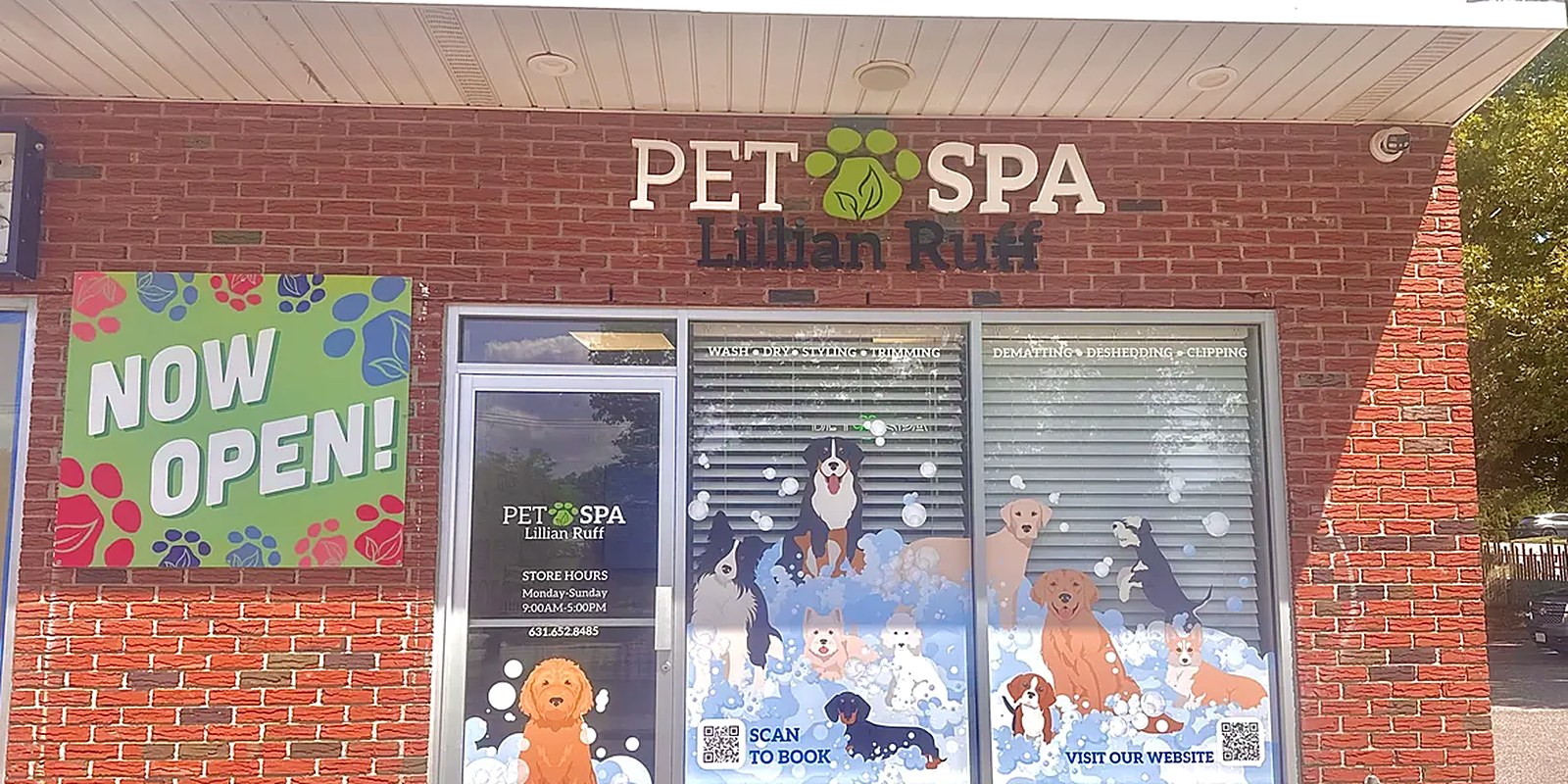
Lillian Ruff Pet Spa
Your dog comes back from a walk with something stuck in the coat, and the first instinct is to grab it and pull. That is the one move that reliably makes things worse. Burrs and grass seed heads are shaped to hold on, and most of the damage owners do at home happens in the first thirty seconds.
Here is what actually works, what tightens the knot instead of loosening it, and the one situation where the right phone number is your vet's rather than ours.
Work the coat loose around the burr first, never the burr out of the coat. Fingers and a comb, from the outside edge of the tangle inward. If the skin under it is red, swollen, weeping, or your dog will not let you near it, stop and call a vet.
The four places they always land
Burrs do not distribute themselves evenly. They collect exactly where the coat is finest, longest, and rubs against itself as the dog moves. If you only check four places, check these.
Check these after any walk through long grass or brushy edges, not just after an obvious romp. Late summer is when a lot of ornamental and field grasses have gone to seed, and the seed heads travel on anything that brushes past.
The Town of Huntington's off-leash dog run sits at the Animal Shelter on Deposit Road, in the same hamlet as our salon. The town's named on-leash walking spots include the Jerome Ambro Memorial Wetlands Preserve in Northport, Phragmites Park in Centerport, Frazer Drive Park in Greenlawn and the Dix Hills Park woodland trail. Anywhere with a grassy or brushy edge is a place to run your hands over the dog before you get back in the car — it is far easier to pick one seed head off a coat than to comb out six that have been ground in on the ride home.
What to try at home
You need three things: your fingers, a proper metal comb with both fine and wide teeth, and a detangling spray or a little plain conditioner. A slicker brush alone will not do it — a slicker skates over the top of a burr and packs the coat down around it.
Look before you touch
Find the whole thing. Often what you can see is one burr and what is actually there is a cluster with coat wrapped around all of them. Part the hair down to skin so you know what you are dealing with.
Wet the tangle, not the dog
Work a small amount of detangler or conditioner into the hair around the burr with your fingers. Slippery hair releases; dry hair grips. Do not soak the whole coat — a damp, matted coat is harder to work with, not easier.
Split the burr with your fingers
Hold the hair close to the skin with one hand so nothing pulls at the roots. With the other, tease the burr apart into smaller pieces and pull the hair away from it a few strands at a time. You are unwrapping the coat, not extracting the burr.
Comb from the outside in
Start at the far edge of the tangle with the wide teeth and work toward the center in short strokes, always with a hand braced between the comb and the skin. Once the wide teeth pass through cleanly, follow with the fine side to catch the fragments.
Stop while it is still going well
Two or three short sessions over an evening beat one long one. The moment the dog starts pulling away, licking, or going still and tense, you are past the point where anything useful gets done.
Helps
- Conditioner or detangler worked in first
- A metal comb, wide teeth then fine
- Holding the hair at the base so nothing tugs skin
- Breaking the burr into pieces before combing
- Doing paws with the dog lying down, not standing
Makes it tighter
- Pulling the burr straight out
- A bath before the burrs are out — water sets the tangle
- A slicker brush over the top of the mat
- Scissors, blind, against the skin
- Letting the dog lick and chew at it for days
Dog skin is thin, and it tents up into a mat — so what looks like a clump of hair frequently has a fold of skin folded up inside it. If you cut into a mat without being able to see the skin underneath, you have no way of knowing whether the blades are closing on hair or on your dog. That is the whole reason we tell owners not to do it. If it has to be cut, it should be clipped out from underneath with a blade held flat against the skin, which is a groomer's job and takes seconds.
When it is a vet call, not a grooming appointment
Some grass seed heads are pointed and barbed in one direction. They do not just sit in the coat — they can work their way through it, reach the skin, and keep going in. Once a seed is under the skin, it is a medical problem. No amount of combing reaches it, and we will not go looking for it either.
Call your vet, rather than booking a groom, if you see any of the following:
- A small swollen lump or a weeping hole, often between the toes, with the dog licking at it constantly
- Sudden violent head shaking or head tilting, or scratching at one ear only — a seed can go down an ear canal, and you will not see it from outside
- Squinting, a streaming eye, or pawing at one eye
- Repeated sneezing that starts abruptly on a walk and does not settle
- Any area your dog will not let you touch, or skin that is hot, red, or smells off
We spot these things all the time and we say so — that is a normal part of the job — but a groomer's role stops at the surface of the skin. Anything under it belongs to a vet, and the sooner it is looked at, the smaller the procedure tends to be.
We can get a coat back. We cannot get a seed out of an ear canal, and we should not try.
When the coat has already matted around them
The common version of this is not one burr. It is a dog that went through brush a week ago, picked up a dozen seed heads, and has been licking and rolling ever since. Now the burrs are the core of a mat and the mat is welded to the skin.
| What you are seeing | What usually happens at the salon |
|---|---|
| A few burrs, coat still combs through around them | Worked out by hand and comb, then bathed and dried. The finished trim looks normal. |
| Burrs with tight tangles forming around each one | Sectioned and worked out where the coat allows, clipped shorter where it does not. Some areas may end up shorter than the rest. |
| Solid matting, skin not visible when you part the coat | Clipped off underneath the mat. It is the humane option, and the skin beneath is often pink or tender. The coat grows back. |
| Dog flinching, guarding an area, any broken skin | We stop and tell you to see a vet first. We will happily do the bath and tidy afterward. |
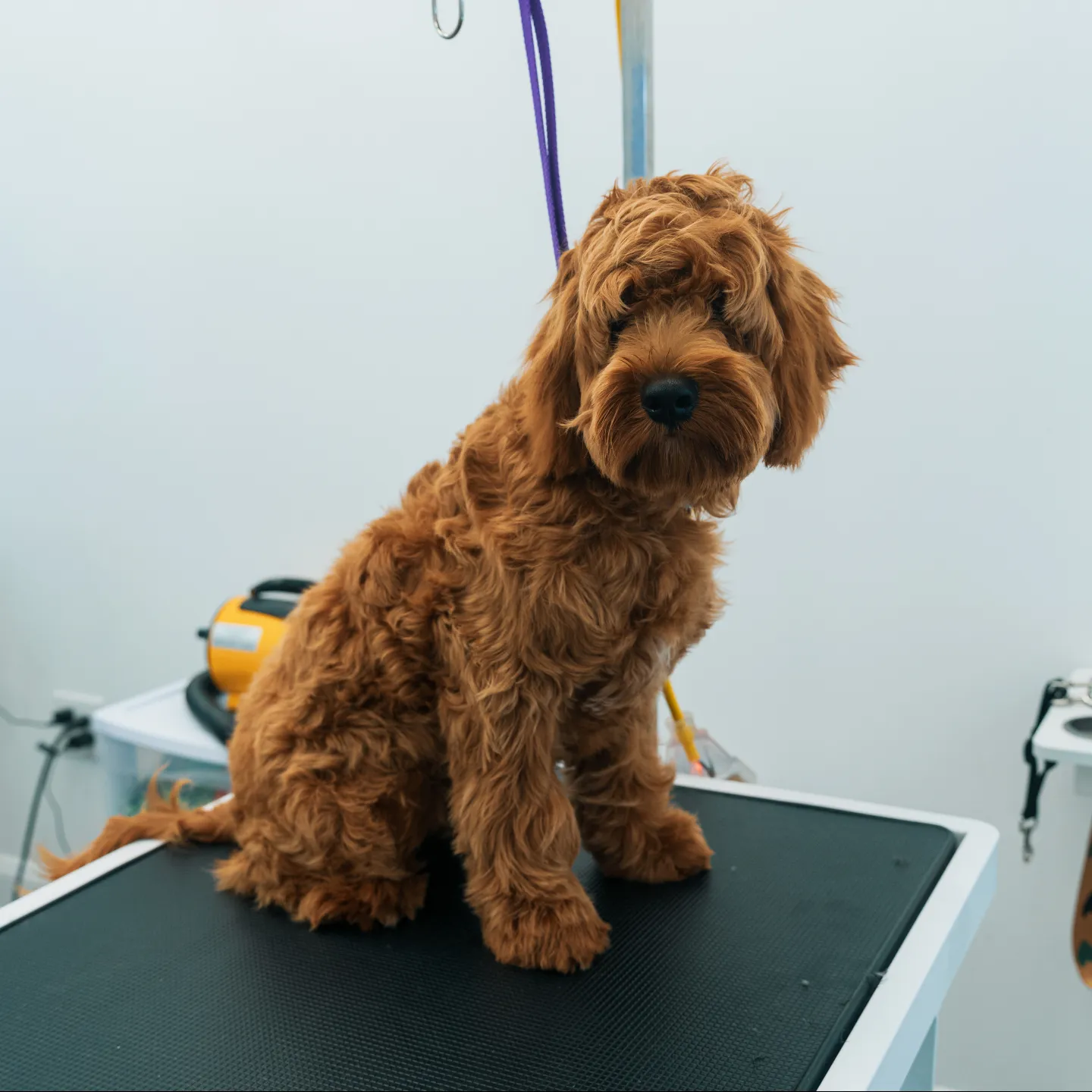
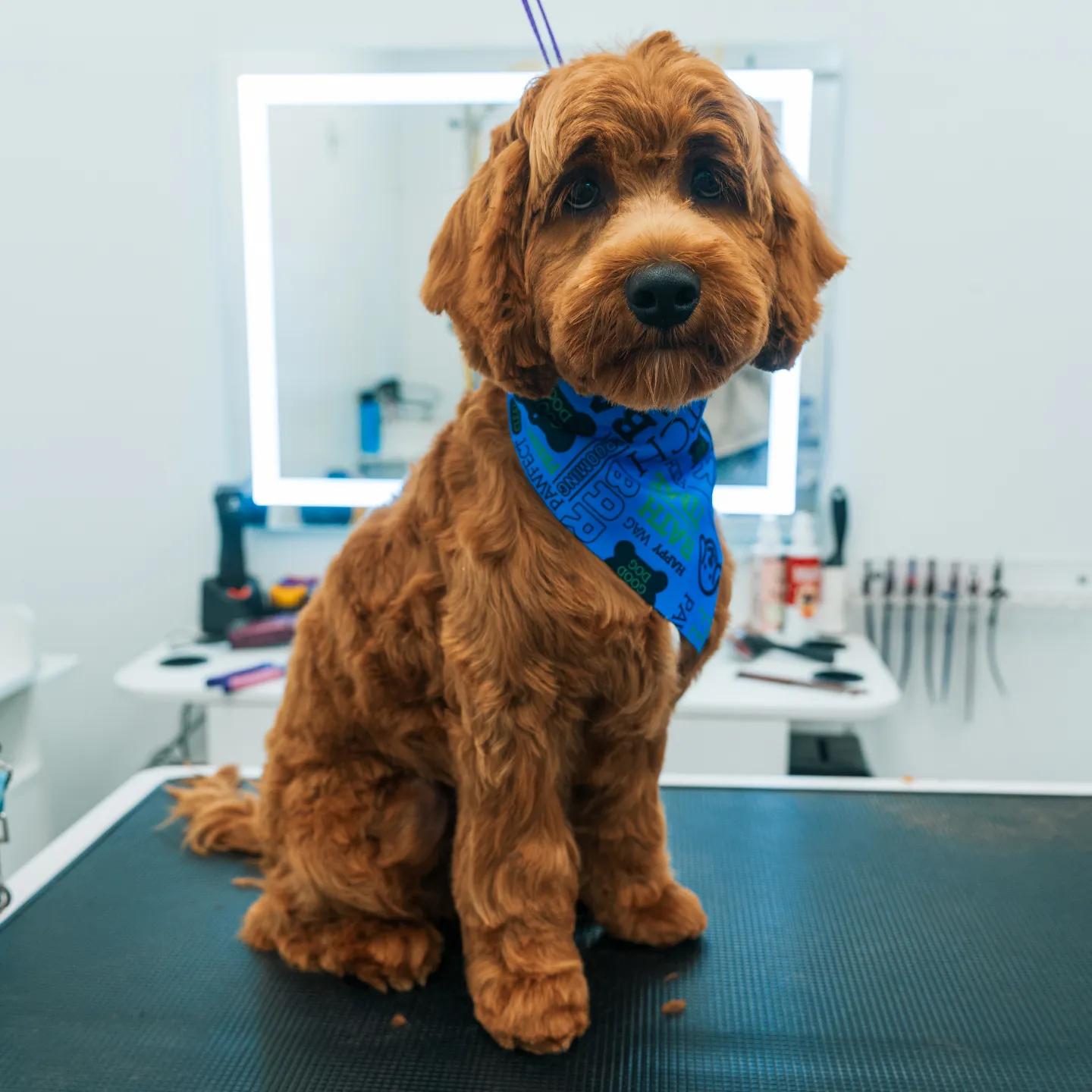
Nobody enjoys taking a coat shorter than the owner wanted. But hours of dragging a comb through a tight mat hurts a dog far more than a clean clip does, and the coat is back within a few months. Doodle coats in particular go from combable to solid faster than most owners expect, because the curl holds every fragment the burr leaves behind.
While you are in there, check for ticks
The same walk that leaves burrs in the armpits leaves ticks in the same places, and your hands are already on the dog. New York State health surveillance splits deer tick activity into two windows — nymphs from May to September, adults from October to December. In Suffolk County in 2025, about 26.6% of nymphs collected carried the bacterium that causes Lyme disease, and among adults collected that October to December the figure was 52.8%.
That is not a reason to panic about a walk. It is a reason to make the post-walk check a habit: ears, armpits, groin, toes — the same four places, for both problems.
Booking a de-burr and bath at 16 Laurel Rd
De-burring is ordinary work here. It is not an emergency service and we are not going to pretend it is. What helps most is simply telling us what we are looking at before we start — if the coat has matted around the burrs, or the dog is sore in a particular spot, say so at the counter. It changes what is realistic to achieve on the day, and that is a much better conversation to have before the dog is on the table than halfway through.
Pricing is published by weight on our booking page — bath and brush runs from $45 to $125 depending on the size of the dog, and a full groom with haircut from $85 to $165. You can see the bands and pick a time yourself online, which is still uncommon among Long Island salons: of 18 audited from their own websites, only 7 offered online booking and only 3 published any pricing at all.
And if it is one burr in a short coat and it came out over the sink in two minutes, you do not need us. Book when the coat is genuinely beyond a comb, or when the dog is due anyway.
Questions people actually ask
Can I just bathe the burrs out?
No — and a bath first usually makes the job harder. Water and shampoo tighten a tangle around a burr and set it. Get what you can out dry, with detangler, then bathe.
Does oil work? I have seen olive oil recommended.
Any slip helps a little, and a light coating of oil or conditioner does make hair release more easily. The catch is that oil is difficult to wash back out of a heavy coat and can leave it greasy for days. A proper detangling spray does the same job and rinses.
My dog is limping and licking one paw after a walk in long grass.
Have a vet look at it. A grass seed that has worked into the webbing between the toes can travel under the skin, and that is a medical problem rather than a grooming one. Do not go digging at it yourself.
Will you have to shave my dog?
Only where the coat leaves no choice. We work burrs out by hand wherever the coat still combs through. Where it is solid to the skin, clipping underneath the mat is the option that does not hurt, and we will tell you before we do it.
How do I stop it happening again?
A quick comb-through after walks through grass or brush — five minutes, ears, armpits, groin, toes. Keeping the feathering and the hair between the pads a little shorter through the summer months also gives burrs much less to grab.
Do you groom cats too?
No, dogs only.
Get the burrs out properly.
Pick a time online, and tell us what the coat is like when you drop off.
See pricing & book ›16 Laurel Rd, East Northport, NY 11731 · Tue–Sat 9–5
Ready to Pamper Your Pet?
Book a grooming appointment today and give your furry friend the spa treatment they deserve.
Book an Appointment