

After a Swim: How to Rinse and Dry a Dog's Coat Properly
Lillian Ruff Pet Spa
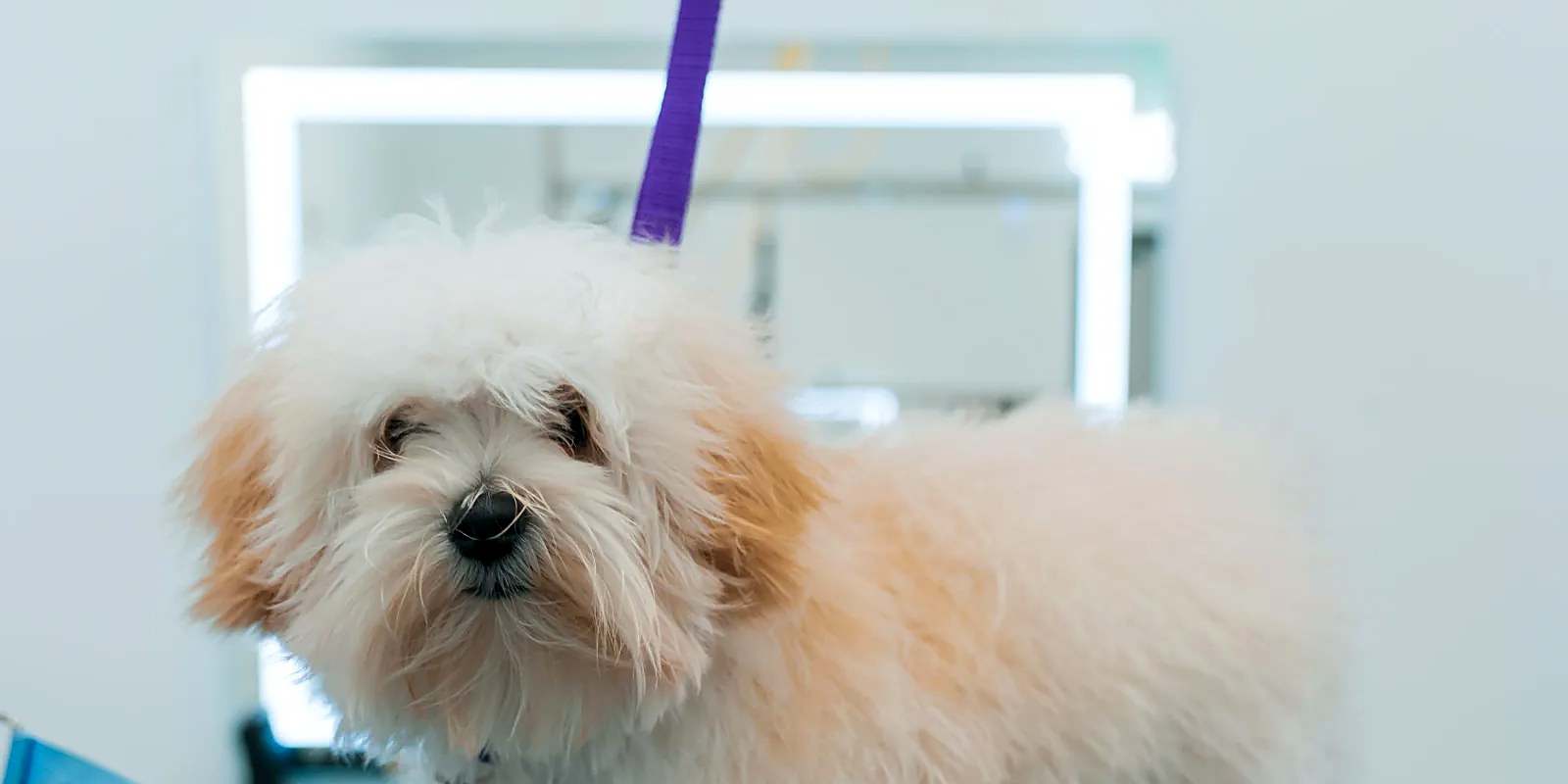
Most dogs who swim are completely fine afterward. The two things you actually control are where you let your dog into the water and how thoroughly the coat gets dried once you are home — and the second one is where nearly all the trouble comes from.
We see a lot of wet dogs in August. The honest truth is that a rinse and a proper dry is usually the whole story. But a swim is one of the few outings where the useful thinking happens before the leash comes off, and then again in the hour after you get back. So we will do it in that order: what is worth checking at the water, and then the part that is genuinely our job — getting a soaked coat dry all the way down to the skin.
Read whatever is posted at the access point, look at the water with your own eyes before your dog goes in, and if anything looks off, do something else. Afterward, rinse with clean water and dry the undercoat completely. That is where problems start.
What you can actually check, and what you can't
We are not going to point you at a website and tell you it is authoritative, because we cannot vouch for one. What we can tell you is what is checkable on the day, with no research at all.
The signage at the access point is the thing that governs. It tells you whether dogs are allowed there in the first place — which varies far more than people assume — and it is where any notice about the water itself would appear. Access to one body of water can be run by different authorities at different points along the shore, with different rules at each. A rule you followed at one entrance is not automatically the rule at the next one.
The second check is your own eyes, and it is not a soft one. Green or blue-green streaks that look like spilled paint, thick surface scum, mats of floating material, or a bad smell all mean the same thing: not today. Conditions in shallow, warm, still water in late summer can change quickly, and they move around with the wind, so what looked clean at one end of a shoreline is not a verdict on the other end.
Read what is posted, before you unclip
Whatever is physically posted at the water wins. It is also the only reliable way to know whether dogs are permitted at that specific spot.
Look at the water
Scum, paint-like streaks, floating mats, an off smell. When in doubt, stay out — that is the standard line for a reason, and it costs you nothing to follow it.
Decide before your dog is already in
A retriever three strides into the shallows is not a dog you can talk out of it. Make the call from the parking area.
Bring the rinse with you
A jug of clean tap water in the trunk and a real towel. Rinsing at the car beats rinsing forty minutes later at home.
Cyanobacteria can be toxic to dogs, and dogs are more exposed than people are — they wade into the scummy shallow edge, drink, and then groom themselves dry. If your dog has been in water with visible scum, do not wait to see what happens. Rinse them and call your vet.
Where dogs are and are not allowed
This part is worth knowing before you load the car, because the answer is genuinely different a few towns apart.
The area around the lake is split across more than one town, so the rules at one access point are not automatically the rules at another. We are not going to tell you what the dog policy is at any particular spot on that shoreline, because we could not confirm it. Read the signs at the entrance you are actually using.
Check for ticks on the way home
A dog who has been in and out of water has usually also been through grass and brush at the edge of it, and a wet coat hides a tick beautifully. New York State's health department runs its deer-tick surveillance in two fixed windows — nymphs from May to September, adults from October to December — so a summer swim sits squarely inside nymph season. Nymphs are the small ones, and they are the ones people miss.
In Suffolk County in 2025, surveillance recorded a nymph density of 61.04 ticks per 1,000 square meters, with 26.6% of them carrying the bacterium that causes Lyme disease. That is a reason to run your hands over the dog properly, not a reason to stay home. Ears, armpits, groin, between the toes, and under the collar.
What to watch for in the hours after a swim
We are groomers, not veterinarians, so this is a referral list rather than advice. The reason to write it down is that the timing matters — some of these want a phone call now, not tomorrow.
| What you're seeing | Who to call |
|---|---|
| Vomiting, diarrhea, drooling, weakness, stumbling or tremors after being in the water | Your vet or an emergency vet, immediately. Say the dog was swimming, and where. |
| Head shaking, scratching at one ear, or an ear that smells off a day or two later | Your vet. Moisture sitting in an ear is something to have looked at rather than guessed about. |
| A red, wet, angry patch of skin that appeared fast and the dog will not leave alone | Your vet first. We should not be bathing broken or actively inflamed skin without their say-so. |
| An embedded tick, or a bite site that stays swollen | Your vet. We will tell you if we find one on the table, but removal and anything after it is theirs. |
| Fine, and stayed fine — but the coat has gone crunchy, matted or smells like pond | That one is ours. |
Rinsing and drying a coat that has been in lake water
Here is the part people underestimate. Lake water is not just water — it carries silt and organic material, and that settles into a coat and stays there. Toweling moves the surface. It does nothing for the base.
Rinse with clean tap water as soon as you reasonably can, and rinse the places that never get rinsed: belly, armpits, groin, the backs of the legs, and between the toes and pads. Grit that sits between pads is a real cause of licking and soreness two days later, and nobody ever connects it back to the swim.
Then dry properly. A double coat can feel dry on the outside and still be soaked at the skin for hours. Warm, damp skin under a dense coat is the condition that causes trouble, and it is also how a swim turns into matting: wet hair plus friction plus a crate nap equals felt. A doodle, a spaniel, a golden or a shepherd that swims and then air-dries in the back of a car is the classic version of this.
Worth doing
- Rinse with clean water, all the way through the coat
- Dry the outer ear with cotton, and ask your vet about a proper ear drying solution if your dog swims often
- Brush while drying, in sections, from the skin outward
- Use airflow rather than heat, and keep it moving
- Check between the pads, in the armpits and under the collar
Skip
- Pushing cotton or anything else down into the ear canal
- A hot human hairdryer held in one spot — the skin burns before the undercoat dries
- Human shampoo
- Crating a soaking dog to "let them dry off"
- Brushing a matted wet coat hard — that tightens it
Most swim problems we see are not water problems. They are drying problems.
When you don't need us
A short-coated dog who swam in clean water, got rinsed at home and dried off in the sun is done. There is nothing for us to add, and we would rather say so than sell you a bath.
Book when the coat is long, dense or double, when it has already started to felt behind the ears and under the harness, or when you simply do not have a dryer that can move water out of an undercoat — because a home towel and a warm afternoon genuinely cannot. A bath and brush runs $45 to $125 depending on your dog's weight, and for a post-swim coat that is usually all that is needed. A full haircut is a different service and often not the one you want after swimming.
One thing we will not do is promise you a slot the same afternoon. Booking is online and it runs on the schedule it runs on — if your dog needs something urgently, that is a vet call, not a grooming appointment.
Questions people actually ask
Is it safe for my dog to swim in the lake?
Nobody can answer that in advance, including us, and you should be suspicious of any page that tries. It depends on the day, the recent weather and the specific spot. Read whatever is posted where you are standing, look at the water, and if there is scum, streaking or a smell, don't. Whether dogs are permitted at a given spot is a separate question again, and that comes down to whoever runs it.
My dog drank a lot of lake water. Should I worry?
Often it passes without incident, but this is a vet question, not a groomer question. Call them if you see vomiting, diarrhea, unusual drooling, weakness or tremors — and mention the swim. It is also a good moment to ask your vet whether the leptospirosis vaccine makes sense for your dog, since that one is about water and wildlife exposure and your vet knows your dog's risk.
How long does a double coat actually take to air-dry?
Longer than people expect — hours, and the skin is the last part to dry. That gap is the whole risk. A high-velocity dryer moves the water out mechanically rather than waiting for it to evaporate, which is why the coat comes out both dry and noticeably lighter.
Can I just use my own hairdryer?
Carefully, on cool, and kept moving. The problem is that household dryers work by heat, and a dog's skin will burn well before a dense undercoat gives up its water. If your dog swims regularly, a proper pet dryer is a better purchase than a bigger towel.
Do you groom dogs that have been in the water a lot?
All summer. Regular swimmers tend to do better on a shorter interval than they need in winter, because repeated wet-and-dry cycles pack a coat down. If your dog is in the water most weekends, tell us — it changes what we recommend.
Should I book a full haircut after a swim?
Usually not. Unless the coat is matted to the point where it has to come off, a bath and brush is the right service. If we open the coat up and find matting that cannot be brushed out safely, we will call you before we change anything.
Get the swim out of the coat.
Book a bath and brush online and we'll dry it properly, right down to the skin.
See pricing & book ›835 Portion Rd, Ronkonkoma, NY 11779 · Open 7 days, 9–5
Ready to Pamper Your Pet?
Book a grooming appointment today and give your furry friend the spa treatment they deserve.
Book an Appointment